|
|  |
|
February 24, 2026
|
|
UK - Exploring global opportunities for GB dairy
International demand matters and there is clear appetite for British dairy.
That was brought into sharp focus when South Cumbria farmer and AHDB Dairy Sector Council member Patrick Morris-Eyton joined our export team at Gulfood in Dubai, the world's largest annual food and beverage trade show.
One of the strongest messages from Patrick's visit was how highly GB dairy is regarded by international buyers.
Across conversations with importers and distributors from multiple regions, British dairy was consistently described as premium, safe and trusted.
For farmers, the same assurance schemes, herd health standards and milk quality requirements that shape day-to-day management on farm are the foundations of this international trust.
The sector's investment and professionalism are not simply meeting domestic expectations; they are strengthening Britain's competitive edge abroad.
The size of Gulfood highlights just how competitive global food markets are. With more than 6,500 exhibitors from over 130 countries, the event showcases the full breadth of international food production.
Countries not traditionally associated with dairy exports are investing heavily in their presence and promotion.
Patrick said: "The scale surprised me. There was a massive number of stands, products and countries that you don't always think of as exporters there with big stands."
Yet despite that competition, feedback from buyers suggests that demand for British dairy exists and that doors are already open. In many markets, GB dairy is seen as a reliable, high-quality option capable of meeting consumer expectations around food safety and provenance.
He said: "The opportunities are huge, and we are at the front of the queue if we want to grasp them and grow the exports for our GB dairy farmers."
Expanding exports is not about chasing volume for its own sake. It's about broadening demand, improving market balance and creating greater resilience against domestic volatility.
A diverse customer base reduces risk and supports longer-term sector stability.
Learn more about dairy exports work
|
|
|
|
|
UK - UK genomic evaluations pass one million milestone as crossbred genomics move into delivery
UK genomic evaluations have reached a major milestone, with more than one million genotypes now included in AHDB's national evaluation programme.
The achievement demonstrates how genomics has become a core part of dairy breeding in the UK. Growing uptake across the industry is giving farmers greater confidence in genomic information to support faster and more accurate breeding decisions.
Funded largely through the dairy levy, AHDB's genomic evaluation programme provides an independent, industry-wide service for UK dairy farmers. Ongoing investment in data, systems and collaboration ensures access to reliable genomic information that supports sustainable genetic progress across herds of all sizes and breeding systems.
Alongside this milestone, AHDB also marked the availability of genomic evaluations for crossbred females, widening access to genomic information for herds using crossbreeding as part of their breeding strategy.
Initially, genomic evaluations for crossbred females are available for a targeted set of key traits: production, lifespan, somatic cell count (SCC), fertility index and maintenance. These traits have been prioritised for their direct relevance to herd health, efficiency and farm profitability.
This year, the service will be expanded to include a wider range of traits, with plans also in place to extend genomic evaluations to crossbred males. This phased approach is designed to maintain robustness and reliability while allowing farmers and industry partners to build confidence in the data.
Marco Winters, AHDB Head of Animal Genetics, said: "Reaching one million genotypes shows how firmly genomics is now embedded in UK dairy breeding. The scale of the reference population strengthens the reliability of evaluations and supports more confident breeding decisions on farm.
"The introduction of genomic evaluations for crossbred females recognises the growing demand of genomic insight by crossbreeding UK dairy systems. A phased and measured approach ensures the information provided is robust, relevant and fit for practical use."
Crossbred genomic results are being released on a monthly basis initially. Further updates will be shared as the service develops.
Further information on UK genomic evaluations and crossbred genomics
|
|
|
|
|
UK - Growing fodder beet could be attractive option after difficult 2025 forage season
After the lack of forage in many areas in 2025 due to the drought, this season could see increased interest in growing fodder beet on livestock farms, believes ProCam agronomist, Nick Duggan.
Once fodder beet gets its roots down, it can be quite drought tolerant, says Nick, so it could appeal to farmers looking to diversify forage crops to mitigate risk. "Although inputs can be quite high, fodder beet does offer a big crop of energy," explains Nick, who operates in Herefordshire, South Shropshire, Powys and the Cotswolds.
"Compared with stubble turnips yielding about 4-6t of dry matter/ha (DM/ha), fodder beet might yield 20t DM/ha. And, at around 12.5ME, the energy content of its roots is similar to grass. There's also the flexibility to feed fodder beet to sheep, beef or dairy, and to lift or graze it, although it's important to 'wean' livestock onto it gradually, especially cattle, because its high energy content can cause acidosis," he adds.
To help ensure that farmers grow the right varieties for their situation based on robust data, Nick says ProCam has been evaluating the performance of fodder beet varieties over multiple seasons, with on-farm trials conducted in the North and West of the country as well as other locations country wide.
"We test a range of varieties," he continues. "These range from low DM beets for grazing, to high energy types for lifting and chopping for livestock, or for use in anaerobic digestion (AD) plants.
Typically, 20 or so varieties might be tested annually in these replicated trial plots, with 4-5 new varieties included each year. But a lot of the established varieties have been in the trial for maybe six years - so we have long term data and can robustly benchmark new varieties."
Assessments begin with variety emergence and vigour, and conclude at harvest by measuring yields, says Nick, with beets lifted and tops and roots weighed separately. Yields per hectare are then calculated, corrected for %DM. "Also at harvest, each variety is assessed for disease resilience, and for the amount of root protruding above the soil. More root protruding is helpful if grazing. If lifting beet, you want more root in the ground for protection from frost.
"Agronomically, we encourage all farmers to keep the tops as healthy as possible with a summer nutrition programme. As well as helping to protect roots from frost, a healthy canopy helps sustain the crop into winter. This helps if growing for energy for AD plants, but also tops have good feed value, at about 17% crude protein, and can provide 2-2.5t DM/ha."
In addition to evaluating varieties, ProCam also evaluates the performance of primed seed, says Nick, which is available with certain fodder beet varieties. Primed seed is pre-germinated for faster emergence, and tends to produce more uniform plants at the cotyledon stage, he notes. "Faster establishment, in turn, helps with weed suppression, and once fodder beet reaches 12 leaves, it becomes more tolerant to virus yellows.
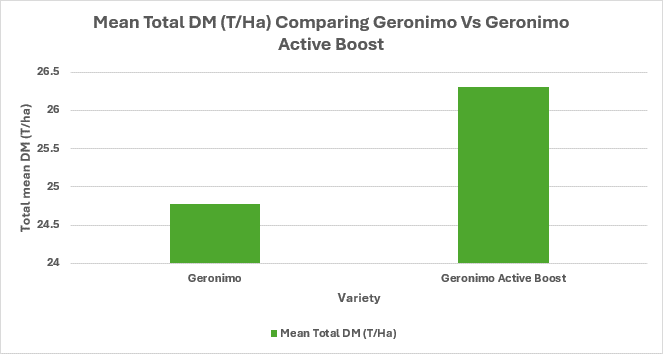
"Plus, primed seed can deliver higher yields. Results can vary, but in five years of trials on the variety Geronimo we saw a yield uplift of approximately 1.5t DM/ha from Active Boost primed seed compared with conventional seed. With the unpredictable spring weather we get nowadays, I think primed seed is extremely useful technology for fodder beet growers."
Mean total yield of DM/ha from conventional versus Active Boost primed Geronimo fodder beet seed
|
|
|
|
|
UK- January 2026 dairy market review
Milk production
Domestic
GB milk deliveries in January totalled an estimated 1,080 million litres, up 3.3% compared to the same period in 2025.
Daily deliveries averaged 34.83 million litres. Production for this year's milk season so far (April to January) sits at 10,913 million litres, up 5.4% compared to the same period in 2025.
We are now also annualising against a period of growth in January 2025. GB milk production is actually 5.4%, or 55 million litres above January 2024.
Organic milk supplies
GB organic milk deliveries have soared ahead alongside the strong growth in total GB milk deliveries volumes.
Volumes have shown year-on-year growth since March 2025, with the latest GB organic delivery estimates (January) showing a 10.7% year-on-year for the month.
This makes the milk year to date at 32.9mn litres above the previous year or 11.1%.
Global
The latest global production data estimate shows global milk flows now increasing sharply in most regions.
Global milk deliveries averaged 856.5 million litres per day in November, an increase of 36.2 million litres per day (+4.4%) across the selected regions, compared to the same period in the previous year.
Milk deliveries in the EU averaged 377.1 million litres per day in November, a substantial increase of 17.8 million litres per day (+4.9%) year on year, and the strongest November on record.
Low input prices, good forage quality and elevated milk prices for most of the year boosted volumes.
Dairy trade
Total UK dairy export volume for Q3 2025 increased 5.5% year-on-year totalling 294,000 t, driven by powders, whey and whey products, cheese and butter. Total UK dairy export value stood at £529m, up 13.7% year-on-year.
Export volumes of milk and cream and yoghurt shrunk in volume but grew in value while exports of cheese are at the highest level for Q3 seen in the last six years.
Imports declined slightly during the period due to lower imports from Ireland and New Zealand year-on-year.
Read the full dairy market review
|
|
|
UK - Fly-tip victim farmer is 'delighted' as fundraiser raises £30k
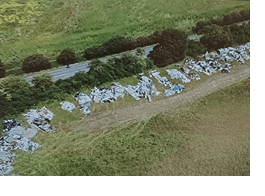 A farmer plagued by fly-tippers is "delighted" after a public crowdfunding appeal raised more than £30,000 in less than 24 hours to help him clear a 200 ton eyesore of illegal waste from his land.
The 80-year-old farmer in Hertfordshire, who wished to remain anonymous, faced prosecution unless he paid £40,000 to clear the fly-tipped waste left by criminals on his land, despite being the victim of the crime.
Having recently lost his wife, the farmer discovered the dumped mess on a field edge being used as part of a government scheme to grow wild bird food. After the council failed to identify the criminals responsible, it fell to the farmer to cover the cost of removing the rubbish, which contains medical waste and sheets of what is thought to be asbestos.
Less than a day after the fundraising appeal was launched, almost 1,000 people donated more than £30,000 to help the farmer burdened to cover the cost alone. Archie Ford, 31, who created the fundraising page, said: "I've been absolutely staggered and humbled by people's generosity. It's been utterly inspiring.
"A lot of the comments left by those donating are in the same kind of vein, of how unfair it is and how angry it makes them. People are seeing an uptick in how often this is happening around them".
William Dickinson, a neighbouring farmer, said the 80-year-old widower and his family were "delighted by the outpouring of sympathy for his plight. They are quite amazed by the public reaction, but it doesn't remove the injustice of the whole thing and I hope it acts as a clear signal to the government that this situation is ridiculous.
"How can you have a law which absolutely and innately implicates the victim of crime as the person who then has to pay to put it right?"
GBNews
|
|
|
UK - John Allen Awarded RABDF Princess Royal Award for Championing Dairy
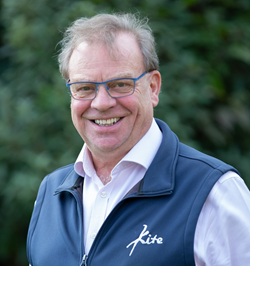 A highly respected figure who has played a pivotal role in supporting and driving positive change across the UK dairy sector, John Allen has been awarded the prestigious RABDF Princess Royal Award.
The award was presented to John by Her Royal Highness The Princess Royal today (Wednesday 18 February) at Windsor Castle.
Presented annually by the Royal Association of British Dairy Farmers (RABDF), the Princess Royal Award recognises an individual who has made an outstanding lifetime contribution to the dairy industry.
John's career spans more than five decades and has become synonymous with leadership, strategic insight and unwavering commitment to the dairy supply chain. He began his career on a small family dairy farm with 40 cows in the Peak District before graduating from Nottingham University in 1979 and joining ADAS (the Agricultural Development and Advisory Service) as a farm advisor in South West England.
Following roles in Wales and the South West, John progressed through ADAS to become Head of Dairy and later Head of Agriculture, supporting farmers and dairy businesses through some of the most turbulent and transformative periods the sector has experienced. These included the introduction of EU milk quotas in 1984, the deregulation of the Milk Marketing Board, and the formation of Milk Marque and its successor organisations.
John is perhaps best known as one of the founders and managing partners of Kite Consulting, established in 2000. Under his leadership, Kite grew into a highly respected consultancy working across the entire dairy supply chain, supporting farmers, processors and retailers. The business expanded to more than 50 employees before being acquired by Associated British Foods in 2022, where John continued as Head of Corporate Dairy until his retirement in December 2025.
Throughout his career, John has helped the industry navigate de-regulation, milk price volatility, fluctuating interest rates, rising input costs and major structural change, while also working closely with retailers to develop aligned supply pools that have helped bring greater market stability.
Commenting on the award, Hayley Campbell-Gibbons, Chief Executive of RABDF, said: "John Allen is one of the most influential and respected figures the UK dairy industry has known. His career has been defined by integrity, leadership and an unwavering commitment to supporting dairy farmers and the wider supply chain."
On receiving the RABDF Princess Royal Award, John said: "I am incredibly honoured to receive this award. The dairy industry has been a huge part of my life for more than 50 years, and I've been privileged to work alongside so many committed, innovative and resilient people during that time."
|
|
|
UK - Hydration strategies for fresh calved cows and calves
Getting newly calved cows off to the best start remains crucial to efficient milk production, while ensuring calves are healthy and fast-growing is vital to reduce mortality and age at first calving. But these animals face significant physiological challenges.
A growing body of research is highlighting that some of the physiological challenges seen in early life calves and freshly calved cows are not always fully addressed by standard on farm protocols. As more data from controlled trials and research centre studies becomes available, it is becoming clearer that these times of physiological change may benefit from approaches more closely aligned with the underlying science.
A free CPD webinar organised by Trouw Nutrition brings together research on two critical points. Dr Juliette Wilms will discuss fluid balance in diarrhoeic calves while Dr Jean Baptiste Daniel will update on calcium regulation immediately post-calving
The speakers will share updated insights that help explain why animals respond the way they do and where there may be opportunities to refine decision making using more precisely aligned, evidence-based methods.
The webinar is at 2.00 on Wednesday 4th March. To register scan the QR code or click here.

|
|
|
Israel - Milk shortages, political reform fights - Israeli dairy sector in turmoil
Israel's dairy industry has entered a period of acute crisis as nationwide dairy farmers staged strikes and protests against proposed government reforms, cutting roughly 20 % of national milk production and triggering supply disruptions that emptied supermarket shelves and forced retailers to ration dairy products.
The standoff, which included dramatic actions like farmers dumping milk on highways and tractor convoys to Jerusalem, underscored the mounting tension between producers and policymakers over the future structure of the sector.
At the heart of the dispute is Finance Minister Bezalel Smotrich's plan to overhaul Israel's tightly regulated dairy market, which has been governed by state quotas, price controls and high import tariffs since the nation's founding. The reform - now tied to the national 2026 budget process - would eliminate protective tariffs of up to 40 % on dairy imports, reduce annual milk production targets from 1.5 to 1.0 billion litres, and lower the price paid to farmers for raw milk by about 15 %.
Supporters of deregulation argue it will boost competition and lower consumer prices, while critics warn it threatens food security and the viability of domestic farms.
The proposed legislative package has advanced through early budget readings despite opposition from lawmakers representing agricultural regions, and procedural moves to keep dairy reform tied to the broader fiscal plan have deepened political divisions.
Although the strike officially lasted only a couple of days, continued logistical bottlenecks meant that regulated products such as fluid milk, butter and cottage cheese remained scarce even after deliveries resumed. Major supermarket chains responded by limiting purchases per customer in efforts to stretch limited inventory.
Israel's Dairy Crisis Deepens As Farmers Strike - EDairy News English
|
|
|
Global - Fonterra forecasts dairy protein surge as GLP-1s reshape F&B trends
Fonterra flags how increased *GLP-1 use is fuelling the demand for protein in its top five food and nutrition trends set to shape the year ahead in F&B. The global dairy exporter predicts a surge in demand for protein powders, ready-to-drink (RTD) protein shakes, and protein-enhanced snacks, as the number of weight loss medication users rises globally.
The New Zealand-based dairy co-operative has identified GLP-1-spurred protein demands as the biggest opportunity for dairy F&B innovation in 2026.
For Fonterra, GLP-1 is not only creating a new demand for protein - it is intensifying and reshaping it.
People using weight loss medications are eating much smaller portions, concentrating on foods that provide satiety and nutrient density, especially protein and fibre.
Fonterra forecasts that protein-rich, nutrient-dense dairy will be positioned at the center of the next wave of food innovation - not as a niche response to medication use, but as a structural shift in how consumers approach satiety, functionality, and long-term wellness.
Much like in the protein category, interest in fibre-enhanced F&B that supports gut health has exploded as the use of GLP-1 medications proliferates.
Dairy-based protein, particularly in high-protein yogurts and shakes, helps maintain muscle mass despite reduced appetite. This is particularly important as using appetite suppressants can lead to reduced muscle mass. Research suggests that a significant proportion of weight lost on GLP-1 medications can come from lean mass, underscoring the importance of adequate protein intake.
Fonterra forecasts dairy protein surge as GLP-1s reshape F&B trends
*GLP 1 RAs are glucagon-like peptide-1 receptor agonists, a class of medications primarily used for weight management and the treatment of type 2 diabetes. They mimic the natural hormone GLP 1, which helps regulate blood sugar and appetite.
|
|
|
Global - MPs concerns about impact of India trade agreement
During a debate in Parliament, MPs echoed the NFU's concerns that dairy markets will be liberalised as part of the UK's trade agreement with India, while dairy farmers in the UK will not see any greater access for British cheeses and dairy products on the Indian market.
This month, MPs debated the newly-agreed FTA (Free Trade Agreement) with India. The NFU has broadly welcomed the deal, and praised the access the deal gives to British lamb - a key ask of the NFU during negotiations. However, the organisation is concerned that the deal gives fully-liberalised access to the UK's dairy market for Indian products, without reciprocal access in return, making the Indian agreement the third FTA which does this.
www.nfuonline.com/news/uk-india-fta-debate/
|
|
|
|
| |
BRITISH DAIRYING
ENSURE YOU RECEIVE EVERY COPY
British Dairying is available by subscription at £70.00 posted to UK addresses,
£90.00 for Europe, £115.00 for the Rest of the world
or £30 +VAT for British Dairying Online only
|
|
|
QUOTE
"There are two good things in life - freedom of thought and freedom of action."
W. Somerset Maugham - writer, 1874-1965
"I am the master of my fate, I am the captain of my soul."
William Ernest Henley - writer and poet, 1849-1903
|
|
| |
|
|
|
You are receiving this email because you are a registered reader of British Dairying and we are pleased to send you extra information to supplement the journal.
|
|
|
British Dairying,
WB Publishing Ltd
Priory Cottage, Eastbourne Road Ridgewood East Sussex TN22 5ST
WB Publishing Ltd is registered in England and Wales, Registration No 2951727
|
|