|
|  |
|
November 25, 2025
|
|
UK - Demand supports organic milk prices
GB Organic milk deliveries have soared ahead alongside the strong growth in total GB milk deliveries volumes. Volumes have shown year-on-year growth since March 2025, with the latest GB organic delivery estimates (up to 8 November) showing a 11.6% year-on-year increase in the milk year to date. This is equivalent to an additional 24.6 million litres of organic milk.
However, in comparison to the previous 2023/24 milk year, volumes are up by a more modest +1.7%, showing that these are mostly recovery gains. Volumes remain significantly below (-7.8%) the 4 year average which was held up by the years prior.
Organic milk prices
Total milk volumes have been supported by favourable milk prices until recently. Milk price announcements in November have been strongly negative for the majority of processors as commodity prices have slumped. Conversely, organic milk prices have held, with no cuts announced so far. Again, this is reflective of industry pushing recovery back to normal levels, rather than oversupply.
The widening gap between conventional and organic milk prices suggests stronger demand for organic milk and need to maintain organic milk supplies - what is happening to retail sales?
Click here to read more of this AHDB analysis
|
|
|
UK - Dairy retail performance - 1 November 2025
During the 52 weeks ending 1 November 2025, volumes of cow dairy declined by 1.1% year-on-year (NIQ Homescan POD, Total GB). Spend on cow's dairy increased by 6.5%, driven by a +7.7% increase in average prices paid.
Cows' milk volumes continued to decrease (-2.6%) year-on-year (NIQ, 52 w/e 1 November 2025), while spend saw an increase of 1.8% due to a 4.5% increase in average prices paid. Overall volume declines were driven by a reduction in frequency of purchase and volumes purchased per trip. Volume declines were seen for semi-skimmed and skimmed milk, while whole milk (+2.3%) and other cows' milk (+16.3%) (including channel island and 1% fat milk) continue to see volume increases this period. Other animal sourced milk also saw volume growth, while plant-based milks saw decline.
Cows' cheese remained in volume growth, up 1.7% year-on-year, and spend during the period increased by 5.7% (NIQ, 52 w/e 1 November 2025). Cheddar, which represents a majority (45.2%) of cows' cheese volumes, saw a slight increase in volumes purchased (+0.3%). Increases in volumes were also seen for snacking (+2.8%), specialty and continental (+3.5%), and other cows' cheese (+7.3%), offsetting the declines seen in British Regionals, processed, and Stilton and British Blue.
Cows' butter saw a 2.2% decrease in volumes this period, while spend grew by 9.8% year-on-year, due to a 12.3% increase in average prices paid (NIQ, 52 w/e 1 November 2025). Block butter continues to see volume growth, up 5.5%, driven by increases in the number of shoppers and the frequency of purchase. However, this was not enough to offset declines in cow butter spread volumes (-5.5%).
Cows' yogurt, yogurt drinks and fromage frais volumes continue to see growth (+6.3%), with spend increasing 11.4% year-on-year (NIQ, 52 w/e 1 November 2025). Most products in this category saw growth in volumes purchased this period, offsetting the declines from fromage frais (-8.3%), split pot (-0.1%) and standard flavoured (-5.6%). Cows' fat free yogurt remains the product that saw the greatest actual growth (+17.5 million kilos), while cows' standard plain yogurt saw the fastest volume growth of 25.5% year-on-year.
Cows' cream volumes saw a +2.3% increase year-on-year, driven by increases in shopper numbers and volumes purchased per shopper, despite a 9.2% increase in average prices paid (NIQ, 52 w/e 1 November 2025). Growth in aerosol (+1.9%), crème fraiche (+0.1%), double (+3.9%) and sour cream (+3.4%), volumes drove this performance. Single cream, on the other hand, saw volumes remain relatively flat compared to the same period last year (+785 litres).
See the full data and these insights visualised on our GB household dairy purchases retail dashboard.
|
|
|
|
|
UK - Cross-sector collaboration needed to unlock farm data potential
Leaders across UK food and finance are calling for cross-sector collaboration on farm data collection, seeing it as vital to building a resilient and environmentally sustainable farming system.
At a Map of Ag roundtable in London earlier this month, panellists - including NFU President Tom Bradshaw, Sophie Throup of Myton Food Group, Kate Hosking of Barclays UK, and Arla Board Director and Arla UK Area Chair Arthur Fearnall - agreed high-quality, consistent, and trusted data is the foundation for both resilience and environmental progress.
They identified three core principles to guide this work:
- Collaboration - breaking down silos across sectors, from farmers and supply chains to government and finance.
- Shared metrics - agreeing on what to measure and how, so progress is consistent and credible.
- Farmer leadership - giving farmers a seat at the table to define and deliver the sustainability agenda.
However, panellists highlighted a gap in understanding what "good quality" data really means and how it should be used. "We need to agree on a set of common metrics and act on them," said Sophie Throup. "We've done a lot of measuring, but the real benefit comes when we use that data to inform on-farm decisions and actions."
Ms Throup added that it's vital to make better use of the data already available on farms, with technology such as AI helping to simplify processes, support emissions reduction, and reduce the hassle factor for farmers.
She also emphasised the need for a trusted, central and independent place to govern farm data - something that would help build confidence and encourage wider data sharing across the industry.
Tom Bradshaw added: "Data on its own is valueless unless it's brought together, analysed collectively, and used to inform change. Farmers need to know there is a purpose - and a reward - for contributing their information."
Panellists agreed that consistent data collection on productivity and sustainability is vital if the food system is to progress but warned against duplication and the burden of reporting to multiple assurance schemes.
The financial sector also has a critical role to play. Kate Hosking, from Barclays UK, said data and metrics are increasingly important in unlocking finance for farm businesses.
"Finance will be key in supporting farmers to transition to more sustainable practices," she said. "To do that fairly, we need clear, consistent metrics that give confidence to lenders and ensure farmers are rewarded for the improvements they are making."
Ms Throup added: "Everyone wants simple answers to a complicated problem. But what we really need is collaboration and a systems-based approach to tackle the challenges we face - and to do so without operating in silos."
It was agreed that farmers should be central to discussions about emissions data collection, and that they shouldn't be dictated to on which standards to follow. Instead, they should have the opportunity to set their own standards and drive their own agenda.
Duncan Rawson, partner at the European Food and Farming Partnerships (EFFP) and a former farmer, said: "Farmers should come together to set their own standards and metrics - creating their own marketing opportunities and shaping the future of the industry. This is about giving farmers control over their own destiny."
MapofAg
|
|
|
UK - Farming SMEs warn Autumn budget must address costs or risk losing sector support
New research has found that while agriculture SME confidence in Government remains, this support is fragile in the face of mounting economic pressures and uncertainty - and may well turn sour without urgent action on tax and costs at the Autumn Budget.
The survey of 250 farming and agricultural SMEs - which was commissioned by FTSE 250 Paragon Bank - revealed policy areas the sector wants Government to prioritise most in the upcoming Autumn Budget are business tax reform (31%), employee tax and costs (28%), infrastructure (26%) and innovation and investment incentives (26%). Access to finance (26%) is also high on the sector's agenda for areas it wants the Chancellor to address in the upcoming Budget.
Despite agriculture contributing £14.5 billion to the UK economy last year, agriculture and farming SMEs have been among the most impacted by measures implemented in the previous Budget. The survey revealed that the Employer National Insurance Contributions (NICs) increase impacted 61% of agriculture SMEs, followed by the launch of the Business Growth Service (58%), corporation tax rise (57%) and national minimum wage increase (56%).
Additionally, nearly half (47%) of SME leaders within the sector claimed that securing finance is among the biggest challenges their business currently face, followed by rising operational costs (35%), supply chain issues (28%) and skills shortages (27%).
In the face of this strain, a quarter (25%) of SMEs in the sector are adopting new technologies or automation to drive efficiencies, whilst others (25%) are exploring new markets or customer segments and 24% are scaling back planned investments to preserve cash flow. In a worrying sign for a sector which already struggles with labour shortages, more than one in five (22%) also said they have implemented a hiring freeze.
Despite these challenges, the UK's agricultural sectors remain resilient. Two thirds (65%) say they are optimistic about their own business prospects over the next 12 months, though just half (52%) say they are optimistic about the UK economy as a whole. Strikingly, despite navigating cost hikes, 61% of agricultural leaders and decision makers rated the Government's support for SMEs in its first year as "good".
Phil Hughes, Deputy Managing Director of Paragon SME Lending, said: "This industry is often underserved by traditional high street lenders, and that's why Paragon exists to bridge that funding gap and help businesses invest and thrive. But finance is only part of the solution. Government has just as important a role to play through policy, and the Autumn Budget is a critical moment in time to act. Trust is fragile and will be quickly eroded without intervention to ease employment costs and reform business taxes to support the resilience of this vital sector."
ParagonBank
|
|
|
UK - Chance to win £100 by sharing your views
 Kingshay would like to invite all farmers to take part in the next British Dairying/Kingshay Tried and Tested survey:
Silage additives for grass silage.
Do you use a silage additive on your grass silage?
If so, we want to hear from you.
Your insights will contribute to a review that helps farmers across the industry make informed choices, explains Sarah Bolt, Kingshay's Technical Knowledge Exchange Manager.
"By sharing your experiences, you'll help build a vital, independent resource for the whole dairy community, providing honest, evidence-based detail, grounded in everyday farming reality."
To take part visit bit.ly/BDTTsilage
Everyone completing a survey will be entered into a prize draw to win a £100 Amazon voucher and can receive a copy of the full report, normally reserved for Kingshay members.
|
|
|
UK - QMS launches 2025 survey for cattle & sheep assurance scheme members
Quality Meat Scotland (QMS) is inviting all Cattle & Sheep Assurance Scheme members to take part in its annual survey, designed to understand why members join and remain in the assurance schemes and how QMS can better support them.
The survey is short, taking approximately 5-6 minutes to complete, and responses are completely anonymous. The 2025 survey builds on last year's research which had an excellent number of responses from members, allowing QMS to measure changes year on year by looking at what we are doing right and to identify areas for development within the schemes.
Members who enter their membership number at the end of the survey will be eligible for a prize draw to win a £100 voucher to use with a local Scotch Butchers Club member.
Kathryn Kerr, Head of Brands Integrity at QMS, said: "Acquiring feedback directly from our members on a regular basis is invaluable. Your input helps us understand what works well, what could be improved, and how to ensure the assurance schemes deliver real value for your business. By taking part, you're helping us shape the future of the Cattle & Sheep Assurance Scheme."
The survey is open until Friday 5 December 2025. Members can access the survey here: https://www.surveymonkey.com/r/MKX59K8
For more information about the survey or the QMS Cattle & Sheep Assurance Scheme, visit the QMS website or contact brandsintegrity@qmscotland.co.uk.
|
|
|
UK - Farmers are not prepared for IHT changes, survey reveals
New figures from NFU Mutual show that almost 18% of farmers said it was important to put plans in place for the future of their business - but added they had done nothing about it. A further 32% of farmers questioned in NFU Mutual's annual Voice of the Farmer research said they did not believe drawing up a plan was relevant or important to them.
Identifying who might take over when a farmer takes a step back is an important but emotional stage of farm succession planning. Each farming business is different and requires a unique approach. Many farmers work past state pension age, as farming for many is a way of life rather than just a job. In 2025, 40% of all farmers in England were aged 65 years and over. Just 5% were aged under 35, according to figures from DEFRA.
Planning a farm succession varies on a case-by-case basis and usually takes into account farm size, type and how many generations are working on the land. The proportion of farms which have succession plans in place and that have been reviewed rose from 27% in 2020 to 38% in 2025, according to the NFU Mutual study.
The research also found some variations - such as 57% of cattle, sheep and livestock farmers had not got around to having a farm handover plan or did not see this as relevant or important.
The survey findings come ahead of a major shake-up of inheritance tax announced in last year's Autumn Budget, which has sparked huge concern in the farming community and prompted many farmers to seek financial advice.
The proposed changes will cap agricultural and business property relief from April 2026 and will also bring unspent pensions within the inheritance tax net from April 2027 - a significant move for farmers who often use unspent pensions to pass on wealth to family members who do not want to take over the farm.
Sean McCann, chartered financial planner at NFU Mutual, said: ''Before the inheritance tax proposals were announced, the approach of many farmers was to gradually hand over more of the day-to-day management to the younger generation while holding onto the ownership of the assets until a later date.
"This change will prompt many to pass on the assets at an earlier stage, because if they live seven years, they would normally be free of inheritance tax.
"For that to work, it's important that the farmer doesn't continue to benefit from the assets they give away; if they intend to continue in the business, they'll need to pay a market rent to the new owner or, if in partnership with them, reduce their profit share to reflect the new ownership."
Mr McCann added that it is important to involve the whole family when planning succession to understand what role each member of the family will play in the future and how assets will be owned in the short, medium and long term.
NFU Mutual's Voice of the Farmer 2025 survey, which was carried out among 1,667 farmers, also found that 70% of farmers said they had a pension and 64% had investments and savings.
FarmersGuide
|
|
|
UK - Diary date: British Cattle Breeders Conference returns 19-21 January
The 2026 British Cattle Breeders Conference returns to Telford from 19-21 January and will be shining a spotlight on how research can be successfully put into practice on farm.
BCBC Chair Dr Alex Brown says this year's theme, 'Joining the Dots: From Blue Skies to Green Fields', was inspired by a growing frustration that valuable research often fails to reach the farmgate.
"Academics are under pressure to publish in peer-reviewed journals to attract funding - but in many cases that doesn't directly help farmers," explains Alex, a geneticist. "We expect this research to trickle down to boots on the ground, but various barriers often prevent innovations from reaching those who can implement change at a practical level.
"At this year's conference, we're asking how we can better connect research with real-world farming and invite everyone to be part of that conversation."
Highlights include:
Beef Day - perspectives from outside cattle breeding
Dairy Day - farmers and vets debate the role of IVF in herd improvement, and we hear about cutting-edge farm trials
New for 2026: A practical workshop on Monday for farmers and vets on the application of tools to improve cattle genetics.
Telford Hotel & Golf Resort | 19-21 January 2026
Conference delegate fees start from £186
Enquiries: heidi.bradbury@cattlebreeders.org.uk
Accommodation: £130/night
For more information go to https://www.cattlebreeders.org.uk/
|
|
|
UK - MP raises concerns about solar farms on agricultural land
A second North Yorkshire MP has raised concerns about the use of good agricultural land for solar farms. Tom Gordon, Liberal Democrat MP for Harrogate and Knaresborough, has called for a more balanced approach to solar energy development that safeguards prime agricultural land while still reducing carbon emissions.
Speaking in Parliament, Mr Gordon said the priority should be making better use of existing infrastructure, such as the roof space on warehouses and commercial buildings, before turning to farmland. This approach, he said, would allow the UK to expand renewable energy without sacrificing land needed for food production.
The MP spoke out amid concerns from residents in Scotton, near Harrogate, about plans for a 49.9 MW solar farm on fields near the village. He said: "Solar panels are vital for reaching net zero, but we need to be smart about where we put them. Covering prime farmland with huge solar farms is not the answer. The proposal in Scotton has understandably caused concern among residents who don't want to see productive fields lost.
"Instead, we should prioritise rooftops and other existing infrastructure. That way, we can deliver clean energy without sacrificing the land that grows our food."
The comments by Mr Gordon come after Labour MP for Selby, Keir Mather, raised similar concerns with the developer of the Light Valley Solar scheme, planned for agricultural land on 1,020 hectares of land between the villages of Escrick, Monk Fryston, Hambleton, Chapel Haddlesey and South Milford.
Mr Mather said his constituency had a "proud agricultural tradition", adding that food security was a key component of national security.
"I fully support renewable energy and, like the government, want to see more of it rolled out on rooftops and industrial sites," he added in the letter to Island Green Power UK Ltd, the company behind the Light Valley Solar proposal.
NorthernFarmer
|
|
|
UK - Booking open for Deeside Monitor Farm meeting on forage crops and outwintering
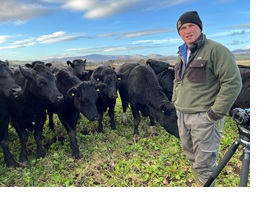 The options, costs and outcomes of forage crops and outwintering in Aberdeenshire will be tackled at the next Deeside Monitor Farm meeting, which is now open for booking.
The open meeting, Forage for Thought, starts at 12 noon on Wednesday 3 December at the Mid-Deeside Church Hall, Torphins. Kirsten Williams from SAC Consulting will help attendees explore forage crop options and consider costs for outwintering on their farms.
Kirsten has delivered a Monitor Farm Scotland Innovation Project, 'Maximising the Potential of Forage Crops in a Challenging Climate' and will be revealing the results at the meeting.
It includes case studies of four farmers growing and using a range of 10 forage crops last winter. The project gave the farmers a deeper understanding of their forage systems, including cost of production, nutritional analysis, nutrition advice, insight into the animals' requirements and the supply from the systems.
Attendees will hear more about the project and its outcomes for outwintering cows and calves in an interactive session led by Kirsten including videos, information and questions.
The meeting includes a visit to Little Maldron and Meikle Maldron farms with Duncan and Claire Morrison, the Deeside Monitor Farmers. Attendees will see in-calf cattle on deferred grazing and bales, then cows and calves or in-calf heifers on kale and bales, with the chance to question Duncan on the benefits and challenges of his forage systems.
The final part of the meeting will see Kirsten interview the four Aberdeenshire farmers, with opportunities for the audience to ask questions about forage crops in the NorthEast.
Peter Beattie, Monitor Farm regional adviser, says: "I am looking forward to hearing the results of this innovation project, and from the four farmers involved - Duncan Morrison, Jonny Stewart, Robert Marshall and Alex Stephen. It will be a great opportunity for attendees to find out how they got on, and Kirsten's session will be informative and thought-provoking for anyone considering the cost of outwintering their cattle."
Booking essential
|
|
|
UK - New CLA President Gavin Lane takes office
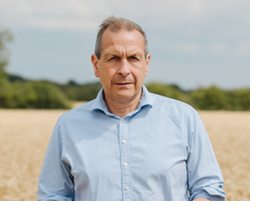 The rural economy has vast potential despite facing several short-term challenges, according to the new President of the Country Land and Business Association (CLA), Gavin Lane.
Norfolk farmer Gavin, who succeeds Victoria Vyvyan as the 57th president in the Association's 118-year history, has outlined the priorities that will be at the heart of his two-year tenure.
Immediate priorities will include campaigning against the government's inheritance tax changes and working to secure certainty around agri-environmental schemes. Gavin is also committed to championing the positive impact of land management and the importance of inter-generational family businesses on the wider economy.
Gavin said: "Long-term family businesses are a force for good, and I believe the rural economy has vast potential. There are massive opportunities in the countryside, including for young people, and if we can unlock the planning system that will make a big difference. CLA members offer some of the best land stewardship in the world, at a cost-effective price to the taxpayer, and can help offer solutions on everything from housing to flood management. I want to champion that."
On the most pressing priorities, Gavin said: "We are not giving up the fight on inheritance tax changes. The ELM schemes in England need to get back on track and we need to better understand what the government's vision is for the countryside, as it isn't clear or transparent. Businesses need stability; it leads to improved confidence and ultimately economic growth. We need a rural development policy that covers farming and family businesses, for the next ten years."
Gavin grew up on his family farm on the edge of King's Lynn in Norfolk. At 25, he started farming on a contract farming arrangement with his father and now owns and farms land on two separate arable farms totalling 1,200 acres, both with Countryside Stewardship schemes and using regenerative farming practices. He is involved with a family residential property portfolio and with his wife, Jane, has diversified into a holiday cottage letting business. Joe Evans has been appointed CLA Deputy President, while Eliza Ecclestone becomes Vice President.
For more information on the CLA visit https://www.cla.org.uk/
|
|
|
UK - Farmers to drive tractors on budget march on London
Farmers from across the UK are preparing to descend on Whitehall again, driving tractors into the heart of London in a major show of solidarity to demand 'fairness and a future for British farming'. The demonstration, set for November 26, to coincide with the chancellor's autumn budget, is being organised by Berkshire Farmers under the banner Farmers To London: Budget Day.
Organisers say the protest will highlight anger over proposed inheritance tax reforms due to take effect in April 2026, alongside wider concerns about the survival of family farms.
Under the changes, agricultural property relief (APR) will be capped at £1 million, with any value above that facing a 50% tax liability. Farmers warn the move could force the sale or breakup of long-established holdings as families struggle to meet higher bills.
Separate demonstrations are also planned across England on November 24, under the Farmers To Action campaign, billed as a 'Day of Unity' to highlight the impact of the reforms on the rural economy.
Read more
|
|
|
EU - Exports boost as Scottish cheese sold in Spain for first time
Scotland's dairy sector is celebrating a major export win with Scottish cheese going on sale in Spain for the first time. In a sales drive backed by a £20,000 Brand Scotland investment, the Scottish Dairy Growth Board, Scottish Development International and importer Iber Conseil have joined forces with the UK Government to help Scottish cheese producers enter the Spanish market.
Cottage cheese from Yester Farm Dairies Limited has this week gone on sale at Ametller Origen's 140 Catalan stores in a deal which will see 20 tonnes of the produce supplied in the first year. Scotland Office Minister Kirsty McNeill will today [Friday 14 November] join producers and export partners for a launch event at an Ametller store in Barcelona.
Iber Conseil is also working with other Scottish producers to bring a number of hard cheeses to the Spanish market over the coming months. UK Government Scotland Office Minister Kirsty McNeill said: Scottish cheese is already celebrated across the UK as a premium, artisan product. Now, thanks to UK Government Brand Scotland funding, it will grace tables across Spain - opening new markets and delivering real benefits for our cheese producers and rural communities.
As part of our Plan for the Change, the UK Government is fully backing Scotland's world class food and drink sector, including securing a trade deal with the EU that will remove red tape for Scottish businesses to export to the continent.
The Scottish Dairy Growth Board's Roddy Wilde said: "The speed with which market entry has been facilitated and the high quality of relationship built in a short time with Spain's major speciality cheese importer-distributor are testament to the agility and performance of our collaborative partnership with Scottish Development International as well as to the transformative aid of Brand Scotland funding from UK Government."
This year's UK-EU trade deal is expected to add up to £5.1 billion a year to the economy and increase the volume of UK exports of major agricultural commodities to the EU by 16%.
Read more
|
|
|
UK - FarmWater improves cow health while reducing water costs
A Somerset dairy farm is seeing significant improvements in animal health and productivity after taking steps to tackle a water quality issue.
Mary Cook of Smokey Farm, Taunton had a contaminated borehole, which meant she was relying on a mains system to supply around 38,000 litres of water a day to her 280 Holstein Friesians, which was proving expensive.
"We initially noticed that there may be a problem with the borehole water when the calves began scouring," Mary explains. "It was found to be contaminated, so we switched to the mains supply, which was costly, but we needed to address the issue."
Testing showed that the borehole water had a high level of bacterial load including major mastitis pathogens, so could not even be used in the parlour during milking or for plant washing.
Working with the vet-led FarmWater team, she installed the firm's chlorine dioxide treatment system 18 months ago. In the first 12 months of using it, there was a 37% reduction in mastitis in the herd, an 81% decline in bactoscans and a 28% decrease in somatic cell counts.
Given there were no other changes to the farm's infrastructure or management of the herd during this time, these changes were as a direct consequence of using clean water on the farm. Since then, the situation has continued to improve, with further reductions in clinical mastitis rate, bactoscan and bulk somatic cell counts.
"Since installing the system, we have seen an overall improvement in the cows' health and, in turn, milk yields," she says. "Improved water quality is also noticeable in the troughs, as once they have been cleaned out there is no algae build-up - we used to have a lot of algal blooms - but that is not happening now."
The fully managed non-toxic water treatment, which is already proven within the poultry sector, kills any pathogens in the incoming water fed to the farm and provides clean water all the way through the water infrastructure, including pipes, tanks and troughs.
It comprises a generator which creates chlorine dioxide in-situ, which will break down any organic matter including bacteria, viruses, protozoa and biofilms in the water and pipework. This makes the water safer and more palatable for the cattle and reduces labour for staff, as they don't have to clean the troughs as often. Once the water has been cleaned, any remaining chemicals break down into completely non-toxic constituents.
FarmWater's field team, backed up by vet support, continually monitor the system and can remotely assess the generator to make sure it is functioning correctly. "It is very easy to operate," Mary adds. "All we have to do is top up the chemical; it is automatically serviced and very simple to use."
For more information visit www.farmwater.co.uk
|
|
|
UK - Dairy campaign delivers strong returns for levy payers.
AHDB's Let's Eat Balanced dairy marketing campaign delivered impressive results from the January 2025 burst. Independent analysis shows the campaign generated £28 in additional dairy retail sales for every £1 of levy invested (Source: NIQ 2025 Marketing Mixed Model result).
This significant return for levy payers highlights the impact of strategic marketing efforts in promoting British dairy products.
The research carried out by NielsenlQ, focused on the Total Dairy category (milk, cheese and yoghurt). It revealed that the campaign achieved £11.9 million (Source: NIQ 2025 Marketing Mixed Model result) in incremental dairy sales, showing a strong return for investing levy payer funds in this area and ultimately shaping consumer attitudes to dairy.
Research into campaign performance showed television was the most effective channel for driving incremental sales, accounting for 44.2 per cent of the total (Source: NIQ 2025 Marketing Mixed Model result). Activity across Facebook, Instagram, YouTube and on-demand TV also performed strongly, delivering excellent returns. When adverts appeared on both traditional and on-demand TV, the impact increased further, with combined activity driving nearly two per cent additional incremental milk sales.
This joined-up approach helps keep British dairy visible and relevant to today's consumers, connecting with families where they find their information and inspiration.
Paul Flanagan, AHDB's Dairy Sector Director, said: "This is a great outcome for our levy payers and a clear demonstration of AHDB's ability to drive growth for the Dairy sector. It shows that when we invest in strategic marketing, we strengthen consumer trust, build long-term demand, and deliver real value back to our levy payers."
For more information, visit ahdb.org.uk/dairy
|
|
|
Diary date: 2026 Semex International Dairy Conference
 The 2026 Semex International Dairy Conference will be held between the 11th and 13th January 2026, at its usual home of The Radisson Blu hotel in Glasgow, Scotland.
Chairperson for the event is Rory Christie, South-West Scotland Dairy Farmer, founding Chair of the Milk Suppliers Association, Chair of the Scottish Agricultural Organisation Society Ltd and also new chair of the recently launched Association of Dairy Producer Organisations. Tasked with keeping the conference proceedings running smoothly, Rory is thus well qualified to keep the excellent line-up of speakers on track, to ensure delegates are informed, challenged and entertained.
The speakers will touch on subjects from politics and policies to the practicalities of milk production, and to the economics and growth potential of dairy, and will share their experience, views, opinions and outlook for the future of UK and global dairying. They include:
Direct from the farm on driving their businesses forward:
- STEFFAN RICHARDS, UK dairy farmer, South Wales;
- CLAIRE BECKETT, UK dairy farmer, Northern Ireland;
- RENE CORNELISSEN, Danish dairy farmer;
- KEVIN LAWRIE, UK dairy farmer, Scotland;
- JACK ALLWOOD; UK dairy farmer, Cheshire.
From the dairy market place
- SERGE MOLY, Lactalis;
- CHRIS WALKLAND, Journalist, Commentator and Market Analyst;
- CHRISTOPHE LAFOUGÉRE, CEO, GIRA.
On politics and policies
- TOM BRADSHAW, President, NFU;
- TIM FARRON MP, Liberal Democrats;
- PAUL VERNON, Chairman Dairy UK.
Bringing a global viewpoint;
- GILLES FROMENT, President IDF (International Dairy Federation)
- MELISSA BOWERS, Semex Alliance;
- MANUEL SOARES, CEO, Milc Group.
Having the last word:
"The Semex Conference is always a fantastic and positive way to start the New Year," concludes Michael Dennison, Semex UK's National Sales Manager. "Semex is delighted to once again provide a platform to the industry and arm our delegates with the knowledge they need to be able to Call the Shots in the year ahead. We look forward to welcoming our impressive line-up of speakers and having the opportunity to catch-up with friends and colleagues."
Bookings can be made over the phone on (01292) 670752, via the web at https://semex.formstack.com/forms/the_semex_conference_2026 or through the QR code below.

|
|
|
UK - Vets join farmer cancer awareness campaign
Vets will be encouraged to speak to their farming clients about their health as part of a new project aiming to raise cancer awareness in rural areas.
The Association of Veterinary Surgeons Practising in Northern Ireland (AVSPNI) and The North of Ireland Veterinary Association (NIVA) have joined the 'Nip it in the Bud' campaign, a collaboration between Macmillan Cancer Support and The Farming Community Network (FCN).
Part of the Rural Communities Cancer Project, it encourages farmers and others living in rural communities to seek earlier diagnosis of cancer and other health conditions to facilitate better outcomes and improve chances of survival. As part of the collaboration, which was announced at AVSPNI Autumn Conference, vets will receive CPD on human health and communication skills to conduct healthcare conversations with farmers.
They will also hand out leaflets raising awareness of the importance of early diagnosis and urging farmers to contact doctors.
Research from Newcastle University suggests that people living in rural communities often present with more advanced cancer when they are diagnosed compared with their urban counterparts, and they are also said to be 5% less likely to survive.
More than a third (approximately 36%) of Northern Ireland's population lives in a rural population, according to the Department of Agriculture, Environment and Rural Affairs.
Read more
|
|
|
Ireland - Tirlán dedicates €126M to scaling Irish whey protein production facility
Tirlán is injecting €126 million (US$146 million) into a state-of-the-art whey processing facility at its Ballyragget site in Kilkenny, Ireland. As the dairy company's largest value-add investment to date, the capital is directed toward its whey processing and product innovation capacities.
The new facility will focus on the production of an "advanced" nutritional whey protein product portfolio, including clear whey protein isolate, which is featured in trending ready-to-drink sports beverages like protein lemonade.
Tirlán expects the water-neutral and carbon-efficient site to be operational by mid-2027. "Today marks another milestone in the proud history of Tirlán and the Ballyragget site which has been synonymous with dairy innovation for many years now," says Ireland's Minister for Agriculture, Food, and the Marine, Martin Heydon, who attended the facility's announcement event.
"This multi-million-euro investment in whey protein processing capability represents not just a commitment to Tirlán's future, but to the Irish dairy industry as a whole. Whey has transformed from what was once considered just a by-product of cheese making into one of the most valuable and versatile nutritional ingredients in the world."
Read more
|
|
|
|
| |
BRITISH DAIRYING
ENSURE YOU RECEIVE EVERY COPY
British Dairying is available by subscription at £70.00 posted to UK addresses,
£90.00 for Europe, £115.00 for the Rest of the world
or £30 +VAT for British Dairying Online only
|
|
|
QUOTE
"People don't notice whether it's winter or summer when they're happy."
Anton Chekhov - Russian playwright, short story writer, 1860-1904
|
|
| |
|
|
|
You are receiving this email because you are a registered reader of British Dairying and we are pleased to send you extra information to supplement the journal.
|
|
|
British Dairying,
WB Publishing Ltd
Priory Cottage, Eastbourne Road Ridgewood East Sussex TN22 5ST
WB Publishing Ltd is registered in England and Wales, Registration No 2951727
|
|