|
|  |
|
March 3, 2026
|
|
UK - Global appetite for UK dairy sees exports hit record high of £2.2 billion
Latest figures from HMRC revealed the total value of UK dairy exports in 2025 was £2.2 billion - up 16.6% on the year. Total UK dairy export volume for 2025 also increased by 9.1% to 1.35 million tonnes year-on-year.
The importance of the EU was highlighted, with shipments to markets in the trade bloc accounting for 73.9% of the total value of UK dairy exports.
The value of UK dairy exports to non-EU markets also returned impressive figures, supported by the fantastic work of AHDB's in-market representatives in Asia and the Middle East. In particular:
- The Gulf Cooperation Council (GCC) has overtaken the USA as the largest market outside of Europe, totalling £99 million - up 40%
- USA totalled £97.2million - up 13.8%
- Hong Kong bounced back to £11 million - up 27.8%
- Malaysia up 115% to £10.3 million
- Singapore strong at £8.9 million - up 1%
The latest figures followed a busy year for the Agriculture and Horticulture Development Board (AHDB) International Trade Development team, which delivered a comprehensive programme of activity in 2025 to promote exports of British dairy.
In total, the AHDB International Trade Development team for the dairy sector, supported by its in-market overseas representatives, delivered 28 events from San Diego to Singapore in 2025, including seven retail promotions and eight marketing events, marking their busiest year to date.
We look forward to continuing this momentum in 2026 with our largest ever presence at Food and Hotel Asia (FHA) in Singapore in April and driving demand for British dairy from parlours in the UK to plates overseas.
Exports are critical to the UK dairy industry by providing a long-term outlet for surplus production. They play a huge role in helping to strengthen demand, build price resilience and support long term profitability. Every extra tonne of cheese, yogurt or other dairy product sold overseas helps balance supply at home.
In addition to FHA in Singapore, 2026 will also see AHDB flying the flag for British red meat at the Annual Meat Conference (AMC), in Maryland, USA, and in Japan in March. The team will also support dairy exports businesses at SIAL Paris in October - this year's largest trade show.
Learn more about dairy exports work
|
|
|
|
|
UK - Government relaunches green payment scheme for farmers after sudden closures
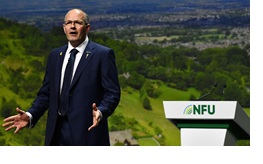 Farmers in England will continue to be paid for environmental work after the government confirmed details of its flagship green funding scheme, which is being relaunched after its sudden closure.
Environment Secretary Emma Reynolds told the National Farmers' Union (NFU) conference that the Sustainable Farming Incentive (SFI) - which replaced EU subsidies after Brexit - would reopen after being shut down with little warning in March 2025.
Reynolds said the new scheme would deliver both environmental benefits and boost food production. The NFU welcomed its return, having described last year's closure as a "shattering blow" and warning that farmers might stop doing environmental work if not paid.
The SFI is the scheme through which farmers in England are paid to manage land to protect soil, restore hedgerows and boost nature recovery. Reynolds told the conference that the new scheme would be smaller than the previous iteration, reducing the number of paid-for environmental actions to 71 from 102.
She said individual farm agreements would also be capped at £100,000, but they would be made more accessible to a wider range of farmers, especially tenant farmers. The new scheme "weeded out" those paid-for actions that were not delivering enough for the environment or food production and that it would "support food production not undermine it", she added.
According to the Department for Environment, Food and Rural Affairs (Defra), reforms to the SFI programme have been designed to share funding more fairly, after it was assessed that one quarter of the money was going to just 4% of farms.
Payments for moorland grazing will increase and smaller farms and those without current environmental land management agreements in place will be allowed to apply first in June, with other farmers allowed to apply in September.
Tom Bradshaw, President of the NFU, said the reformed SFI scheme appeared "to strike the right balance between simplifying the process and maintaining flexibility.
"What is pleasing is that Defra has taken the NFU's feedback on board in a number of areas where we were concerned about early plans for the new SFI", he added.
www.bbc.co.uk/news/articles/cqj9y9xw5v8o
|
|
|
|
|
UK - Wettest start to 2026 raises mineral leaching concerns ahead of turnout
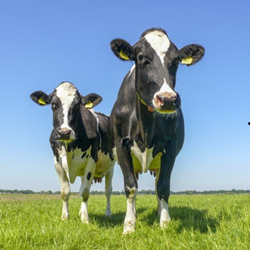 One of the wettest starts to the year on record is raising fresh concerns about mineral deficiencies in grazing livestock this spring, with advisers warning farmers to assess trace element status carefully ahead of turnout.
Met Office data shows the UK as a whole recorded 17% more rainfall than the long-term meteorological average in January, with some regions experiencing near-record-breaking totals, such as Cornwall which has provisionally recorded its wettest January on record.
With soils saturated for prolonged periods, advisers warn that mineral leaching and reduced plant uptake could pose challenges at turnout.
Nia Williams, Commercial and Technical Manager at Nettex, says prolonged waterlogging can significantly affect trace element availability.
"When soils sit wet for extended periods, oxygen levels are reduced and root function is compromised," she explains. "This can limit mineral uptake by the plant. At the same time, we can see increased soil intake and therefore higher intakes of antagonists such as molybdenum and iron, which interfere with the absorption of key minerals like copper, manganese and zinc in the animal."
Rapid grass growth later in the spring may also compound the issue, she adds. "Fast-growing grass can dilute trace element and magnesium concentrations. Combined with low dry matter and high potassium and nitrogen levels, this increases the risk of deficiencies and conditions such as grass staggers," says Mrs Williams.
Unlike some minerals, magnesium cannot be stored effectively in the body, meaning cattle require consistent daily intake during high-risk periods.
With many farms preparing for turnout, advisers suggest this is an ideal time to reassess mineral strategies.
Spring calving dairy and suckler cows are at particular risk of developing hypomagnesemia (grass staggers) post-turnout. Every litre of milk requires around 0.11g of magnesium to produce, therefore during early lactation, magnesium requirements for a typical dairy cow are doubled compared to the dry period.
To prevent, every producer should consider their grazing and magnesium supplementation strategies, which will differ from trace element provision. There are several types of magnesium supplement available.
"Where infrastructure allows, producers may choose to add a magnesium liquid, such as Rumag Aqua from Rumenco, to the drinking water. If this is to be done, all accessible water must be supplemented, as magnesium can be unpalatable," adds Mrs Williams.
While forage testing provides useful guidance, it only offers a snapshot of trace element status. Where farms have known trace element imbalances this year's wet conditions are likely to amplify those issues.
Long-acting boluses are increasingly being used to provide consistent trace element supplementation, ensuring every animal receives the required intake
"Turnout is a logical time to administer a bolus," says Mrs Williams. "It provides peace of mind that cattle are supported during a period when mineral supply from grass can be unpredictable."
Production gains seen in on-farm trials
On-farm trials in Northern Ireland have demonstrated performance benefits from bolusing cattle with EnduraBol Cattle, which provides sustained release of six trace elements (Copper, Cobalt, Iodine, Selenium, Manganese, Zinc) and three vitamins (A.D.E) for up to 240 days.
At Ashwoods Farm in Co. Fermanagh, 20 Angus-cross steers were split into control and bolused groups at turnout. After 183 days at grass, cattle receiving two EnduraBol Cattle boluses showed a 16.5% increase in liveweight gain, averaging 27kg additional liveweight per animal compared with the control group.
"Trace element status underpins immunity, growth and fertility," says Mrs Williams. "In years like this, when mineral availability is uncertain, proactive supplementation can help protect performance and maintain momentum through the grazing season. Mineral planning is certainly something that should not be left to chance."
Nettex
|
|
|
|
|
UK - Farmers attack Tesco for putting food security at risk
Farmers have accused Tesco of putting Britain's food security at risk by leading a "race to the bottom on price".
The boss of the UK's biggest supermarket was grilled by senior figures from across the agriculture sector in February, who accused the business of effectively "giving away" British produce on the cheap.
Farmers said the low prices supermarkets pay for their produce pose a threat to their financial viability, restricting their capacity to safeguard food production in the decades to come.
Speaking at the National Farmers' Union (NFU) conference, Ashwin Prasad, Tesco's UK Chief Executive, praised farmers' resilience and described Tesco as "a business built on partnerships". However, Joe Stanley, of the Allerton Project conservation trust, told Mr Prasad that farmers are struggling to stay afloat because of shrinking revenues.
He highlighted that more than one in three farming businesses lost money in 2024, claiming that many "work for less than the minimum wage".
He said: "What will it take for the retail sector to accept that its business model - ultimately a race to the bottom on price - is broken at the foundations and will not be able to continue loading all the risk and cost of that cheap food system onto the shoulders of farmers and growers if it wants to survive?
"Or can we expect to see one-kilogram packs of potatoes and carrots literally given away this Christmas?"
www.telegraph.co.uk/business/2026/02/25/farmers-attack-tesco-for-putting-food-security-at-risk/
|
|
|
UK - Galebreaker launches a retrofit ventilation ridge
 UK - Galebreaker launches a retrofit ventilation ridge
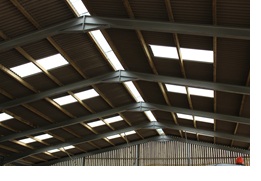
Livestock environment specialist, Galebreaker, has launched VentRidge - a cost-effective ventilation system designed to exhaust warm, contaminated air up to four times more effectively than traditional cranked roof designs.
Suitable for both new sheds and to retrofit to existing buildings, the VentRidge is engineered to maximise the 'stack effect' that circulates fresh air. This helps reduce the risk of respiratory issues and heat stress, while optimising herd performance.
Galebreaker's UK and Ireland sales manager Will Johnson identifies that many livestock buildings suffer from insufficient air flow, frequently providing only 20% of the natural ventilation required.
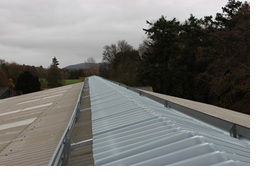 "A well-designed ridge should be a key element of any natural ventilation strategy, because if dirty air can't leave the building efficiently, there are real implications for animal health and productivity," says Mr Johnson.
"We developed VentRidge as a cost-effective solution that can easily be retrofitted to ensure better ventilation for existing livestock buildings."
Maximised ventilation, designed around real buildings: VentRidge has been designed with aerodynamic performance in mind to maximise the benefits of crosswinds. As wind passes across the top of the ridge, the baffles encourage the airflow to accelerate and create a low-pressure zone. That low pressure increases draw - effectively boosting the 'suction' that draws stale air out of the building.
Practical, self-fit, and built to last: VentRidge installation can be carried out from inside the building, helping minimise the need for expensive roof safety netting and it comes with a ten-year warranty.
"One of the biggest barriers to upgrading ridges in older buildings is the difficulty (and cost) of working at height on fragile roof surfaces. VentRidge removes the need for extensive structural work, expensive mechanical ventilation, or rebuilding a shed from scratch," add Mr Johnson.
"If you're investing in better housing conditions, the ridge is one of the highest-impact places to start - because it's the part that lets the building breathe."
galebreaker.com/agriculture/natural-ventilation-systems/ventridge/
|
|
|
|
|
UK - AHDB-funded training places available for first-time Open Farm Sunday hosts
AHDB are offering fully funded training places to support farmers hosting Open Farm Sunday for the first time, helping them confidently open their gates to the public ahead of this year's 20th anniversary on 7 June.
As a long-term supporter of Open Farm Sunday, AHDB are funding 20 places on a bespoke Countryside Education Visits Accreditation Scheme (CEVAS) training course.
The tailored three-day accredited course focuses on building confidence in public engagement.
It will give farmers the communication skills, practical tools and structured planning to create safe, fun and memorable on-farm experiences.
Who can apply: Applications are open to all beef, sheep and dairy levy payers who are planning to host Open Farm Sunday for the first time.
Training dates and locations: Leeds: 12, 13 and 25 March; Cambridge: 18, 19 and 26 March. Participants will leave with a clear event plan and a nationally recognised accreditation.
To apply for a funded CEVAS training place, email education@ahdb.org.uk
To contact the Open Farm Sunday team directly, email OpenFarmSunday@leaf.eco or call 07912 463151
Annabel Shackleton, Open Farm Sunday Manager at LEAF (Linking Environment And Farming), said:
"These fully funded CEVAS training places are a fabulous opportunity for newcomers to Open Farm Sunday to build their confidence and feel fully prepared to welcome the public onto their farms.
"Opening your gates for the first time can feel daunting, but with the right preparation and support, it becomes an incredibly positive and rewarding experience.
"We're incredibly grateful to AHDB for helping more farmers take part in our 20th Open Farm Sunday."
Find out more about hosting an event
|
|
|
UK - NFU elections 2026: Meet your new officeholder team
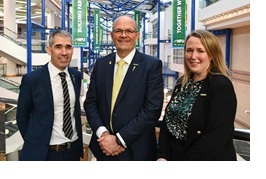 Tom Bradshaw has been re-elected NFU President. Tom, an arable farmer from Essex, has been part of the NFU officeholder team for six years, having served as President for the past two years and holding both the Vice-president and Deputy President positions before that. He will be joined by Paul Tompkins as Deputy President and Robyn Munt as Vice-president.
NFU President Tom Bradshaw said: "I am deeply honoured and extremely proud to have been re-elected President of this superb organisation. I would like to thank both David and Rachel for their commitment and service to the NFU and its members.
"The past 18 months have been among the most challenging in recent memory for British farming. Throughout this time, the NFU has been at the forefront of fighting for our industry and none of it would have been possible without our members. The success we have achieved has been down to working collaboratively and showing a united front. Together we have been stronger.
"With the support of the public, we will continue to campaign hard on our members' behalf to ensure the right policies are in place in order to create an environment for a more resilient, thriving and profitable British farming industry, and secure long-term food security for the UK."
NFU Deputy President Paul Tompkins said: "Every farmer and grower, whatever their sector, scale or system, wants the same essentials; fairness, stability and the chance to build a future. Our union is at its best when it operates as a team, our members, officeholders and staff all pulling in the same direction, working with those that share our values.
"My focus is now clear - deliver practical results for farmers, work collaboratively, keep a sharp commercial outlook and build confidence across the farming community."
NFU Vice-president Robyn Munt commented: "I'm incredibly proud and honoured to have been elected to represent Britain's farmers as part of the NFU officeholder team.
"As a fifth-generation beef, sheep and arable farmer, I know what a challenging time it has been for the farming industry with confidence at an all-time low due to volatile costs, threats of disease and extreme weather.
"For me, the next two years are about working with our members to create a landscape for resilient, productive and profitable farming businesses to thrive so we can continue producing sustainable food for the nation alongside protecting and enhancing the great British countryside."
NFUOnline
|
|
|
Australia - Industry targets AUD588m profit boost
Australia's dairy sector is charting an ambitious profitability reset, with Dairy Australia unveiling a strategy to deliver an additional $588 million to farmers over the next five years. The plan comes as industry data show a stark structural shift: while national farmgate production value has risen 25% to just under $6 billion in 2024-25, the number of dairy farms has fallen by 25% over the same period. For processors, producers and dairy market analysts, the message is clear - productivity gains must offset consolidation.
Chief executive Matthew Shaffer described the new targets as deliberately bold, designed to restore visibility and confidence in dairy farm profitability. The overarching objective is to help most farms achieve a 5-6% return, strengthening competitiveness against other agricultural sectors and improving industry perception at a time when workforce attraction and retention remain pressing challenges.
At the core of the plan are four measurable 2030 goals aimed at lifting on-farm performance. Dairy Australia wants to increase earnings before interest and tax (EBIT) by 30 cents per kilogram of milk solids, taking returns from $2.27 to $2.57/kgMS. It also seeks to boost homegrown feed utilisation by one tonne per milking hectare, lift genetic gain by $90 per cow entering the herd, and raise the proportion of heifers reaching a third lactation and beyond by 12%. Together, these metrics focus squarely on feed efficiency, herd genetics, longevity and margin improvement.
en.edairynews.com/dairy-australia-targets-588m-profit-boost/
|
|
|
|
|
Europe - Arla approves record €296m payout to farmer owners
Arla Foods has announced the highest-ever supplementary payment to its farmer owners, reflecting a strong financial performance in 2025 and underscoring its commitment to supporting sustainable farming and local milk production.
The cooperative's Board of Representatives approved a total payout of EUR296 million, equivalent to 2.2 eurocents per kilogram of milk supplied, including interest on individual contributed capital. The payment exceeds the guaranteed supplementary level under Arla's retainment policy and is part of the cooperative's strategy to return profits to owners while enabling investment in farm development and sustainability initiatives.
Jan Toft Nørgaard, Chair of Arla, said the record payout demonstrates the company's financial stability and its ability to deliver competitive returns to farmers across Denmark, Sweden, the UK, Germany, Belgium, Luxembourg and the Netherlands.
"I am very pleased that the board of representatives have decided to pay out the highest supplementary payment ever to our farmer owners, demonstrating Arla's financial strength and stability," he noted. "The payment is part of delivering a competitive return to our farmers to support them in continuing to develop their farms, invest in sustainability and continue local food production".
Foodbev.com
|
|
|
India - World's leading dairy producer, struggles to rid market of adulterated milk
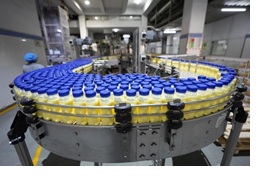 Water is often added to Indian milk, but so are chemicals and vegetable oils. The quality of Indian dairy products is therefore frequently questionable, a fact highlighted by a recent scandal in the state of Gujarat.
In India, a country where cows are sacred, the dairy market is awash with adulterated products. The most recent scandal occurred on February 8. In Gujarat, one of the country's leading dairy producing states, the local police crime-fighting task force in Sabarkantha discovered that a factory had been manufacturing synthetic milk and buttermilk for nearly five years using chemicals. Employees at Shree Satya Dairy Products had been mixing a host of dangerous substances into their products, including laundry detergent, urea-based fertilizer, caustic soda, refined palm oil, soybean oil, whey powder and skimmed milk powder. For years, hundreds of people in the Sabarkantha and Mehsana districts had consumed this concoction.
The move was purely profit-driven: With just 300 litres of real milk, the facility produced nearly 1,800 litres of artificial milk each day. The Food Safety and Standards Authority of India (FSSAI) reported that the hazardous milk stocks had been destroyed on site.
https://www.lemonde.fr/en/environment/article/2026/02/23/india-world-s-leading-dairy-producer-struggles-to-rid-market-of-adulterated-milk_6750764_114.html
|
|
|
Sweden - Arla Foods reveals largest-ever investment in Swedish dairy as protein demand surges
Arla Foods has made its largest-ever investment in Swedish cheese dairy, citing rising global demand for protein and the country's commitment to increasing food production as key factors. The Danish-Swedish multinational dairy cooperative has committed approximately EUR300 million to a new production site in Götene, intended to boost capacity and supply chain resilience, and accelerate product innovation.
Innova Market Insights identified "Powerhouse Protein" as its top F&B industry trend this year, finding that nearly 60% of global consumers say they are actively pursuing protein for overall health. The growing demand for nutrient-dense products, spurred by GLP-1 usage, is creating new opportunities for dairy ingredient manufacturers.
"Global demand for reliable, nutritious protein continues to grow, and dairy plays a vital role in healthy diets and resilient food systems," says Arla Foods CEO Peder Tuborgh. "We are investing at scale to build modern, efficient capacity that serves consumers across our markets. Götene will be a cornerstone in this network."
"The clear political commitment in Sweden to increase food production and self-sufficiency has been a key factor for this decision," he adds. The Götene site is expected to boost Swedish cheese production, jobs, food security, and regional growth.
www.foodingredientsfirst.com/news/arla-foods-investment-swedish-cheese-dairy.html
|
|
|
UK - Dairy genomic evaluations pass one million milestone as crossbred genomics move into delivery
'UK dairy genomic evaluations have reached a major milestone, with more than one million genotypes now included in our national evaluation programme,' report AHDB.
The achievement demonstrates how genomics has become a core part of dairy breeding in the UK. Growing uptake across the industry is giving farmers greater confidence in genomic information to support faster and more accurate breeding decisions.
Funded largely through the dairy levy, our genomic evaluation programme provides an independent, industry-wide service for UK dairy farmers.
Ongoing investment in data, systems and collaboration ensures access to reliable genomic information that supports sustainable genetic progress across herds of all sizes and breeding systems.
Alongside this milestone, we also marked the availability of genomic evaluations for crossbred females, widening access to genomic information for herds using crossbreeding as part of their breeding strategy.
Initially, genomic evaluations for crossbred females are available for a targeted set of key traits: Production; Lifespan; Somatic cell count (SCC); Fertility index; Maintenance.
These traits have been prioritised for their direct relevance to herd health, efficiency and farm profitability.
This year, the service will be expanded to include a wider range of traits, with plans also in place to extend genomic evaluations to crossbred males.
This phased approach is designed to maintain robustness and reliability while allowing farmers and industry partners to build confidence in the data.
Find out more about UK genomic evaluations and crossbred genomics
|
|
|
UK - Grants announced for Mendip Hills farmers
Farmers in the Mendip Hills National Landscape are set to benefit from continued government backing after Defra committed to funding local grants until March 2029.
The funding means the National Landscape Team will allocate around £270,000 each year to projects helping farmers adapt to climate change, restore nature, protect landscape character and improve public engagement across the hills.
The grants are delivered through Farming in Protected Landscapes (FiPL), a flexible programme supporting projects that enhance England's protected landscapes while creating a lasting environmental legacy. Since its launch in 2021, FiPL has supported 11,000 farmers across 5,500 projects nationwide. Achievements include the planting of 362 kilometres of new hedgerows.
In the Mendip Hills alone, £1.4 million has already been invested. The funding has delivered more than 12 kilometres of new or restored hedgerows, 38 new or restored ponds, over 1.5 kilometres of drystone wall restoration, 15 kilometres of improved or newly created paths, and 704 hectares of wildlife-rich habitat now managed for biodiversity.
www.southwestfarmer.co.uk/news/25865084.grants-announced-mendip-hills-farmers/
|
|
|
Canada - Group Bel Canada and Logiag to support decarbonization of dairy production
Group Bel Canada has formed a strategic partnership with Logiag aimed at supporting the reduction of greenhouse gas emissions associated with dairy production in Canada.
This long-term partnership is supported by a CAD3.7m investment over five years from Group Bel Canada to provide concrete support to dairy farms in adopting sustainable and measurable practices, contributing to the responsible evolution of the Canadian dairy sector.
Bel Group has set ambitious decarbonization targets across its entire value chain, including a 25% reduction in indirect greenhouse gas emissions and sourcing 100% of its milk and fruit from farms transitioning to regenerative agriculture by 2030.
Upstream dairy production represents approximately 35% of the company's total emissions, making it a priority lever for action. To contribute concretely to these objectives, Group Bel Canada has partnered with Logiag and its Dedicated Dairy Farms program.
This initiative is based on a holistic and distinctive approach, working directly with a cohort of 34 dairy farms in Quebec and across the dairy value chain. It combines on-farm greenhouse gas measurement, the development of personalized roadmaps and the adoption of sustainable agricultural practices to generate measurable, long-term impacts for producers.
The resulting emission reductions are quantified and verified using an internationally recognized methodology validated by SustainCERT, ensuring the credibility and robustness of the results.
www.fdiforum.net/mag/production/group-bel-canada-and-logiag-to-support-decarbonization-of-dairy-production/
|
|
|
Global - The world's biggest food company doesn't want to make ice cream anymore
 The world's biggest food and drinks maker said recently that it was in "advanced negotiations" to sell its remaining ice cream business to its joint venture partner, Froneri.
The division, which includes brands such as Häagen-Dazs and Drumstick, is valued at just shy of USD1.3 billion. Nestlé plans to sell the brands to UK-based Froneri over the next year, but remain in the joint venture. Nestlé's share price gained 3% in morning trade in Zurich, before giving up some of those gains.
In full-year earnings, Nestlé said it would focus on its coffee, pet care, nutrition and food and snacks businesses. "We are focusing our portfolio on four businesses, led by our strongest brands," Navratil said in a statement.
On a call with reporters, he said that Nestlé's six ice cream brands were a "distraction" from the rest of its portfolio, which spans cereal, coffee, confectionary and frozen foods, to name a few.
"We held on to those six businesses because we thought we could drive growth (but) they don't have any global scale," he added. "We cannot drive (growth) the same way that Froneri can."
Froneri was created a decade ago by Nestlé and UK ice cream maker R&R. In 2019, Nestlé sold its US ice cream unit to Froneri for USD4 billion.
Nestlé is not the first major consumer goods company to ditch ice cream . . .
edition.cnn.com/2026/02/19/business/nestle-selling-ice-cream-business-intl
|
|
|
|
| |
BRITISH DAIRYING
ENSURE YOU RECEIVE EVERY COPY
British Dairying is available by subscription at £70.00 posted to UK addresses,
£90.00 for Europe, £115.00 for the Rest of the world
or £30 +VAT for British Dairying Online only
|
|
|
QUOTE
"The beautiful spring came; and when Nature resumes her loveliness, the human soul is apt to revive also."
Harriet Ann Jacobs, abolitionist and writer, 1813-1897
|
|
| |
|
|
|
You are receiving this email because you are a registered reader of British Dairying and we are pleased to send you extra information to supplement the journal.
|
|
|
British Dairying,
Grove House Media Ltd
Priory Cottage, Eastbourne Road Ridgewood East Sussex TN22 5ST
Grove House Media Ltd is registered in England and Wales, Registration No 16722598
|
|