|
|  |
|
August 19, 2025
|
|
UK - NI could see milk shortages due to industrial action
Northern Ireland could experience milk shortages as a result of industrial action at Dale Farm, a trade union has warned.
Unite the Union has confirmed strike action at the dairy producer will begin Wednesday, August 20.
Engineers and drivers at multiple production sites will participate in an initial three-day walkout with a further three strike days scheduled for the following week. A planned escalation to a five-day strike is in place for the week after that, with all-out strike action commencing from the fourth week if a resolution is not reached.
"Management knows what is needed to avoid this outcome" - Simon Hall (Unite). The move follows a formal members' ballot which saw 90% of drivers and 89% of engineers voting in favour of the action as row over pay rumbles on. The union said compensation for Dale Farm workers is lower than industry comparators in NI.
Unite General Secretary Sharon Graham said, "Dale Farm engineers and drivers are determined to win a needed pay increase. Dale Farm is a highly successful enterprise and can afford to pay their skilled workforce properly."
However, a spokesperson for Dale Farm insisted there would be no interruption to milk supplies as a result of the strike action. "We value all our staff and take pride in our employee relations. We believe we have made a very fair offer to this small group of our workforce, and we urge them, and Unite, to reconsider their decision," they said.
BelfastTelegraph
|
|
|
|
|
UK - Entrepreneurs in Dairying applications open
Applications are now open for the 2025 Entrepreneurs in Dairying programme, which starts in late September.
Entrepreneurs in Dairying is a business training programme for aspiring dairy producers organised by the Royal Association of British Dairy Farmers in collaboration with The Andersons Centre, AHDB Dairy and the NFU.
The course provides commercial experience and learnings in: People development; Financial skills; Business management; Taxation; Business structures including partnerships, joint venture and tenancies.
Now in its twelfth year, the course has seen over 450 applicants complete it, all from varying backgrounds within or related to the industry.
It is open to anyone involved in, or looking to be involved in, the dairy industry.
Please note applications close on 30 August and there are limited spaces per co-hort. Applicants must be 20 years old or over.
Find out more and apply
|
|
|
UK - Silage growing season of extremes
Second cut silage analyses clearly highlight how the weather has influenced silage quality and potential rumen efficiency. 2025 has delivered a forage season marked by extremes and the impact is now clearly visible in both fermentation quality and how forages will perform in the rumen observes Nacia Bonnick from Trouw Nutrition GB. observes Nacia Bonnick from Trouw Nutrition GB.
"According to Met Office figures Scotland, Wales and the North West received 20 - 50% more rainfall than average, enabling strong second cuts. On the other hand, the South East and Midlands received just 30-40% of normal, severely stalling regrowth.
"These weather differences have translated directly into grass silage quality and quantity. Dry matter contents ranged from 33.6% in Scotland to over 43% in the East Midlands, reflecting both rainfall levels and the weather in the wilting windows."
Overall, fermentation quality in 2025 is more variable than 2024. While wetter northern regions generally benefitted from more favourable conditions for ensiling, drier regions, particularly the South East and East Midlands, faced greater challenges in achieving stable, well-fermented silage.
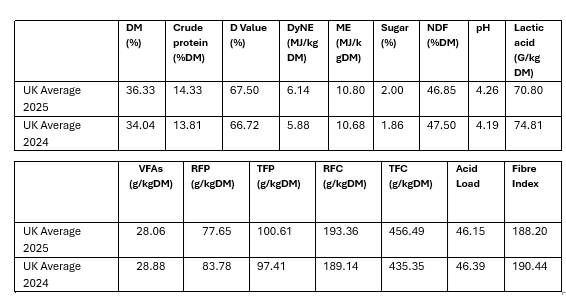
The growing and harvesting conditions have a direct impact on how well crops will be preserved. Lactic acid remains the key marker for desirable fermentation, driving rapid pH reduction and anaerobic preservation. Average lactic acid levels have declined from 74.8 to 70.8 g/kg DM, indicating a general fall in fermentation quality.
Regionally Scotland, Yorkshire and the West Midlands crops show strong lactic acid production, suggesting rapid acidification and good aerobic stability. However, in the West Midlands, high lactic levels were accompanied by elevated total volatile fatty acids (VFAs), which may indicate less efficient fermentation.
In contrast, the South East experienced challenges due to excessively high dry matter contents. These drier silages struggled to acidify quickly, delaying pH drop and increasing the risk of aerobic spoilage, especially during feed out. A similar trend was seen in the East Midlands, where high pH values combined with low lactic acid and elevated VFAs raise concerns around silage stability and nutrient preservation.
"Most regions still achieved an acceptable pH overall, but drier southern and midland silages showed signs of slower fermentation, leaving them more susceptible to yeast and mould development," Ms Bonnick continues.
She explains that rumen kinetics refers to how feed materials move through and are processed in the rumen, directly affecting how feeds will perform in the diet. In a year marked by tight forage availability and stressed grassland, understanding rumen kinetics is more important than ever.
"Acid load has remained relatively stable but stayed elevated in regions like Scotland and the West Midlands, suggesting the need for buffering strategies to avoid ruminal acidosis.
"On a more positive note, Rapidly Fermentable Carbohydrate (RFC) levels have improved which will support stronger rumen microbial activity and fibre digestion. Additionally, Total Fermentable Protein (TFP) has increased, boosting protein availability but also raising the risk of excess rumen ammonia, which may require attention to the energy-protein balance in diets.
As expected, national dry matter levels have risen compared to 2024 due to improved harvesting conditions. However, this increase comes at the expense of fermentation quality. "When it comes to crude protein, regional differences have widened. The national protein average has edged up slightly from last year."
In terms of energy, ME has risen slightly on average, but again varies by region. Scotland, the South East and West Midlands all averaged D-Values of ?68 and ME >10.9 MJ/kg, supporting improved energy intake and animal performance. However, the East Midlands recorded just 10.05 ME and a D-Value of 62.8, suggesting later cuts or over-mature swards with reduced feed value.
With silage supplies under pressure and fermentation quality under scrutiny, proactive planning will be essential this winter. Ms Bonnick advises that attention to detail will be needed to make the most of silages and benefit from the current stronger milk price. She emphasises that regular analysis of silages by clamp and by cut will be essential.
"When formulating diets, use rumen kinetic indicators such as Rapidly and Total Fermentable Carbohydrates and Protein, Fibre Index and Acid Load to balance rations for optimum rumen efficiency. High sugars and fermentable carbohydrates are a positive but require careful balancing for optimal fibre index and acid load."
TrouwNutrition
|
|
|
LISTEN WHILE YOU WORK - British Dairying Audio - PILOT ISSUE
As a result of reader research and continuing innovation to help meet the needs of the dairy industry British Dairying is launching an audio version of the monthly magazine.
An audio version of the August issue with selected articles and features can be accessed via the website by email notification QR codes and Spotify. This enables you to listen on iphone or PC.
To read the pilot audio version click here
To help us when you have had chance to listen please complete the short survey to help us improve the service to meet your needs.
|
|
|
UK- Six new graduates enter AHDB top 10 proven £PLI ranking
Six new daughter-proven sires graduate into the top 10 ranking for Profitable Lifetime Index (£PLI),
These Holstein bulls move up from the genomic young bull rankings and now demonstrate, through their daughters, how they can contribute to improving health, fertility and production efficiency across UK herds.
The top four positions are occupied by newcomers, with OCD Trooper Sheepster leading the way. With a PLI of £779, Sheepster has strong Predicted Transmitting Abilities (PTAs) for production, (47.8kg fat, 35.7kg protein) alongside an impressive lifespan improvement of +113 days.
New in second position is Peak AltaSeverus (PLI £757), transmitting outstanding daughter fertility (+12.8) and an excellent ability to lower cell counts and mastitis (-25 SCC, -1 Mastitis).
SDG-PH Delux Dominance (PLI £741) ranks third, offering a short gestation length (-4 days) and good calf survival (+2.8).
In fourth place is the high fat (+0.33%) Winstar Maserati (PLI £728), whose strong daughter Fertility Index (+9.6) contributes to an excellent HealthyCow of £215.
With over 2,000 UK milking daughters now in his production proof, former long-term frontrunner, Genosource Captain, holds fifth place (PLI £723), ranking highly for feed cost-saving traits, including Maintenance (-28) and Feed Advantage (+255).
See AHDB's full list of available Holstein bulls
|
|
|
UK-AHDB Top genetic value from new young sire
A new high health and efficiency young sire has entered the running in the genomic index ranking.
Taking the lead by a whisker, with a Profitable Lifetime Index (PLI) of £877, Peak AltaValuepack (sired by Peak Excitement) claims the top spot thanks to a well-balanced profile featuring strong health traits.
These contribute to a high HealthyCow rating of £203, meaning he is predicted to transmit £203-worth of health and fertility benefits on average to his daughters; a favourable Maintenance Index of -17, indicating his daughters will require less feed for maintenance; and solid Predicted Transmitting Abilities (PTAs) for production, including +0.17% fat and +0.10% protein.
With a PLI of £876, Denovo 20771 Segment (sired by Leeds) edges up to second position, with an impressive Calf Survival rating of +2.6.
Number one sire from the previous ranking, Denovo 20893 Harmony, is bumped into third position (PLI £875) although there's little in £PLI between the top three sires. Harmony continues to excel in PTAs for weight of milk (1116kg), fat (54.6kg) and protein (41.3kg), as well as feed efficiency (-28 Maintenance, 294 Feed Advantage) and he retains the highest score for EnviroCow (+5).
Progenesis Preston holds firm in fourth with a PLI of £862, delivering high milk solids (54.3kg fat, 41.5kg protein), while fifth ranking Denovo 20723 Columbia (PLI £856), is one of the highest yield transmitters. He passes on 1135kg milk and, like his sire, Leeds, a strong Feed Advantage. At 237, this means his daughters will save 237kg of dry matter intake during each lactation.
See AHDB's full list of available Holstein genomic young sires
|
|
|
UK - Vikings excel at top of the Jersey rankings
In the AHDB Profitable Lifetime Index (£PLI) rankings for the Jersey breed, VJ Outrup Luxi Luxplus (PLI £472) climbs into number one position, combining solid production (226kg milk, 46.1kg fat plus protein) with an exceptional EnviroCow score of +2.9.
This makes him one of the most environmentally efficient Jersey sires available.
This bull also excels when compared across breeds (see £SCI ranking), as does the number two Jersey, VJ Ravninggaard Huus Hamlet (PLI £443). Hamlet rises from fourth to second position, thanks to standout health and fertility traits. This includes a daughter Fertility Index of +16.8 and a HealthyCow of £232, supported by data from 519 UK daughters.
Former Jersey leader, VJ Kibsgaard Jocko Jojo (PLI £439) now ranks third, continuing to deliver with good production (306kg milk, 31.8kg fat plus protein) and a strong Lifespan Index of +109 days.
VJ NR Haugaard Hays Hauga (PLI £432) holds fourth place, offering an excellent Lifespan Index (+125 days) and a well-balanced profile across production, health and efficiency.
Completing the top five is VJ Kjoelby Higher Highlan (PLI £389), climbing from ninth and earning his place with high milk quality (+0.33% fat, +0.16% protein). This bull completes a clean sweep in the top five for Viking Jerseys, which go on to fill nine of the top 10 places.
See AHDB's bull list for proven Jersey and for young genomic Jersey
Read about Ayrshire, Friesian and other breeds
|
|
|
UK - Care with cover crop choices will help minimise forage gaps
With winter feed stocks likely to be depleted for many farmers following an exceptionally dry growing season, careful consideration should be given to late summer and autumn drilled catch crop options that have potential to fill forage gaps.
So advises independent forage seed specialist Francis Dunne, who says factors such as drilling date, future grazing or cutting requirements, and evidence of varieties' performance in UK conditions should all be taken into account.
"Given the very real threat of forage shortages this winter, farmers can ease the pressure by making the right drilling choices in the coming months," he says. "Short term ryegrasses, including Italian or Westerwolds, are a viable option up to the middle of September, but if the drilling window is any later, with the catch crop perhaps following maize for example, then it will be better to grow a forage cereal, such as rye or triticale. Drilled as late as mid-October, these forage cereals have the vigour and low temperature active growth to build maximum root mass to support big, early spring yields.
"In any case, my advice to farmers is to play safe, not only in terms of drilling date but also with variety choice. It's important that varieties are proven and have a good UK track record.
By mid-August, the opportunity to establish a crop that will deliver a significant autumn silage cut is diminishing, but there is still time for crops to provide some late season grazing, says Mr Dunne.
"Italian and Westerwolds ryegrasses could still potentially provide as much as three tonnes of dry matter per hectare as autumn grazing, drilled into early September," he adds, "but it's important not to overgraze if the aim is to use this as an early silage cut in the spring. Also, take care with variety choice, as not everything will have the winter hardiness to perform in the UK."
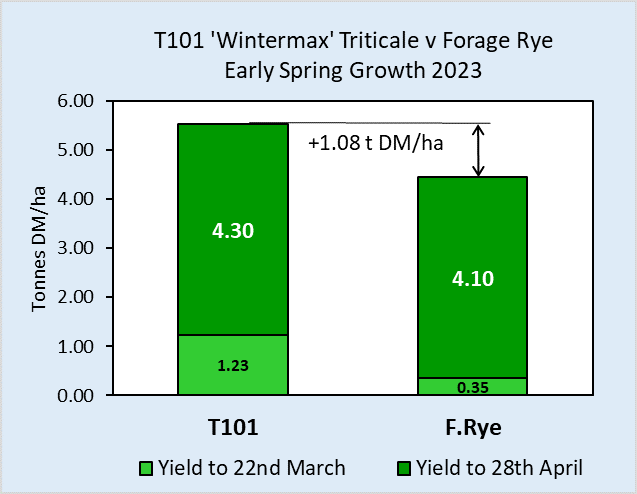
Forage cereals become the best option for later drilling, with the New Zealand-bred forage triticale T101 Wintermax offering the most yield potential and at a reasonable cost, according to Mr Dunne.
"This variety is now considered the 'go to' cover crop for following maize in New Zealand," he says, "and it has been a proven performer in the UK over the past two seasons. It establishes very quickly and is extremely winter hardy, and the earliest drilled crops can provide the option of a light, late autumn grazing. In most cases, however, the main grazing period will be the end of February to mid-April.
"Alternatively, from a September sowing, this forage triticale could provide a silage cut from as early as mid-April, with similar nutritional quality to Italian ryegrass. It will deliver up to five tonnes of dry matter per hectare and has been shown to out-perform forage rye in the UK. Also, with a large volume of seed now in production, it is a cheaper drilling option than forage rye.
"In a year when forage stocks look certain to be in short supply, this very vigorous and high yielding, proven forage crop has the potential to help livestock farmers reduce their winter-feeding periods significantly."
For farmers looking to fulfil a SAM2 commitment within an SFI agreement, T101 Wintermax can be combined with winter vetch or other fast-establishing species to create an over-winter, multi-species cover crop, even when drilled in early October.
"As with other cover crop options, take account of winter hardiness. Many varieties of vetch are not hardy. The best option is Hairy Vetch. This combines the best establishment vigour with excellent hardiness." FDSeeds
T101 Wintermax forage triticale is available from seed merchants throughout the UK.
|
|
|
Win an autumn calving bundle
 As many producers, gear up for autumn calving, Bonanza Calf Nutrition is offering the chance to win an autumn calving bundle consisting of a Trusti-Tuber kit - a four litre bottle, cap and teat and flexible stomach tube - a pack of disposable gloves (in your size), a Progiene boot dipper and five bags of Transformula, the transition-milk based calf milk replacer.
A recent trial at Harper Adams University demonstrated that feeding Holstein Friesian heifer calves Transformula for the first 10 days of life, significantly increased milk production in their first lactation compared to those fed a standard milk replacer. The transition milk group produced an average of 85kg more milk solids and 947 litres more milk during their first lactation. This translates to a substantial economic benefit for farmers and a 100:1 return on investment. Enter now and be in with a chance of winning five bags of Transformula to try on your farm.
www.surveymonkey.com/r/QNNXSVT
Competition closes on 1st September
|
|
|
UK - Farmer praises Clarkson's 'remarkable' impact
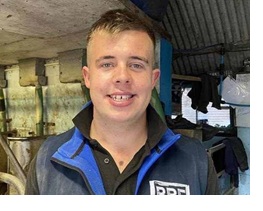 A fourth-generation dairy farmer has said diversification is key in the "competitive" agricultural industry and praised TV presenter Jeremy Clarkson for providing an "honest reflection" of British farming.
Jack Emery, who runs Thistle Ridge Farm, in Eastleigh, Hampshire, with his father, said: "We are constantly trying to update the way we work, whether that's with new technology or simply creating better relationships between people and farming." The 22-year-old said what Clarkson has done for British agriculture was "truly remarkable".
Mr Emery said staying up-to-date with new technologies could be costly but explained the farm was "lucky to be on a milk contract, so we don't add any extra cost onto the consumer". The farm was started by Mr Emery's grandfather, and was milking a herd of 100 cows by the 1980s.
"Over the years, we have continued to update the parlour with new technologies and feeding systems, as we have 240 cows," he said. "We've had to make changes to the parlour to keep moving with the times and the demand."
Mr Emery said he was a "huge fan" of Clarkson's Farm, which he said gave an "honest reflection" of British farming. He said: "Regardless of the controversies that Mr Clarkson's has had in the past, what he has done for British agriculture has to be recognised as truly remarkable. He has really managed to capture the nation and give them a brief education into the details of what farmers are working with and the realities of farming.
"I know the audience will laugh at him for how difficult farming can be, or that he has had a bad harvest and profits are dwindling, but it is an honest reflection of the work we do. As farmers, we can do all this work for 365 days a year, but mother nature is the thing we rely on and we can't control the weather."
Milking cows has always been the "backbone" of Thistle Ridge Farm, says Mr Emery
New technology at Thistle Ridge Farm will help reduce milking time from eight hours to five, said Mr Emery, as well as increase the number of cows milked at one time.
BBC
|
|
|
Egypt - UK farmers to benefit from smoother dairy exports to Egypt
British dairy farmers are set to benefit from continued access to a major international market thanks to a breakthrough with Egypt that will prevent a trade barrier due to come into effect next year.
Preventing the trade barrier that was due to come into force in January will protect an estimated £250 million in additional export opportunities for farmers over five years helping them sell more products like milk, butter and cheese.
Following regular UK Government engagement in support of international efforts-led jointly by the Department for Business and Trade and Department for Environment, Food and Rural Affairs-Egypt will not impose a proposed trade barrier requiring halal certification on all dairy imports.
From Cornish clotted cream to farmhouse butter and mature Cheddar, UK dairy products are known for their quality and taste. This change means British favourites like cheese and butter can continue to reach Egyptian shelves more easily and affordably benefiting both UK farmers and international consumers.
In 2024, the UK exported around £26 million of dairy items to Egypt and removing this barrier protects UK exporters already exporting to Egypt and those looking to enter the market for the first time.
The proposed barrier would have required halal certification on dairy products, adding over £1,000 per shipment in costs and complexity. Its removal has protected UK exporters from these additional burdens-reducing costs, simplifying export procedures, and creating new commercial opportunities for processors. This is particularly good news for producers of cheese, butter and milk powder-some of the UK's most popular dairy exports-who now face fewer hurdles when selling to Egyptian buyers.
The UK is currently among the leading suppliers of dairy products to Egypt, with average annual exports valued at around £26 million in 2024 - driven primarily by powdered milk and cream.
Hopefully this change will open growth opportunities for other dairy categories such as cheese and butter, helping to diversify and expand the UK's export portfolio in this key market benefiting both UK producers and Egyptian consumers.
This forms part of the Government's Trade Strategy, launched in June, which is focused on removing market access barriers, opening new markets, and growing the UK economy.
It also supports the Government's wider aim to deliver a steady pipeline of export wins following the launch of the Trade Strategy-highlighting how targeted interventions can deliver real-world results for UK businesses.
Gov.UK
|
|
| |
BRITISH DAIRYING
ENSURE YOU RECEIVE EVERY COPY
British Dairying is available by subscription at £70.00 posted to UK addresses,
£90.00 for Europe, £115.00 for the Rest of the world
or £30 +VAT for British Dairying Online only
|
|
|
QUOTE
"Nature is the source of all true knowledge. She has her own logic, her own laws, she has no effect without cause nor invention without necessity."
Leonardo da Vinci - 1452-1519
|
|
| |
|
|
|
You are receiving this email because you are a registered reader of British Dairying and we are pleased to send you extra information to supplement the journal.
|
|
|
British Dairying,
WB Publishing Ltd
Priory Cottage, Eastbourne Road Ridgewood East Sussex TN22 5ST
WB Publishing Ltd is registered in England and Wales, Registration No 2951727
|
|