|
|  |
|
June 30, 2026
|
|
UK - How will food inflation affect meat and dairy demand in 2026?
UK food prices have risen 39% since 2020, peaking in 20231. While food inflation has eased since this peak, new global pressures point to another period of volatility in late 2026. This is likely to affect shopper behaviour and demand across meat and dairy.
Key takeaways
- The Middle East conflict and possible global weather disruption could push food inflation higher towards the end of 2026
- Inflation will vary by category, with beef inflation currently easing and some dairy prices in decline, creating mixed demand signals
- Cost-of-living concerns have returned to their highest level in the past two years. This will impact shopper mindsets before inflation hits household budgets
- Consumers will focus on cheaper products for everyday use and keep expensive products for special occasions or small treats
Dairy has seen falling retail prices in 2026 for some categories. For example, butter, driven by lower wholesale prices.
Shoppers typically respond to rising prices by:
- Prioritising essential groceries while spending less on large purchases and holidays
- Trading down to cheaper options, including switching stores, choosing standard over premium products and buying smaller pack sizes.
- Looking for discounts and promotions, although these are less available at the peak of inflation
- Taking more time to plan, batch cook and freeze meals to stretch budgets and reduce waste
- Increasing scratch cooking to save money and reduce reliance on ultra-processed foods
- Eating out less and choosing to eat at home more often
Higher levels of scratch cooking will likely benefit butter, plain yogurt and cream.
Even during inflation, many consumers will still choose healthy, more natural alternatives. This supports demand for primary meat cuts, block butter, whole milk and plain, probiotic or high-protein yogurts.
Read the full article
|
|
|
|
|
UK - 'Regenerative dairy farming' talk sessions from First Milk - head to Groundswell event 1-2 July
First Milk returns to Groundswell this year, bringing together farmers, partners and industry experts to explore how regenerative dairy farming can build resilient, profitable businesses while delivering positive outcomes for nature.
The farmer-owned dairy co-operative is exhibiting at stand G19 throughout the two-day regenerative agriculture festival at Lannock Farm, Hertfordshire SG4 7EE, on 1-2 July 2026, showcasing its approach to farming with nature and supporting members on their regenerative journey.
As part of its presence at the event, First Milk is hosting a series of live 'In-Tents Talks' podcast sessions on day one (Wednesday 1 July), bringing together leading voices from across the agricultural supply chain to share practical insights and real-world experiences of regenerative farming.
Session 1: 3.45 - 4.30 pm:
Resilience through collaboration - Nestlé Sustainability Director Emma Keller, Yeo Valley Chief Impact & Financial Officer Fay Cooke and First Milk Chief Executive Shelagh Hancock
From risk to river health - Cleddau River Action Group Lead Ric Cooper and First Milk Director of Regenerative Farming & Agriculture Lee Truelove
Session 2: 4.45 - 5.30 pm
Nature beyond the margins - UK Centre for Ecology & Hydrology Principal Scientist Richard Pywell and First Milk Director of Regenerative Farming & Agriculture Lee Truelove
Carbon from the ground up - Agricarbon Chief Executive Officer Annie Leeson and First Milk Consultant Mark Brooking
Session 3: 5.35 - 6 pm
Resilience in practice - First Milk Farmer Director and Vice Chairman Mike Smith and First Milk farmer members
The discussions will explore how farmers can strengthen business resilience through collaborative approaches, improve water quality, build soil carbon and create thriving habitats alongside productive farming systems.
FirstMilk https://www.groundswellag.com/
|
|
|
UK - New PM will need to put food security first says 'Save British Farming'
The team at Save British Farming welcomes the opportunity for a change of direction, but whoever succeeds Keir Starmer faces a stark reality the organisation says:
'Britain's food system is becoming less resilient at precisely the moment the world is becoming more volatile.
The next Prime Minister will inherit a farming sector grappling with the consequences of Brexit, rising costs, policy uncertainty, geopolitical instability and growing pressure from imports . . .'
Yet Britain remains one of the few developed countries without a coherent long-term food production strategy, says the organisation.
In an era of climate instability, geopolitical conflict and fragile global supply chains, that is a serious strategic weakness.
The proposed SPS agreement with the European Union is a step in the right direction, but it is not a panacea for the challenges facing food producers.
Britain has already diverged from EU rules in key areas such as chemicals, gene editing and novel foods, while imports flow into the British market through a complex global network of ports and supply chains.
An SPS agreement can only deliver meaningful benefits if standards remain closely aligned and border controls are sufficiently robust to ensure imported products meet those standards. Achieving that is a far bigger undertaking than many politicians acknowledge. Many organisations across the rural economy are calling for a reset in the relationship between government and rural Britain.
Save British Farming agrees. However, rebuilding trust will require more than warm words. Farmers need a government that recognises food production as a strategic national priority and is prepared to align trade, tax, environmental and security policy around the goal of increasing domestic food production and resilience.
The wider issue is food security. Farmers are being asked to produce more with less support while facing rising costs, increasing geopolitical uncertainty and intensifying competition from imports. Recent events in the Middle East have again exposed the fragility of fertiliser, energy and food supply chains. Food security can no longer be treated as an afterthought.
There will also be concern within the sector about any move towards a land value tax. Farming is a low-margin, asset-rich industry. Additional annual taxes on productive agricultural land would inevitably reduce investment, constrain production and place further pressure on both family farms and consumer food prices. At a time when Britain should be strengthening domestic food production, any policy that undermines productive farmland must be approached with extreme caution.
Many farmers will also hope that a new administration reconsiders the inheritance tax changes affecting family farms. These proposals have already damaged confidence across the sector and risk discouraging long-term investment in food production, environmental improvements and succession planning.
SaveBritishFarming
|
|
|
UK - RABDF launches dairy entrepreneurs club
RABDF has launched a dedicated entrepreneurs club to bring together former participants of its long-running Entrepreneurs in Dairying (EiD) programme.
Building on the success of the EiD programme, it will offer past delegates ongoing opportunities for learning, collaboration and peer-to-peer support.
RABDF Chief Executive Hayley Campbell-Gibbons said the club is an exclusive network open to all delegates who have taken part in the EiD programme over the past 14 years.
She explained that many wanted continued support after finishing the course. The new club offers a space to keep learning and developing as they grow their businesses and careers.
The club will also offer opportunities for members to gain board-level experience within the industry. This will help develop governance, leadership and strategic skills for those who want to progress further.
The club forms part of RABDF's wider strategy to support progression in the dairy industry.
This includes opening channels for sharing knowledge, learning through experience, promoting excellence and supporting the development of future industry leaders.
RABDF Vice-Chair Tim Downes, said:
"The EiD programme has supported almost 500 aspiring dairy producers since its launch in 2012, delivered in conjunction with The Andersons Centre, AHDB Dairy and the NFU.
"So many dairy farmers, myself included, have put members of their team through the programme. It will be fantastic to reconnect this network of farmers to learn more about their journey and career development since they completed the programme."
Former EiD delegate Andrew Edwards, who completed the programme in 2025, said:
"The networking was unbelievable, and the programme opened so many doors for me.
"Since completing EiD, I've secured a contract farming agreement and continue to benefit from the contacts and opportunities it created.
"The club will be a fantastic way to keep learning, sharing ideas and supporting like-minded people across the industry."
Read the full article: RABDF launches dairy entrepreneurs club | AHDB
|
|
|
UK - ForFarmers' dairy farming customers achieve high CO? allowances once again
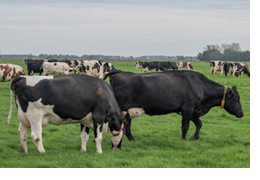 Dairy farmers who use ForFarmers' feed are proving that strong results and sustainability can go hand in hand, say the company. They are once again achieving impressive CO? reduction results.
Last year, average CO? emissions fell to 823 grams per kilogram of milk. Dairy farmers supplying FrieslandCampina receive around 70% of the maximum CO? allowance for this achievement. Over 10% of ForFarmers' customers achieve the maximum reward. These results are primarily achieved by efficiently growing and making optimal use of high-quality forage, and by using concentrated feed in a targeted manner. Efficient milk production, a long herd lifespan and fewer young stock also help to keep CO? emissions low.
FrieslandCampina will pay out the 2025 sustainability allowances, including the CO? allowance, in June. With emissions of 823 grams of CO? per kg of milk, this equates to EUR10,475 for a dairy farm with an annual production of 1 million kg of milk. Frontrunners, with an average emission rate of 696 grams of CO? per kg of milk, will receive the maximum allowance of EUR15,000. This allowance applies to farms with emissions of 725 grams or less.
ForFarmers
|
|
|
UK - EID, tech and herd health on show at Demo Farm Open Day July 9th
Dairy farmers will have the opportunity to see first-hand how herd monitoring technology, data and proactive animal health planning are helping to improve productivity, welfare and labour efficiency when one of Staffordshire's leading dairy farms opens its gates this summer.
The inaugural MSD Animal Health Demonstration Farm Open Day will take place at Castle Hayes Park Farm, home to Major Farming Ltd on 9th July. With electronic identification (EID) set to become mandatory for cattle in England from January 2027, the event offers a timely opportunity for farmers to see the technology in action on a commercial dairy farm.
Hosted by dairy farmer Rupert Major and his team, the open day will demonstrate how data generated through SenseHub Dairy can support proactive herd health planning, helping improve decision-making, herd performance and labour efficiency. The farm will also showcase how they are using EID to ease management tasks.
Major Farming milks 650 Jersey x Holstein Kiwi crossbred cows within an extensive, spring block-calving system, with all calves born between February and April. Since joining the MSD Animal Health Demonstration Farm Network in 2024, the farm has worked closely with MSD Animal Health and their vet to assess disease risk, review herd health protocols and implement a number of preventative strategies tailored to its specific challenges.
A key focus has been calf health. Following disease screening and a review of calf-rearing practices, the farm introduced targeted vaccination programmes alongside improved colostrum management and hygiene protocols. As a result, calf scour has been significantly reduced, while calves have achieved weaning weights up to 10 kg heavier at the same age compared with the previous year, enabling weaning around a week earlier. In addition, 98% achieved their target weight before the onset of winter, up from 87% the previous year.
Similarly, since introducing SenseHub Dairy collars to monitor fertility, alongside a SenseHub Dairy Sorting Gate, the herd has seen improvements in submission, conception and in-calf rates.
The collars, together with the SenseHub Premium application plan, which generates custom reports and highlights rumination health alerts, have also contributed to improvements in cow health and productivity. The system's rumination alerts are used to identify cows requiring additional attention before service. Data from the system is also used alongside milk recording information to refine feeding decisions.
Rupert Major, owner of Major Farming Ltd., says: "As dairy farms continue to grow in size, technology has an important role to play in helping businesses work more efficiently. Through our involvement in the MSD Animal Health Demonstration Farm Network, we've seen how combining technology with proactive herd health planning can improve calf health, animal welfare and overall farm performance. We look forward to sharing those experiences with other farmers in July."
The event will include farm tours, practical demonstrations and presentations from industry specialists, alongside a selection of trade stands. Attendance is free, but places are limited and will be allocated on a first-come, first-served basis.
Register for your free place
|
|
|
UK - Jersey KPI report targets and trends
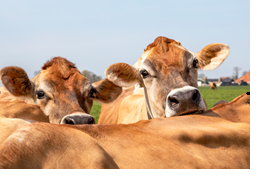 PAN Livestock Services Ltd, based at Reading University, has published its latest Key Performance Indicator (KPI) report for the Jersey breed, comparing production parameters in a cross-section of 40 NMR recorded herds based on 2025 data.
This is the third Jersey KPI report since 2012, and it shows trends in the 14 year period from 2012 to 2025. Improvements are noted in production, from a median (mid-point) in the sample of herds of 5,537kg of milk to 6,022kg of milk, and an increase in milk butterfat from 5.3% to 5.52%.
Progress has also been made in udder health, with a decline in somatic cell counts (SCCs) from a median of 198,000 cells/ml in 2012 to 181,000 cels/ml in 2025, and significantly fewer milk samples with SCCs above 200,000cells/ml.
Lancashire-based farm adviser Tom Hough from Gro-Agri uses this breed-specific KPI data to help identify strengths and weaknesses with his Jersey-herd clients.
"It's far more relevant than relying on the annual Holstein benchmarks published in PAN Livestock's 500-herd report. Even though the Jersey herd sample is much smaller, the NMR data is accurate and reliable, so it provides valuable targets and trends," he says.
Tom accesses the data on the InterHerd+ system and can compare individual herds with targets set in the report for key parameters. "It's much fairer to compare data within a breed - particularly for production, milk quality, SCCs and longevity. "Also, it's important to look at the whole picture, and not one area in isolation, which we can do by using this data." The Jersey breed KPI report 2025 can be found by scanning the QR code:

https://panlivestock.com/wp-content/uploads/2026/05/NMR500Herds-2025_JerseyReport-May2026.pdf
|
|
|
UK - 'Slug prediction' tool developed to cut back on pesticide use
Maps created as part of Defra-funded Slimers project allowed test growers to halve amount of slug pellets used.
Farmers believe they have a new weapon in their age-old battle against the slugs that destroy their crops: modern technology.
Slug prediction maps, which have been created by computer models as part of a research project, are now helping growers to better target the use of pesticides, saving them money and reducing environmental harm.
Slug damage is not just frustrating it is also expensive for arable farmers, with damage to wheat and oilseed rape crops estimated to cost almost £44m a year in the UK.
The gastropod mollusc grazes on the young leaves of emerging cereal crops and has been known to eat barley, oat and wheat seeds. Slugs also damage potatoes and can have a huge impact on vegetable crops, as whole fields sometimes have to be abandoned if there are signs of an infestation.
The monitoring work is being carried out as part of the 'Slimers project' - which stands for strategies leading to improved management and enhanced resilience to slugs.
https://www.theguardian.com/business/2026/jun/21/slug-sleuth-farmers-england-prediction-tool-reduce-pesticide-use
|
|
|
UK - Calf rearing workshops
AHDB are running a free, practical workshop for calf rearers at the National Youngstock Conference on 15 July 2026.
This workshop focuses on how to put new ideas into practice on your farm.
Decide whether a change is needed on your farm; Plan how to implement new practices and protocols; Measure what works and what needs improving; Identify barriers and find solutions that work for you
The session is led by farm vet Emily Linton, chair of the Right Start group for the GB Calf strategy. It will be supported by industry experts Laura Awdry, Holly Shearman and Sarah Tomlinson.
Location: National Conference Centre, Birmingham, B92 0EJ. Time: 11:00am to 12:30pm
Successful applicants will receive a free ticket to the full conference, giving access to talks and networking opportunities as well as the workshop.
The 2026 programme covers key topics, including: Calving and colostrum management; Milk feeding and weaning; Disease prevention and control; Hygiene and the calf environment; Calf housing.
To apply, please complete our short application form. Places are limited. Applications close at midnight on 30 June 2026. Successful applicants will be contacted by email and receive full conference access, along with their workshop place.
Learn more: Join our calf rearing workshop | AHDB
|
|
|
Ireland - Second highest organic milk price in the EU
Ireland sat second from the top of a table of EU organic milk prices at 72.5c/L according to the latest version of the EU's milk market observatory which is published monthly, EU Milk Market Observatory.
Commanding a premium of almost 30c/L over conventional milk prices, now is the time for Irish dairy farmers to consider organic dairying as viable option.
A lack of an organic premium is often cited as one of the most common reasons for dairy farmers to avoid contemplating an organic conversion for their farm.
With this obstacle currently removed, should more conventional dairy farmers be evaluating their options to assess the merits of organic dairying?
The Teagasc organic team has organised three organic dairy farm walks at three locations across the country. These walks are primarily aimed at any farmer who wishes to find out more about organic dairy farming and the potential it may offer them for their farm.
Find out more
|
|
|
UK - A common health dilemma among farmers
 A fifth-generation farmer said Jeremy Clarkson's cancer diagnosis had highlighted how health problems could cause a real dilemma for those in agriculture.
The presenter announced in the latest episode of his television show Clarkson's Farm that he had been diagnosed with an aggressive form of prostate cancer in 2025 but he confirmed recently that he was in remission.
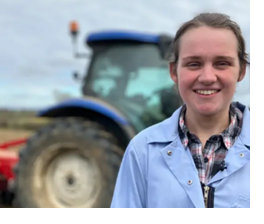
When talking about his diagnosis, he shared his worries that treatment would overlap with a busy period for his Cotswolds farm - concerns 25-year-old farmer Bridgette Baker said she recognised well.
"Farmers calculate how many days they would be off and think 'how far back in my jobs list am I going to be?'" she said.
Baker said there were no external employees at her family's beef and arable farm in Montacute, Somerset, making it tough to cover daily duties in periods of ill health. She said many farmers were in the same position. "Sometimes you'd think the priority is to get the treatment but sometimes farmers like to put their farm first to get the jobs done," Baker said.
The charity Farming Community Network (FCN) is working in a partnership with Macmillan Cancer Support to improve the support available to farming families. FCN said farming communities often had fewer opportunities to access cancer services and support due to the nature of their work and rural life in often isolated areas.
"Cancer can impact a family business that may employ many people," a spokesperson for FCN said. "That can have significant impacts on an individual and their families, including their housing and extended family situation or immediate welfare issues for livestock." https://www.bbc.co.uk/news/articles/c24y9mgqr0no
|
|
|
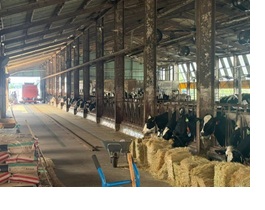
S Korea - A journey into South Korea's dairy landscape
On May 16, a group of students from Michigan State University embarked on a ten-day educational experience in South Korea. Joining them was a group of Oklahoma State University students and staff. Part of the Cross Paths Program, the two groups explored the beef and dairy industries in both South Korea and the United States, gaining firsthand insight into agricultural practices, production systems and cultural perspectives. This article highlights one of the South Korean dairy farms visited during the program and provides a glimpse into the country's dairy industry.
The Youngmin Farm located in Pyeongtaek-si, South Korea, is a family-owned dairy operation that milks 65 Holstein cows using an automated robotic milking system. Each cow is equipped with an electronic identification ear tag that communicates with the robot, allowing the farm to accurately track milk production and individual cow performance. The farm operates year-round and markets its milk through a fluid milk system.
Milk quality is an important component of dairy farm profitability in South Korea. Farms receive premium payments for maintaining somatic cell counts below 200,000 cells per milliliter, while farms exceeding that threshold are subject to penalties. The somatic cell count measures the number of somatic cells (mostly white blood cells) in a milliliter of milk. The dairy visited by the group consistently demonstrated excellent milk quality, maintaining a somatic cell count below 100,000. The herd averaged approximately 70 pounds of milk per cow per day.
Full story here
|
|
|
Ukraine - Country plans major dairy sector expansion by 2035
The Ministry of Economy, Environment and Agriculture of Ukraine has presented a draft Strategy for the Development of the Dairy Industry until 2035, which envisions increasing the production of high value-added products, modernizing processing enterprises, expanding exports, and aligning legislation with the requirements of the European Union.
According to the ministry's press service, one of the key goals is to increase the value of dairy product exports to USD800 million by 2035, up from USD401.36 million in 2025. The share of high value-added products-such as caseinates, milk protein concentrates, and infant formula-in the export structure is planned to reach 40%.
The strategy also foresees attracting at least USD1 billion in investment into dairy processing by 2030, creating around 40 modern full-cycle dairy processing facilities, and building no fewer than 100 industrial dairy farms.
The document notes that Ukraine's dairy sector faces a number of structural challenges, including the consequences of the full-scale war, a shrinking domestic market, a lack of investment, limited access to foreign markets, a significant shadow economy segment, and insufficient technological development of enterprises.
According to the strategy's authors, Ukraine's share in global milk production has decreased from 3.6% in 1992 to 0.7% in 2024. At the same time, production is becoming more concentrated: between 2015 and 2025, the number of farms with up to 50 cows fell from 985 to 317, while the number of farms with more than 1,000 cows increased from 64 to 76.
At the same time, the authors emphasize that the sector has demonstrated resilience under wartime conditions. In 2025, industrial enterprises processed over 3.6 million tons of milk, compared to 3.2 million tons in the pre-war year of 2021. Dairy exports last year increased by 12% to 131,900 tons, while foreign currency revenue rose by 35% to USD401.36 million.
https://odessa-journal.com/ukraine-plans-major-dairy-sector-expansion-by-2035
|
|
|
|
| |
BRITISH DAIRYING
ENSURE YOU RECEIVE EVERY COPY
British Dairying is available by subscription at £70.00 posted to UK addresses,
£90.00 for Europe, £115.00 for the Rest of the world
or £30 +VAT for British Dairying Online only
|
|
|
QUOTE
When the heat is finally getting to you . . .
"If you saw a heat wave,
would you wave back?"
"When is a swimming pool safe for diving?
It deep ends."
"What do bees say in summer?
Swarm, isn't it."

|
|
| |
|
|
|
You are receiving this email because you are a registered reader of British Dairying and we are pleased to send you extra information to supplement the journal.
|
|
|
British Dairying, Grove House Media LtdPriory Cottage, Eastbourne Road Ridgewood East Sussex TN22 5STGrove House Media Ltd is registered in England and Wales, Registration No 16722598 Us
|
|