|
|  |
|
September 1, 2026
|
|
UK - Dairy retail performance - 8 August 2026
During the 12 weeks ending 8 August 2026, volumes of cows' dairy remained stable with a 0.0% increase year-on-year. Spend on cows' dairy increased by 1.9% year-on-year, driven by a 1.9% increase in average prices paid1.
Heatwaves across parts of the UK have reduced milk output. If the situation continues, shoppers may face higher prices and reduce promotional activity.
Cows' milk
Milk volumes saw a 1.3% decline in volumes purchased year-on-year1, while spend saw a 1.2% increase, driven by a 2.6% increase in average prices paid.
Declines were seen for semi-skimmed and skimmed. Whole milk continued to see volume growth, with a 1.4% increase year-on-year, this is due to more buyers and more litres per occasion purchased.
Cows' cheese
Cow cheese remained in volume growth, seeing a 2.5% increase year-on-year1. Spend grew by 0.6% during this period, benefitting from a 1.8% decrease in average prices.
Other cows' cheese (+13.0%), specialty and continental (+4.1%), snacking (+3.5%) and processed (+1.1%) saw growth. This is particularly driven by cottage cheese which saw a 43% increase in volume. This growth offset declines in stilton and British blue, British regionals and cheddar. Cheddar saw a decrease of 839kg due to a decrease in buyers. Extra mature slices (-16.1%), reduced fat/functional (-12.7%) and grated mild (-11.6%) also saw large declines.
Cows' butter
Butter saw a 2.6% decrease in volumes purchased year-on-year1. Spend saw a 6.7% decrease year on year, and average prices paid decreased by 4.2%.
Block butter continues to be the only subcategory to see volume growth (+1.8%), this growth is likely to be due to consumers wanting less ultra processed and more natural foods. However, this growth was not enough to offset the decline in cow butter spread volumes (-4.6%).
Cows' yogurt, yogurt drinks and fromage frais
Cows' yogurt, yogurt drinks and fromage frais volumes continue to see growth (+7.1%), with spend increasing 9.3% year-on-year1. This growth is due more kilos per occasion purchased. Averages prices paid grew 2.1%.
Cows' standard plain yogurt (+19.7%), healthy (+15.1%) and fat free (+9.7%) were among the strongest performing subcategories.
Cows' cream
Cream volumes fell by 1.9% year-on-year, with a 2.5% increase in average prices paid, and a 0.5% increase in spend1. Growth was seen in double (+1.3%) and whipping (+1.2%).
See the full data and these insights visualised on our GB household dairy purchases retail dashboard.
¹ NIQ Homescan POD, Total GB, 12 w/e 8 August 2026
Read more: Dairy retail performance - 8 August 2026 | AHDB
|
|
|
|
|
UK - GB dairy population: The GB milking herd sees lowest level on record
The latest BCMS figures show that the GB dairy herd contracted 2.2% in the 12 months ending 1 July 2026, while GB milk deliveries increased 3%. The 2.2% decline in under 2-year-old dairy females presents a challenge over the availability of dairy replacements going forward.
Key points
- The overall GB milking herd totalled 1.57 million head, as of the 1 July 2026
- The milking herd contracted 34,500 head in the year ending 1 July 2026, versus the previous year, yet the GB milk deliveries increased
- 4-6 year old cattle was the only age group who gained numbers, up 0.5%
- Youngstock under 2 years have dropped 2.2% in the 12 months ending 1 July 2026, creating concern over availability going forward. This had dropped significantly from the peak in early 2023
Read the full AHDB article: GB dairy population: The GB milking herd sees lowest level on record | AHDB
|
|
|
|
|
UK - Taking back control of dairy margins
Farmgate milk prices are getting increasingly volatile, so what can producers to do manage those elements that they can control: Input costs and income?
There are two main considerations - improving feed efficiencies and maximising fat and protein content to boost milk prices, says Dr Chris Bartram, Head of Nutrition at Mole Valley Farmers. "From 2008 to 2025, milk yields, fat and protein increased by 27%, so farmers have already made great strides, through a mixture of improved genetics and management. But by feeding more precisely, it's possible to get more."
For example, first cut silage in South West England this year averaged 11.2MJ/kg dry matter (DM) of metabolisable energy (ME), versus 10.9MJ/kg last year. "That will enable cows to produce one more litre per day from forage." Lactic acid content is higher, too - at 93g/kg versus 87g - so cows will eat more of it. However, individual forages will need to be carefully balanced to maximise feed efficiencies and fat or protein production.
"It's not worth pushing for production if your contract doesn't pay for the extra," says Dr Bartram. "But where your contract allows, the economics are still there to feed for the marginal litres."
However, the concentrates fed can have a massive impact on yield and quality. More acidic concentrates reduce feed intakes and upset rumen activity. Comparing a high acidity and low acidity concentrate, trials show forage intake falls from 11.7kg DM to 11.1kg/head, causing yields to drop from 31.7 litres/cow to 27.8 litres, and butterfat to decline from 4.18% to 3.75%. "Not all feeds are the same."
Feeding fresh cows TPI90 - which includes prairie meal, protected methionine and lysine, before and after calving - boosted fat and protein by 0.2 percentage points. In addition, cows gained weight rather than losing it, helping to set them up for subsequent insemination. "If you invest £30/cow the return is £60. This is a really exciting development - feeding TPI90 just for four days post-calving had a beneficial effect," says Dr Bartram. "A short, sharp slug has continuing benefits."
Another good return on investment comes from feeding calves and heifers higher protein milk powder and concentrates. This maximises growth rates at the most efficient time in a cow's life, and enabling her to calve down earlier. "A Reading University trial showed that increasing dietary protein at a cost of under £4/calf gave a positive return on investment with only 15 litres more milk required to break even in the first lactation," he explains. "And yields in a summary of recent studies increased from 10,242 litres to 11,511 litres, simply by feeding more protein in the rearing period. So if you're still feeding 18% concentrates, have a look at 22% protein instead."
Other areas to consider include using silage additives to reduce clamp losses, and re-evaluating minerals and specialist inputs in the light of forage analyses. "Bringing that all together, alongside payments for carbon efficiency, can help you to claw back up to 5ppl," notes Dr Bartram. "We may not be able to influence the milk price, but you can influence input costs and what you get out of them."
www.moleonline.com
|
|
|
DON'T MISS: CREAM AWARD WINNER ANNOUNCEMENT FRIDAY
Check www.creamawards.UK THIS FRIDAY
Who will win the Lely Atlantic Cup - the prestigious John Beckett Memorial Cup this year?
|
|
|
|
|
UK - Could your land be suitable for onshore wind?
For dairy farmers facing continued pressure on margins and rising costs, generating a long-term income from suitable land could offer an additional source of business resilience.
With renewed momentum behind onshore wind in the UK, more farmers and landowners may be considering whether their land has development potential. Importantly, hosting wind turbines does not necessarily mean taking large areas out of agricultural production. Modern turbines occupy a relatively small footprint, with grazing, forage production and other farming activities often able to continue on much of the surrounding land.
But identifying a viable site involves much more than simply having enough space or being in a windy location.
On Tuesday 8 September, from 6-7pm, onshore wind specialist Caeli is hosting a free online webinar to help farmers, landowners, rural estates and advisers understand what makes land suitable for wind development and what to consider before taking the next step.
The session will cover planning, environmental and grid considerations, what drives the commercial value of a wind site and why different developers may value the same site differently. Caeli will also provide a live demonstration of its digital site analysis, followed by an opportunity for attendees to put their questions directly to the team.
The webinar is free to attend, and a recording will be shared with registered participants.
Find out more and register: www.caeli.co.uk/webinar
|
|
|
UK - Visit the UK's leading dairy industry trade event
 UK Dairy Day will be taking place on Wednesday 16th September at the Telford International Centre, Shropshire, TF3 4JH.
Trade stands will feature across the extensive internal and external exhibition areas. Exhibitors include feed manufacturers, animal health suppliers, vets, milk buyers, dairy and farm equipment suppliers - plus professional service providers and charities.
The annual showcase of dairy cattle will see six dairy breeds compete under the spotlights, a great showcase for breeders from across the UK. UK Dairy Day hosts the National Shows for the Ayrshire, Brown Swiss, Dairy Shorthorn and Holstein breeds, with classes for the Guernsey and Jersey breeds. Live streaming of the cattle show will be on YouTube with a commentary team running through the schedule of over 30 classes.
Judges for the cattle show are: National Ayrshire Show: Matthew Service from Stranraer; National Brown Swiss Show and Guernsey Classes: Richard Thomas from Carmarthenshire; National Dairy Shorthorn Show: Blaise Tomlinson from Leicestershire; National Holstein Show: Gary Jones from County Wexford, Ireland; Jersey Classes: Phil Arrell from Shropshire.
Building on the success of last year's practical demonstrations, the Hall 3 foyer area will be promoted as 'UK Dairy Day Calf Corner' where three leading veterinary practices sharing their expertise during the day.
Nantwich Farm Vets and AHDB will provide insight into rumen development in dairy calves. Shropshire Farm Vets return to demonstrate and discuss lung scanning techniques in calves, and looking at the data it provides. The ever popular and visual "Beneath the Black and White" calf painting demonstration returns with the team from Scarsdale Vets presenting their innovative and engaging demonstration using paint to assist in understanding calf health, welfare and rumen function.
In the external trade stand area, Tim Carter will run practical demonstrations on foot trimming and blocking with dairy cows and will also provide advice on knife sharpening. Leading industry professionals will be sharing their thoughts on key topics during the day on the first floor with the 'Sharing Knowledge Zone'.
- 10.00 am to 10.30 am - AHDB Seminar: Breeding and Feeding for a lower emission Dairy Cow
- 10.45 am to 11.45 am - Industry Panel 1: Building the Future
- 12.00 pm to 12.45 pm - UK Dairy Road Map
- 1.00 pm to 2.00 pm - Industry Panel 2: Technology Adoption
- 2.15 pm to 2.45 pm - Seminar 1: AI in Agriculture, Lely Center Midlands
Entry to the event is free of charge with no pre-registration required. www.ukdairyday.co.uk
|
|
|
UK - A fresh look at the value of soil health
Measuring and valuing soil health is becoming increasingly important - but it's not easy to do. Now, one regenerative farming adviser has written a Centenary Scholarship paper for the Central Association of Agricultural Valuers entitled 'The value of soil health', setting out the practicalities of this complex area.
"Regenerative farming is driving changes, and farmers are now being paid to provide carbon and other ecosystem services," explains report author Harry Epsom. "But we're operating within legislation written decades ago - I wanted to create a guide on soil principles and valuing soil health."
At a fundamental level, soil quality and soil health are different. "We have been destroying our soils slowly for years; our high input, high output focus has created these problems," he says. "But soil can be healed quite quickly, which presents us with an opportunity."
Measuring soil health requires a multi-pronged approach including biological, chemical and physical assessments. It can include compaction testing, worm counts, organic matter and carbon measurement, nutrient analysis and plant health tests, says Harry. "Healthy soil is the foundation of our existence - it's crucial to food, water security, ecosystems and biodiversity."
With the advent of regenerative farming and trade for carbon credits and biodiversity net gain, there is increasing demand for both measurement and valuation of soil health. But both of those factors might vary according to the client's objectives. "We can't give the right advice if we don't understand the vision, landscape, skills, soil, climate, social, financial and regulatory context."
For a farmer, healthy soil will increase profits and resilience; for a landowner it might command a higher rent; for the public, it could be flood mitigation. So when it comes to valuations, there are three areas of value to consider: Business, public, and asset.
For example, when valuing a field for sale, a field with healthy soil could perhaps command a higher price than degraded soil. But when valuing a field for an organisation seeking to sequester carbon and build biodiversity, they might see more value in a degraded soil that can be improved. And when it comes to tenanted land, soils are increasingly relevant to rent reviews, tenants' improvement and dilapidation.
Clearly, measurements of soil health must be undertaken before and after any improvement projects, and land managers will need evidence to provide a direct link between management decisions and soil outcomes, notes Harry. Contracts also need to be carefully drawn up at the start, to avoid unexpected surprises. "What rights are you granting or reserving, and what compensation will be paid over what period of time? There's a lot to be thought through at an early stage."
However, the opportunities are tremendous, and by working with a range of experts offering a holistic perspective, agricultural valuers will secure the best outcome for their clients, he adds. "We certainly have the potential to undo the damage that's been done, and the truth is, it's not that difficult."
The full report is available at https://bit.ly/4gd4DD5 and a podcast with Harry Epsom can be accessed at https://bit.ly/4g5Cmyh.
|
|
|
UK - M&S rolls out AI-powered tools for its dairy farms
M&S is the first retailer to use AI-powered monitoring systems on its entire Milk Pool to monitor animal welfare across 46 dairy farms. The innovative tools use cameras to capture footage of dairy cows when they are indoors which is then analysed using an algorithm trained alongside vets to monitor welfare of dairy cows in real time. This latest move by M&S sets a new standard for animal welfare for dairy cows.
The technology uses AI-powered video analytics to build an individual health profile for each animal, tracking mobility and body condition scoring over time to give farmers objective, consistent data on the wellbeing of their herd. The tools monitor the cow's behaviour including lying time, feeding time, social interactions and mobility to generate a 'cow comfort score' which supports vets in their assessment of individual cow's health.
Regular, in person, welfare checks by independent vets will be enhanced by this daily monitoring of dairy cows. The cameras will assess body condition scoring to assess cows' nutritional status over time. Terry Canning, CEO of Cattle Eye says "Changes in body condition are early indicators of metabolic health, fertility, and overall wellbeing. Tracking those changes more regularly, across every cow, gives farmers a level of insight that was previously unavailable outside research environments." The algorithm supporting the tool has been tested and found to perform to the same standard as a trained welfare assessor.
These tools are being rolled out following trials at a selection of M&S dairy farms, where farmers have used the technology to make changes to tailor care to individual cow's needs. By measuring lying times, farmers have made changes to the bedding of individual cows to improve their comfort based on their specific size and shape. Feeding schedules have been adapted to reduce the amount of time cows spend standing and the design of some stalls has been adapted to improve cow comfort.
Peter Kennedy, Head of Agriculture at M&S Food: "M&S has always had market-leading welfare standards, and as we continue to support British farmers in this latest evolution of welfare monitoring, powered by AI, it will support farmers to give the best care to dairy cows. This latest innovation supports our Plan A for Farming to build resilience in British farming and continue to raise the bar on animal welfare."
https://corporate.marksandspencer.com/newsroom/press-releases/ms-rolls-out-ai-powered-tools-support-next-generation-animal-welfare-its
|
|
|
UK - Dry august seedbeds force forage crop rethink
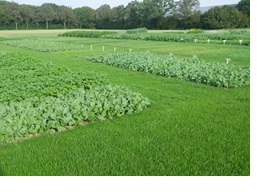 With farmers in many parts of the UK forced into later sowing of forage crops due to dry August seedbeds, greater care will be needed in deciding what to grow and how best to use it in order to combat predicted winter feed deficits.
So says Francis Dunne of FD Seeds, recognising the critical nature of these choices and urging a best practice approach to all future sowings.
Investing in the right species for your objectives, and sticking closely to optimum drilling dates and seed rates, will ultimately prove to be the most cost-effective approach, he adds.
"If farms have been unable to drill in August due to a lack of moisture, the traditional favourites such as forage rape and stubble turnips may well no longer be viable, because it's too late," he advises.
"Whether growing a crop for winter grazing, an early spring silage cut, or fulfilling a SAM 2 cover crop action within an SFI agreement, it could be that farms need to look at alternative options to those that they are used to managing.
"With September planting, few can expect significant production this side of Christmas, though there will still be ample opportunity to shorten the winter with significant dry matter in the early spring."
Mr Dunne points to three species groups that are ideally sown in September and will provide hardy winter cover but offering their main forage production in the spring.
"Italian & Westerwold ryegrasses, forage cereals, and hardy vetches should be the main considerations," he says. "These can all either be sown as standalone crops, or in mixtures, and will offer the potential of over four tonnes of dry matter per hectare, with high protein and energy at a time when forage stocks may be dwindling.
"The short-term ryegrasses really should be sown in the first two weeks of September to allow sufficient autumn root development to achieve very early spring growth. Beyond mid-September, forage rye and forage triticale are the best choices, and these can be grown with winter hardy vetches, ideally Hairy or Pannonic vetch, as a companion.
"With rye and triticale, it's important to grow forage types, as opposed to grain types, as these will have far greater vigour, active winter growth, and produce significantly greater spring biomass. These forage types will also have the earliest spring growth, which will provide March grazing or an April silage cut."
Where drilling is delayed until late September or early October, it is still possible to achieve exceptional winter cover by growing T101 forage triticale, a specialist variety bred in New Zealand, Mr Dunne adds.
"This variety is now grown widely in New Zealand, following maize," he says, "and it has been a proven performer in the UK. It establishes very quickly and is extremely winter hardy, and the earliest drilled crops can provide the option of a light, late autumn grazing. In most cases, however, the main grazing period will be the end of February to mid-April.
"Alternatively, T101 forage triticale could provide a silage cut from as early as mid-April, with similar nutritional quality to Italian ryegrass. It will deliver up to five tonnes of dry matter per hectare and has been shown to out-perform forage rye in the UK. Also, with a large volume of seed now in production, it is a cheaper drilling option than forage rye."
For those requiring earlier grazing, species like white mustard, Ethiopian mustard and fodder radish are fast growing with good grazing characteristics, but they are not winter hardy and therefore need to be grazed by November, and certainly before the first hard frosts.
"Later flowering varieties can be more winter hardy, and grazed later, and can be a useful companion crop to ryegrass or forage cereals sown in early September, to provide early winter grazing," concludes Mr Dunne.
A forage crop selector, summarising species options, optimum drilling dates and utilisation periods, is available by contacting Francis Dunne at FD Seeds at fd@fdseeds.co.uk
|
|
|
UK - Jersey and Guernsey focus at the Dairy Show
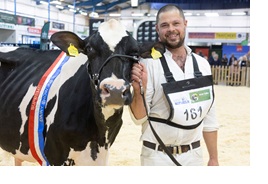 This year's Dairy Event is set to be a highlight in the industry calendar, playing host to the Jersey and Guernsey Cattle Society National shows once again.
"The Dairy Show has hosted the English Guernsey National Show since 2015, with the Jersey Cattle Society following suit, making us its National Show home in 2017," explains The Royal Bath & West of England Society chief executive, Carol Paris. "We are extremely proud to host these events. The Dairy Show showcases some of the best of the UK dairy herd while also highlighting the fantastic work going on across the sector, supporting an industry worth over £8bn to the UK economy."
Other cattle classes include Ayrshire, Dairy Shorthorn, Holstein, and Any Other Dairy Breed; the winners of which will go forward to compete for the coveted Supreme Championship. The overall winner will receive the Colonel Joseph Weld Perpetual Challenge Cup and £750, while the reserve champion will win £500.
"Sourcing cattle from top-quality bloodlines is important to the continuation and resilience of our dairy breeds," Ms Paris says. "Entering classes at such a prestigious show is therefore a great opportunity for breeders to showcase their stock to a wider audience."
With more than 200 cattle and calf entries across the board in 2025, a high calibre of entries is expected once again, and competitors are encouraged to enter early ahead of the 18 September deadline.
Elsewhere at the Dairy Show, the popular Agri Forum and LandAlive features make a welcome return. Panel discussions in the former include anaerobic digestion and inheritance tax, while the latter will cover a wide range of regenerative dairying topics.
Last year saw more than 6,000 people attend the show at Shepton Mallet, which is known for its convivial atmosphere, extensive exhibitor list and innovations on display.
"After what's been a difficult year for dairy producers, this is a great opportunity to get off farm and see some of the latest technology up close," says Ms Paris "With over 200 exhibitors having already booked to attend, visitors can expect to see some of the most cutting-edge technology and machinery, catch up with veterinary and feed experts and learn about the latest developments in housing systems and more.
Tickets are available online, at an early bird rate of £22/person (a saving of £4 from the gate price), plus £35 for those hoping to attend LandAlive.
The Dairy Show: Wednesday 7 October 2026 at The Bath & West Showground - The Showground, Shepton Mallet, Somerset, BA4 6QN. Gates open at 8.30am
FREE parking at the event.
For competition entries visit: https://www.bathandwest.com/the-dairy-show/competitive-entries
|
|
|
US - Dairy industry backs Trump in Canada tariffs row
A 50% tariff from the US on goods from Canada, including alcohol and dairy products, has just come into force, after both countries failed to reach a deal. Two US dairy-industry bodies have praised President Trump for "standing up" for the sector in the trade dispute between the country and Canada.
A 50% tariff from the US on goods from Canada, including alcohol and dairy products, came into force recently, after both countries failed to reach a deal. On Saturday (22 August), Canadian Prime Minister Mark Carney said his country "will match Washington's new tariffs dollar for dollar".
In his statement, Carney said: "While we believed, earlier this week, that we were moving toward a mutually beneficial agreement, in recent days, the US proposed new terms that were uneconomic, unfair and undermined the net benefits to Canada, calling into question the reliability of any deal.
"In short, they asked too much and offered too little. More fundamentally, the cumulative effect of US demands revealed the limits of their commitment to a true economic partnership. As a result, last evening, I suspended trade negotiations with the US and directed Canada's negotiators to return to Ottawa. They worked hard, in good faith, to the last minute to defend the interests of Canadians."
However, in a social media post on Truth Social, President Trump said: "Canada wants the benefits of being a State, without being one!!! They have also charged our great farmers, for many years, massive amounts of Tariffs. No more!!!"
Read more: https://www.just-food.com/news/us-dairy-industry-backs-trump-canada-tariffs/?cf-view
|
|
|
Middle East - Under constant threat, Gaza farmers struggle to survive
Efforts to rebuild domestic food production face severe challenges and have come at deadly cost
As Gaza's population of 2.1 million has been hemmed into an ever-smaller slice of the territory, farmers are using every last remaining patch of unspoiled earth, no matter how tiny, in their struggle to survive.
With severe shortages of water, fertiliser and pesticide, and with more than 80% of greenhouses ruined, it has taken inventiveness and determination to clear land of debris and coax new seedlings into life. Moreover, venturing out into the open to tend to plants can be deadly.
Read more: https://www.theguardian.com/world/2026/aug/26/gaza-farmers-struggle-scraps-of-land-constant-threat
|
|
|
|
| |
BRITISH DAIRYING
ENSURE YOU RECEIVE EVERY COPY
British Dairying is available by subscription at £70.00 posted to UK addresses,
£90.00 for Europe, £115.00 for the Rest of the world
or £30 +VAT for British Dairying Online only
|
|
|
QUOTE
"You can be rich in spirit, kindness, love and all those things you can't put a dollar sign on."
"If you don't like the road you're walking, pave another one."
Dolly Parton - Country singer, songwriter and philanthropist, 1946-2026
|
|
| |
|
|
|
You are receiving this email because you are a registered reader of British Dairying and we are pleased to send you extra information to supplement the journal.
|
|
|
British Dairying, Grove House Media LtdPriory Cottage, Eastbourne Road Ridgewood East Sussex TN22 5STGrove House Media Ltd is registered in England and Wales, Registration No 16722598 Us
|
|