|
|  |
|
August 18, 2026
|
|
UK - GB milk deliveries: Milk volumes decline as high heat continues
Daily deliveries in July averaged 33.28m litres and totalled an estimated 1,032m litres, a reduction of 34m litres (-3.2%) compared to the previous year. This brings milk year to date (April-July) supplies for GB to 2% below 2025 levels.
July daily deliveries opened 1.8m litres below last year's high level and remained consistently under year-ago volumes, averaging a 1.1m litre shortfall. The most recent week of data (week ending 1 August) showed a 4.5% decline on year-ago levels, finishing just below the five-year average.
Milk contracts moved upwards for August, with more positive price announcements for September, though will remain below cost of production for many.
The Met Office recorded the driest and sunniest July on record for England and Wales, with 71% of England now in drought. This is likely a leading factor in the continued fall in milk volumes, as high heat stress suppresses yields.
The weather has also cut forage production, with grass availability in a critical position for much of GB, prompting livestock farmers to begin feeding silage earlier due to poor grazing. This compounds the input-cost pressures already facing the industry, squeezing margins further.
Bluetongue remains a key watchpoint for the domestic herd. With recent reports concentrated in Devon, escalation could add to the existing downward pressure on milk yields.
Read the full AHDB article: GB milk deliveries: Milk volumes decline as high heat continues | AHDB
|
|
|

Visit CowManager at UK Dairy Day - September 16th
Want to detect health issues earlier, improve breeding results, and save valuable time on your dairy farm?
Stop by Booth H219 at Dairy Day and discover how CowManager helps you manage your herd more efficiently.
The CowManager Ear Sensor combines ear temperature with eating, rumination, and activity data to deliver highly accurate, early alerts. This unique combination enables you to identify sick cows days before clinical signs appear, detect heats with confidence, and make proactive management decisions that improve herd performance.
Our newest Innovation: Need to find a specific animal quickly? CowManager's Find my Cow Flash functionality makes it easy.
The sensor's built-in LED can be activated directly from your app or desktop, allowing you to instantly identify cows, heifers, or calves-even in large groups.
It's a simple feature that streamlines daily routines and helps your team work more efficiently.
With our Find My Cow tools, you can reduce time spent searching for animals, minimize lock-up time, lower labor costs, and improve the accuracy of everyday herd management. The result is greater efficiency, better animal care, and increased profitability.
Whether you're looking to optimize workflows, enhance animal health, or maximize the potential of your herd, CowManager provides the insights you need to make informed decisions.
Visit us at Booth H219 during UK Dairy Day and see how smarter monitoring can transform your herd management.
|
|
|
UK - Milk utilisation trends: Cheese, milk powders, butter and yogurt production on the rise
Total UK milk availability for processing touched a new peak following record milk volumes in 2025/26. Is there any change in milk utilisation trends?
Milk production touched record highs in 2025/26 following favourable dairy economics. UK milk deliveries for the calendar year 2025 recorded a new high at 15.75 billion litres, an increase of 5% compared to the previous year.
However, liquid milk production and consumption continued the long-term trend of decline. 40% was processed into liquid milk in 2025 compared to 45% in 2015. In 2026 so far, liquid milk has continued to lose share of total milk utilisation.
Cheddar is the largest variety produced of all types of cheeses accounting for 22% of total milk utilisation in 2025 and over 70% of total cheese production. Other cheeses like blue vein cheese, long life territorial cheese, short life territorial cheese accounted for 9% of milk utilisation.
While yogurt production volumes increased, its share of total milk utilisation remained relatively stable due to overall growth in milk availability. Milk trade also remained steady in terms of share, whilst 'other products' increased by 1 percentage point to 16% during the period.
Within the other products category, butter is the major contributor followed by milk powders and condensed milk. Production of milk powders and butter increased significantly by 18% and 6%, respectively in 2025 compared to the previous year.
Read the full AHDB article: Milk utilisation trends: Cheese, milk powders, butter and yogurt production on the rise | AHDB
|
|
|
UK - Whole team approach to herd health
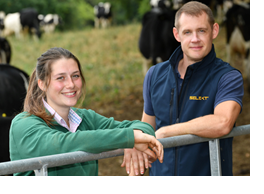 A firm belief in the value of a team is what drives the management at Stocken Farm, in Buckinghamshire, and is the foundation of an impressively well-managed herd health program.
With over 17 staff, many working different hours and days, Charolotte West, who farms with her brother, Robert, and parents, Richard and Maxine, oversee the rota and staff training for their 450-cow Holstien Friesian herd at Stocken Farm in Buckinghamshire. "With a few exceptions, I train everyone in every role," explains Charlotte. "This ensures that we all understand the challenges of every job on the farm, how each task fits into the overall running of the herd and cover is easily available if we have someone off work."
Charlotte believes it makes the job more interesting, and because people understand what is being done and why, they are more likely to take ownership of the task at hand.
One aspect that has been particularly successful is herd health. All team members are trained in identifying sick cows and treatment protocols. "Wherever that animal is on the farm, from cubicle shed, collecting yard or the parlour, someone will be able to spot the signs of illness and report to the correct person."
This has been acutely important this year, where heat stress has tested all the herd, especially sick and fresh cows. "As a business, our goal is to have systems in place to prevent health issues. It's an area of animal care we have really focussed on in recent years and have seen some good results," she explains.
Each morning, the rota allocates a member of the team to the herd health check. The fresh cow group and heifer group all benefit from headlocks, and using the Cow Manager app, animals that have been identified with reduced intakes are checked. "Having this dedicated person ensures every animal of concern is looked at. You want to see cows' intakes on an upward protectory after calving, so any animals not achieving this automatically go on a protocol."
Charlotte works closely with farm vet Sam Potter, from the Hook Norton Vet Group, who offers advice and training to the team. Together they have developed a comprehensive guide to using hydration products in the herd, particularly cows that are seeing reduced rumination in early lactation.
Charlotte explains, "We had been drenching sick cows for many years, but around two years ago, we really focussed on how we use the Selekt system and the formulae we were using for a targeted approach. We now have four different protocols; restore, off feed, fresh and antacid so the most suitable action is taken. So, for example, every 3rd lactation cow or over gets a fresh cow drench as we have found the older cows are more prone to health issues and this acts as a preventative measure.
"Hydration is everything," she says. "Quite often a drench will save a sick cow. It fills the rumen and with the right formulae, the yeast can stimulate the bugs in the rumen and turn them around. I'm in no doubt this action has prevented DA's in our herd, which we rarely see now."
"If a cow has a temp of 40 or over, she is likely to have reduced feed and water intakes so she will automatically receive an off-feed formulae drench alongside the correct treatment. It's all about getting the right formulae to encourage appetites and that rumen working."
Although this is a year-round approach to animal health, it has additional benefits in the hot weather, when dehydration maybe more severe. The herd currently averages 11,870 litres, milked 3x/day, and so water demand is high. "Cows can quickly become dehydrated, so this system helps us avoid health problems," she says.
Farm vet, Sam Potter, from Hook Norton Veterinary Group, adds, "Calving and illness are high risk events that can lead to dehydration in dairy cows. Add to that, heat stress or a high yield, and that animal can be severely challenged to drink enough water to meet its demands, which, if not met, can lead to many health issues and even death.
"Stomach pumping is a very effective and quick way to supplement the cow's daily fluid requirements, and one that is routinely used at Stocken Farm and targeted to each individual cows' needs. For example, the fresh cow is given a mixture that provides additional calcium and yeasts to promote normal rumen function and prevent milk fever and ketosis. Sick cows are given an electrolyte sachet that also replaces sodium, potassium and chloride ions. Added dextrose can see a quick response in energy, resulting in eating and drinking. This aids recovery and therefore results in the animal achieving her potential quicker than if she had a slower improvement."
Sam continues, "Early intervention with fluid therapy is a positive, and practical, task that can be done on any farm to reduce the risk of metabolic disease and improve recovery of sick and fresh cows. I've worked a lot with Charlotte and the team to establish a system that everyone can use and is effective. With targeted therapies, the farm has seen a successful outcome which will see extended benefits in terms of yield, fertility and longevity."
|
|
|
INSTANT ACCESS FARM ASSURANCE
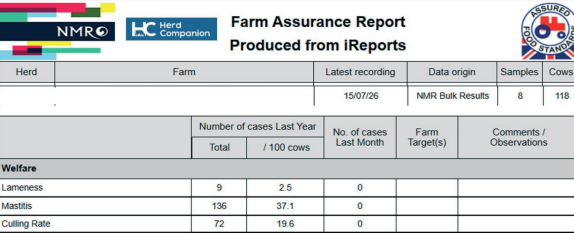
 Easy, accurate and time-saving. This sums up NMR’s Herd Companion Farm Assurance report which has recently been highlighted as one of the management system’s top 10 reports.
Why? Because it’s specifically designed to contain data required by farm compliance schemes such as Red Tractor, and because it accesses this data from information already held on Herd Companion.
It’s populated entirely from full milk recording NMR data and NML data, so there’s no duplication.
Mastitis, milk fever, lameness and mobility scores are ‘pulled across’, as well as milk recorded data like milk quality, somatic cell counts and average milk yields.
A big bonus is that it automatically calculates the proportion of heifers reaching their second lactation in each herd. This data is required by assurance schemes. Calculating it manually would be very long-winded. This farm assurance scheme takes the strain.
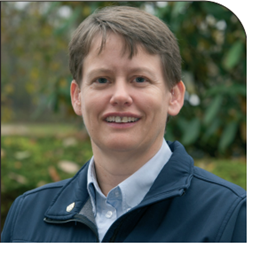
Raising awareness of this valuable report, NMR software trainer Cath Smith says: “Many vets are already using this report for generating and updating herd health plans.
“We’re encouraging more farmers and herd managers to use it too. It’s a ready-made document for assurance schemes that saves time and minimises mistakes.”
Taking the strain out of farm admin is music to many farmers’ ears. This easy-to-use and readily accessible Farm Assurance report fits the bill.
- There’s nothing to set up
- It populates itself
- It minimises duplication
- It defaults automatically to the past 12 months, but can be set for other time ranges
- It’s a one page printed document if required
- It can be sent to third parties
For more information please visit nmr.co.uk or call 03330 043043
|
|
|
UK - Support for Welsh farmers as dry weather continues
Farmers and growers facing another period of dry weather can access practical support available to help them cope. The Capital Production and Efficiency grant is now open, and farmers can apply for funding towards climate adaptation measures such as boreholes, water harvesting equipment, and ventilation systems including fans for cattle housing.
Farmers who have entered the Sustainable Farming Scheme (SFS) or delivering preparatory scheme contacts, who may be struggling to meet requirements because of the weather, are encouraged to apply for a temporary derogation via their RPW online account, including photographic evidence showing the condition of the crop. Given the exceptional conditions this year, requests will be looked at favourably and responded to promptly.
The Cabinet Minister for Rural Resilience and Sustainability, Llyr Gruffydd, said: "We recognise the pressures facing farmers and growers during prolonged dry weather conditions, including impacts on livestock, crops, and farm businesses. That's why we want farmers to know about the support available, whether through our Capital Grants scheme, or the flexibility on offer under the Sustainable Farming Scheme.
"We've announced more than £1bn this Senedd term to support sustainable agriculture, and, through our Water Reform Programme, we will take full control of water in Wales, now and for future generations."
Farmers with concerns about animal welfare should seek immediate advice from their vet. Practical guidance on caring for farm animals and horses in extreme weather is available on the Welsh Government's website. Support available for farmers as dry weather continues | Welsh Government News
|
|
|
UK - High cryptosporidiosis burden in calves drives 143% rise in antibiotic treatment use
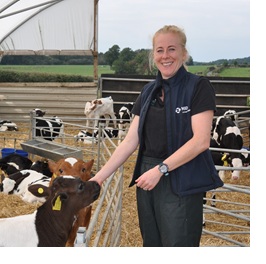 Persistently high levels of cryptosporidiosis in calves¹, increasing antibiotic sales², and concerns over possible resistance³ are reinforcing calls for greater focus on prevention-led disease control and antimicrobial stewardship in youngstock systems.
According to the Government's latest Veterinary Investigation Diagnosis Analysis (VIDA) report¹, cryptosporidiosis remains the second most common bovine diagnosis and the leading enteric pathogen in neonatal and pre-weaned calves. Sales data also show that use of the antibiotic paromomycin², licensed for the reduction in the occurrence of diarrhoea due to diagnosed C. parvum, has more than doubled over five years-from 96kg to 233kg, a 143% increase-reflecting sustained disease pressure in youngstock.
The rise in cases and antibiotic sales comes at a time when concerns have been raised about increasing paromomycin resistance in young calves³, with experts warning that routine or widespread use may increase selection pressure and contribute to resistance development.
Dr Kat Baxter-Smith, veterinary adviser at MSD Animal Health, said the trends are worrying and reinforce the need for prevention-led disease control to safeguard the effectiveness of antibiotics in the future. "Management of cryptosporidiosis requires a multi-pronged approach, as there is no silver bullet for its control. MSD has developed a Five-Point Plan for Cryptosporidiosis Control that focuses on stopping the spread of the microscopic parasite Cryptosporidium by focusing on diagnosis, colostrum management, environment and management, prevention, and treatment.
"The Five-Point Plan for Cryptosporidiosis Control is a good starting point to help farmers and their vets identify the areas that need attention, whether that's improving colostrum management, changing or fine-tuning hygiene routines, prevention through vaccination, or implementing appropriate treatment protocols when infection pressure is high. Successful control depends on addressing each of those areas together," she said.
A vaccine, Bovilis Cryptium, is now available to help protect calves against disease caused by Cryptosporidium parvum. The vaccine is administered to the dam during the third trimester and works by stimulating antibody production in the dam, which is transferred via colostrum and transition milk, helping to reduce clinical signs in early life when calves are most vulnerable. Colostrum and transition milk from vaccinated animals should be fed for five days for maximum benefit.
Dr Baxter-Smith added: "The vaccine is just one part of the Five-Point Plan for Cryptosporidiosis Control and when used alongside other elements of the plan, has been shown to help reduce disease impact in young calves, which can then help reduce reliance on antibiotics during the highest-risk period.
"Every case of diarrhoea that can be prevented is potentially one less calf requiring treatment. Prevention isn't just good for calf health; it also helps protect the effectiveness of antibiotics for the future and saves money and time. If we are serious about improving calf health and tackling antimicrobial resistance, preventative management must remain the foundation of every herd health strategy."
The news comes at a time when greater industry focus is being placed on antibiotic use in ruminants, with work underway to develop a UK Ruminant Antibiotic Stewardship Roadmap, which will influence how data is collected on antimicrobial resistance, how it is reported, and how progress is demonstrated across the country. The roadmap is expected to be launched later this year.
MSDAnimalHealth
|
|
|
UK - UK and Switzerland agree new trade deal with opportunities for agri-food exports
The UK and Switzerland have finished negotiating a new free trade agreement (FTA) to replace the arrangements put in place after the UK left the EU.??While full details have not yet been published, AHDB are looking at what we know so far and key opportunities the deal could create for UK agricultural exporters.
AHDB will continue to follow developments closely, particularly any?concessions?affecting the dairy sector, and will keep levy payers updated as further details emerge.?
Details of changes to dairy products, horticulture and seafood have not yet been published.?
As the full text of the deal has not yet been released, it is still too early to understand all the implications for UK agricultural trade. The deal must also be approved by both the UK and Swiss parliaments before it can come into force.?
Read the full AHDB article: UK and Switzerland agree new trade deal with opportunities for agri-food exports? | AHDB
|
|
|
UK - Staying vigilant when recruiting
Whether you're advertising for a full-time role, taking on a summer student or offering work experience, bringing new people onto the farm is an important investment. Most applicants are genuine and enthusiastic about working in the dairy industry, but carrying out a few simple checks before offering access to your business can help protect your farm and give you peace of mind.
NFU and AHDB guidance highlights the importance of having a clear recruitment and vetting process for prospective employees, students and work experience candidates. Asking for references, confirming previous employment and, where appropriate, checking directly with colleges or universities can help verify an applicant's background before they arrive on farm.
It's also worth considering who will have access to different areas of the business. Ensuring new staff are inducted properly, understand farm protocols and are supervised appropriately during their first weeks can help protect both the individual and the business.
The same common-sense approach applies online. Be mindful of how much information about your farm, family and business operations is publicly available through websites and social media. Limiting personal contact details and sensitive information can help reduce unwanted activist attention.
Most importantly, trust your instincts. If an application contains inconsistencies, references cannot be verified or something simply doesn't feel right, take the time to investigate further before proceeding. Genuine applicants will be happy to answer additional questions and provide supporting information.
A robust recruitment process doesn't need to be complicated, but it can help ensure you find the right people for your business while protecting your farm, livestock and staff. As with many aspects of dairy farming, a little preparation upfront can prevent much bigger issues later on.
NFU members can contact CallFirst for individual expert advice on best practice when recruiting new staff on 0370 845 8458.
|
|
|
UK - New route to market for landowners with major Norfolk onshore wind opportunity
Caeli, the digital marketplace for onshore wind sites, is bringing Eaubrink, a major greenfield onshore wind opportunity in Norfolk, to the UK market. The site has an indicative capacity of approximately 192 MW and could potentially accommodate up to 40 wind turbines. Covering approximately 3,400 hectares, Eaubrink represents a substantial new opportunity for onshore wind development in England.
From mid-August, registered project developers will be able to access comprehensive information about the site through Caeli's digital marketplace. Interested developers can register their interest now and book a dedicated project presentation with the Caeli team. "Eaubrink is a significant opportunity in its own right, and it demonstrates what a competitive and professionally managed process can offer landowners," said Hans-Georg von Lewinski, CEO of Caeli UK.
"Bringing a site to market is about more than finding an interested developer. Landowners need access to a broader market, clear information about the proposals they receive and a sound basis for selecting the project partner that best fits their objectives. Our role is to create that market access, support and manage the process from the initial site assessment through to developer selection."
For landowners, assessing the potential of a site and identifying a suitable wind project developer can be complex. Individual proposals may differ considerably in their commercial terms, technical approach, experience, plans for progressing the project and approach to community engagement and local benefits. The tender process enables these wider considerations to be assessed alongside the commercial terms, helping the landowner identify a project partner whose approach reflects both their own objectives and the local context.
Caeli combines digital site analysis and expert assessment with access to a broad network of qualified wind project developers. Relevant site information is compiled and made available to suitable developers, who can then submit proposals through a competitive tender process.
The proposals are assessed and presented to the landowner on a like-for-like basis. This provides greater transparency across the available options and allows the landowner to make an informed choice before progressing to direct negotiations with the selected developer. For more information contact www.caeli.co.uk
|
|
|
UK - Changing dairy nutrition focus leads to UFAC-UK restructure
With environmental considerations being increasingly enforced from milk buyers, and a collective desire from farmers to limit their imprint, UFAC-UK has announced a major restructure to ensure new opportunities are met around the world.
Heading up the UFAC-UK team, newly appointed Commercial Technical Manager, Dr Andrew Pine says, "Particularly over the last 12 months, the demand for UFAC's animal feed supplements has accelerated, as new rules and requirements are demanded of food producers and more sustainable products are expected.
Dr Pine, who joined UFAC-UK in 2025 and is internationally renowned in the field of animal nutrition, has seen the appetite for products that protect the environmental increase significantly. "Requirements from milk buyers have shifted in recent years as our understanding of carbon footprint and methane emissions has improved. Farmers have embraced these changes and have made positive steps in animal nutrition to source responsible ingredients that do not compromise animal performance."
As a company, UFAC-UK has spent nearly 50 years investing in, and developing, high-performance alternative blends to replace and improve on palm-based and palm-oil derivative products, avoiding the environmental devastation and deforestation associated with palm-oil production. Furthermore, research undertaken at leading UK universities has also shown that UFAC products can outperform dated protected fat products because of the novel technologies they use.
"Our practical approach has seen the introduction of solutions such as reducing methane production in ruminants, reducing reliance on soya in ruminant and monogastric diets, and identifying and developing alternatives to fishmeal feed. By improving gut health and general animal welfare, we can also reduce the use of antibiotics. This is an important consideration in any modern livestock management system," he concludes. For further information please visit ufacuk.com
|
|
|
UK - Guernsey dairy farmers feeding herds on silage meant for next winter
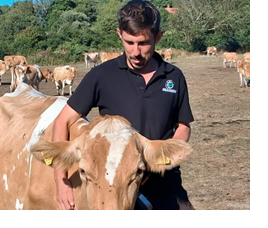 Drought conditions over the last few months have again forced Guernsey's dairy farmers to resort to feeding their herds on stores of silage intended for next winter.
If there are no autumn rains then many local farms could completely run out of feed, and have to look at the expensive option of importing it.
Josh Dorey, who is one of the island's largest dairy farmers, with 190 milkers and 100 'followers' admitted that the situation was concerning.
"Basically, the grass hasn't been growing for a couple of months now, so there's been no grazing and no ability to cut silage to make feed. So, we are having to use the feed which was meant for next winter. The cows are out in the fields but they are just eating from feed trailers.
"Everyone is hoping they'll be rain in the autumn, which would mean some winter grass growth, but the other day I heard it could be dry up to October."
At the end of the summer farmers will harvest their crops of cattle maize, but while this will provide some respite, the traditional feed crop is also being affected by the exceptional conditions.
Mr Dorey says he was actually luckier than most in this respect because his farm is on low-lying land and he planted his maize early.
"I got 150 vergees of maize in, and it has done reasonably well. Hopefully that will see me through to next March or April but we will have to make a judgement call during the winter."
Mr Dorey said 2026 was the second dry summer in a row, which meant that Guernsey farmers were not starting from a good position this spring. Full story: https://guernseypress.com/news/2026/08/11/dairy-farmers-feeding-herds-on-silage-meant-for-next-winter
|
|
|
Start them right, the key to healthy calves - new calf shed and farm open day
Tom and Dan Mitchell, Fields Farm, Nantwich in partnership with Bonanza Calf Nutrition are hosting an open day on Thursday 3rd September 10am-1pm to showcase the farm's brand new calf shed for 120 calves with a four-station automatic feeding system. The day will also feature a guided walk around the farm and talks from:
Nantwich Farm Vets, Becky Williams talking about calf health management, herd KPIs and herd health planning. Bonanza Calf Nutrition, Dr Amanda Dunn who will look at the critical first few days of a calf's life and the challenges of getting nutrition right and laying the foundation for productive, healthy onward growth. Plus, Semex, Aran Owen discussing breeding decisions aimed at improving cow longevity, efficiency and productivity.
The open day is free to attend and includes refreshments; registration is required - use the QR code

|
|
|
Bull Proofs: New at the top
The August genomic Holstein proofs were pretty groundbreaking, with a new number one and four bulls scoring over £900 on the profitable lifetime index. Independent Breeding Consultant Kevin Lane considers the best bulls to suit your system.
For a full update click here
|
|
|
|
| |
BRITISH DAIRYING
ENSURE YOU RECEIVE EVERY COPY
British Dairying is available by subscription at £70.00 posted to UK addresses,
£90.00 for Europe, £115.00 for the Rest of the world
or £30 +VAT for British Dairying Online only
|
|
|
QUOTE
"Those who blame others, have a long way to go on their journey.
Those who blame themselves are half-way there.
Those who blame no one - they have arrived."
Chinese Proverb
|
|
| |
|
|
|
You are receiving this email because you are a registered reader of British Dairying and we are pleased to send you extra information to supplement the journal.
|
|
|
British Dairying, Grove House Media LtdPriory Cottage, Eastbourne Road Ridgewood East Sussex TN22 5STGrove House Media Ltd is registered in England and Wales, Registration No 16722598 Us
|
|