|
|  |
|
July 8, 2025
|
|
UK - £150m Capital Grants offer returns to help farmers boost profits
Thousands of farmers will benefit from £150 million in new funding as the government opens a new round of its flagship Capital Grants offer, supporting sustainable food production and environmental improvement.
The offer funds a wide range of on-farm projects - from tree planting and flood prevention to improved slurry storage and water filtration - helping farmers boost profitability while protecting the environment.
Last year alone, Capital Grants helped plant over 4,000 miles of hedgerows and upgrade slurry systems to keep our rivers clean - real, tangible improvements for farming and the environment.
Environment Secretary Steve Reed said: "British farmers work tirelessly to feed the nation and look after our countryside. This major investment will give them the tools to cut pollution, restore nature, and grow their businesses. It forms part of the record £11.8 billion we've committed to sustainable farming during this Parliament - boosting food security, supporting rural growth, and protecting the environment.
The announcement is the latest in a series of steps taken by the government to support the farming industry. These include slashing costs for food producers by cutting red tape on exports to the EU, appointing former NFU president Baroness Minette Batters to recommend reforms to boost farmers' profits, and ensuring farmers get a bigger share of food contracts across our schools, hospitals, and prisons.
Farmers and land managers are now able to apply for a total of 78 items, ranging from supporting natural flood management projects to improving water quality on farms under this new round of the Capital Grants offer. Four new items have been added including assessing woodland condition, creating wildfire management plans, repairing drystone walls and hosting educational visits.
Changes are also being introduced to ensure that more farm businesses can access these grants - making it fairer for farmers by setting funding limits that maximise the number of farms benefiting, while enabling Defra to manage budgets more effectively. This includes funding limits to four of the six groups of capital items in this Capital Grants offer. An application can include items from each of the six groups. The funding limit for four of the groups is:
- £25,000 maximum for each of the following three groups: water quality, air quality, and natural flood management
- £35,000 maximum for the group covering boundaries, trees, and orchards
Defra will also listen to feedback from farmers and use it to improve the offer ahead of the next round, which we plan to open in 2026, report the
CLA
|
|
|
|
|
UK - Harper Adams open day highlights positive future for UK dairy
Confidence in the dairy sector was evident last week as Harper Adams University welcomed over 600 visitors to the 2024 NMR RABDF Gold Cup Open Day.
The event marked the university's landmark win of the UK's most prestigious dairy farming accolade-the Gold Cup-celebrating excellence in herd performance, innovation, and sustainability. Visitors toured the state-of-the-art Future Farm and heard from industry leaders offering technical advice and insight into the future of British dairy.
Opening the day, Deputy Vice-Chancellor Professor Michael Lee called the Gold Cup win "one of the proudest moments of my time at Harper Adams University," and praised the teamwork and vision behind the achievement. The upbeat tone was matched by keynote speaker and respected dairy analyst Chris Walkland, who gave his assessment of the market.
"Lots of milk processors are holding their milk prices for August, so you should be all really positive about the next few months," he told visitors. Despite a 4.1% drop in the latest (1 July) Global Dairy Trade (GDT) auction-the steepest decline in a year-Mr Walkland downplayed the impact for UK producers.
"I don't think this market slide will affect your milk prices," he said. "It's a bigger issue for New Zealand. Yes, EU butter prices are down a bit, but cream is flying. It hit £2.85 and rose to £2.90 by the end of last week-that's exceptional for this time of year.
"If it weren't for the insane amount of milk you're producing, I think we'd be talking about a price rise, not a drop," he added. "But processors don't want more milk. They might hold off on increasing the price, just to avoid fuelling production further."
Looking at farm incomes, Mr Walkland highlighted that May 2025 ranked as the second-highest month on record in terms of milk price multiplied by volume. "March is fourth highest, April seventh, January ninth, and June tenth. The highest month was December 2022. But back then, the money was flying out the window as fast as it came in. Now, hopefully, some of it is sticking to the sides," he added.
He also reminded farmers of the upcoming Fair Dealing Obligations (Milk) regulation-better known as FDOM-coming into force on 9 July. "If your buyer hasn't issued a compliant contract by then, technically they're breaking the law. You're not-so don't panic."
"What it should do is give you more transparency around pricing-and the ability to complain a bit more easily," he said.
RABDF Chairman Robert Craig, organisers of the prestigious event, said: "This Gold Cup win is thoroughly deserved, and it's great to see how academic research and commercial farming can come together to shape the future of our industry."
www.rabdf.co.uk/gold-cup-comp
|
|
|
UK - Dairy farmers urged to take action to minimise heat stress this summer
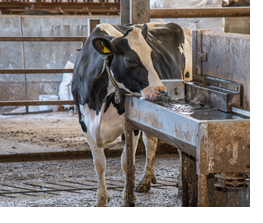 As summer gets into its stride, ForFarmers is urging dairy farmers to implement preventative measures against heat stress, which can significantly impact milk production and herd fertility. Andrew Torrens, Ruminant Specialist at ForFarmers, highlights the ideal ambient temperature for dairy cows ranges between 5°C and 25°C, or lower if the humidity is higher.
He says: "We don't operate at our best when we're hot and bothered and the same applies to cows. Once temperatures exceed this range, cows begin to show signs of heat stress such as panting and drooling. These self-regulating behaviours reduce feed intake, impacting overall productivity.
"The effects on fertility can be seen in the form of reduced pregnancy rates," he adds. "It's vital producers start planning now to help their herds cope with rising temperatures."
To maintain high feed intakes during periods of hot weather, Andrew advises feeding fresh feed in the cooler hours of the day. He also recommends increasing dietary energy density and using high-quality, easy-to-digest feeds to reduce heat from fermentation while supporting intake and performance.
Additional recommendations include: Shade and shelter: Grazing herds should have access to shaded areas, and farmers may consider bringing cows indoors during the hottest parts of the day. Water access: Whether cows are housed or grazing, ensuring an adequate supply of clean, cool water is essential. A lactating cow can drink up to 140 litres of water per day. Water troughs should provide a flow rate of 20 litres per minute - the rate at which cows naturally drink.
Cleanliness and space: Troughs must be cleaned regularly to prevent bacterial growth and encourage intakes. There should be at least 10cm of drinking space per cow to avoid crowding and ensure consistent intakes. Ventilation: Good airflow is crucial in housed systems. Open or protected ridge vents, additional air inlets, and the use of fans - particularly in high-traffic areas like the collecting yard - can greatly enhance ventilation and cow comfort.
Fertility: include products such as Lintec which are high in energy to increase the density of the diet to help reduce the negative energy balance due to reduced intakes.
ForFarmers
|
|
|
|
|
With 30+ years experience we have studied the behaviour of the cow in the cubicle bed on our own family dairy farm and across hundreds of other farms.. We offer a no obligation site assessment or advice on your project to ensure you have the best possible set up for your cows. Reduce incidents of lameness, mastitis and other issues with Mayo advice and guidance from the onset of your project.
Watch the video. Find out more www.mayofarmsystems.co.uk
|
|
|
UK - Reset and reseed grassland to offset forage shortage
With many livestock farms facing the prospect of a shortfall in forage production this year, growers are being urged to assess their grass swards and plan for autumn reseeding or renovation as a matter of urgency. "A significant percentage of livestock farmers in the UK have seen early season grass growth being severely hampered by the spring's cold and exceptionally dry conditions," explains Simon Montgomery, Technical Lead for ProCam's Field Options Performance Seeds. "As such, forage stocks are forecast to be in short supply, with farmers advised to take appropriate action to rejuvenate next year's swards."
The lack of rain in March and April, combined with cold soils, meant first-cut silage yields were estimated to be down by as much as 30% in the worst affected regions, with the damage caused by the dry conditions not just confined to early season productivity: "Swards which were impacted by the drought could struggle to recover, with any bare patches caused by a lack of moisture and/or poaching over the wet winter providing an easy entry for troublesome weeds such as docks and thistles."
Simon therefore advises growers to assess the health and vitality of their swards and to put plans in place either to bolster existing swards by overseeding, or, in more severe cases, to carry out a full reseed. "Reseeding creates an opportunity to improve the quality and yield of grassland swards and to enhance livestock performance through higher feed intakes," Simon explains. "A young, well-managed grassland ley can produce 13.5t DM/ha at an energy content of 12.0-12.5ME. In comparison, an average or ageing sward will produce just 7.0t DM/ha at 10.8ME, equating to a loss of 93,150MJ/ha.
"The higher yield potential of fresh swards enables stocking densities to be increased and offsets the need for bought-in feed. Healthier, more productive swards will also support an extended grazing season, with an extra 30 days at grass saving an estimated £3,725 per 100 cows in housing costs alone."
Simon recommends that the best time to assess sward health is straight after second or third-cut silage has been taken.
In terms of which species to plant, Simon explains that the final decision will be dictated by the sward's end use, and local conditions: "Westerwolds and Italian Ryegrasses are an obvious choice thanks to their rapid establishment vigour and ability to produce large quantities of biomass. But this year's dry conditions have clearly illustrated that hybrid ryegrasses which contain Italian and Perennial Ryegrass genetics are better suited in periods of drought thanks to their ability to put down an extensive root structure which enables them to scavenge moisture and nutrients from deeper within the soil profile.
www.field-options.co.uk
|
|
|
|
|
UK - First Milk excellence recognised across the board at International Cheese Show
First Milk was delighted to receive accolades across its product range at the International Cheese and Dairy Awards, the world's largest cheese show in June.
The British-owned regenerative dairy co-operative achieved 22 awards for its hard cheeses, comprising nine gold, eight silver and five bronze medals.
It also secured four major trophies, including the newly awarded Brian Eddy Award for Best Home International English Cheddar and retained the South Caernarfon Creameries Trophy for Best Welsh Cheese of any variety.
From vintage to mild Cheddars, Double Gloucester and Red Leicester, all its cheese types were recognised among the winners. Three of the 22 awards went to its Golden Hooves branded cheeses, reflecting the emphasis on regenerative farming principles practised by First Milk member farmers. The brand's newest product Golden Hooves salted butter, also earned a medal at the first time of asking.
Now an established part of the First Milk group, specialist dairy product manufacturer BV Dairy, won medals for its well-respected reduced fat Greek-style yoghurt and popular full fat soft cheese. Commenting on these successes, First Milk Customer Quality Manager Jack Eade said: "It's an outstanding achievement to have won so many accolades at the world's largest cheese show, particularly doing it across such a wide range of recipes and cheese profiles. It's testimony to our people and the quality of milk our members produce."
FirstMilk
|
|
|
|
|
UK - Inside the Berkhamsted golf course where cows have replaced lawnmowers
A golf course in Berkhamsted has taken an unconventional, and sustainable, approach to grounds maintenance, introducing a herd of cows to graze the fairways as part of a local regenerative farming project.
Instead of traditional mowing equipment, Berkhamsted Golf Club allows cattle to manage the grass naturally, reports National Club Golfer. Up until World War II, cattle grazing on Berkhamsted Common were a regular sight, but they didn't return after the war and it wasn't until 2023 that Berkhamsted Golf Club brought them back.
Each of the herd wears a special GPS collar, enabling the club to control where they graze, so golfers should not encounter any bovine bother.
"We have received fantastic advice from the experts, and the cattle will help Berkhamsted residents and visitors to continue to enjoy using the common for generations to come," says a Club spokesperson.
The initiative is part of a regenerative farming project which the golf club, as custodians of the 520-acre Berkhamsted Common estate, has developed with the assistance of Chilterns National Landscape, and the Herts & Middlesex Wildlife Trust.
|
|
|
Innovative Abbi PV-S ceiling fans
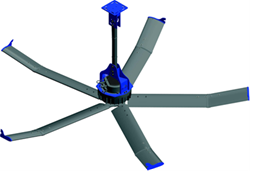 Abbi PV Streamline Technology has been specifically developed for Abbi ceiling fans with a diameter of 5 meters and larger. By applying a newly engineered rotor blade geometry, this system achieves a significantly broader distribution of airflow.
Streamline Technology enables a consistent airspeed over a much larger throw area compared to the straight rotor blades used in conventional ceiling fans.
Thanks to its optimized blade design, PV-Streamline (PV-S) offers a wider cooling reach-without the need to increase fan speed! This allows for more effective ceiling fan cooling even in environments where low rotation speeds are required. Streamline Technology is effective on fans with a diameter larger than 4 meters.
As a result, the Abbi ceiling fans with diameters of 3 and 4 meters will remain unchanged in their current design. Rotor blades consist of two segments, connected during installation using a specially designed coupling piece. This design ensures that the blade set (including packaging) never exceeds 1.90 meters in length.
As a result, additional costs for long-load transport are now a thing of the past www.abbi-aerotech.com/
|
|
|
UK - Knapsack gives options in controlling grassland weeds
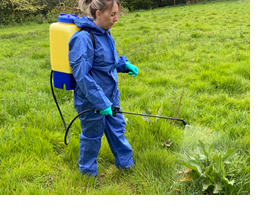 Knapsack sprayers are popular because of their mobility and ease of use in challenging of terrains but also as an effective method of managing unwanted additions to swards, says Dave Gurney, Corteva Agriscience's Field Technical Manager for Grassland Crop Protection Products.
He says: "Although a useful tool, to legally use a knapsack sprayer, you must have PA1 and the appropriate PA6 qualification for the job being undertaken."
Knapsack sprayers can be particularly useful where access is poor, weed populations in a field are below 5%, or where there is no access to a boom sprayer.
When applying a herbicide, it is important a product is chosen which targets the specific weeds you want to control while also being safe for the surrounding grass. Dave says: "Plan your spraying activities during periods of active weed growth and before the weeds have started flowering for maximum effectiveness. Spraying during windy conditions should be avoided to prevent herbicide drift onto the spray operator and non-target plants."
There are few selective herbicides which have authorisation for handheld equipment use. Dave explains: "Grazon Pro from Corteva is one of the products licensed to be sprayed through a knapsack. It is an excellent solution for docks, nettles, thistles, brambles and other woody weeds. It can be applied using the hand lance on an ATV mounted sprayer. "The dose rate is 60 ml in 10 litres of water, so a one litre pack of Grazon Pro provides for 16 knapsack fills of 10 litre capacity."
Dave says: "Use the spot-spraying technique to apply Grazon Pro to the weeds by aiming the spray directly at the foliage of the target weeds, and spraying up to, but before the point of run-off.
Corteva.com for more information
|
|
| |
BRITISH DAIRYING
ENSURE YOU RECEIVE EVERY COPY
British Dairying is available by subscription at £70.00 posted to UK addresses,
£90.00 for Europe, £115.00 for the Rest of the world
or £30 +VAT for British Dairying Online only
|
|
|
QUOTE
"Today is your opportunity to build the tomorrow you want."
Ken Poirot, Author
"I've got nothing to do today but smile."
Simon & Garfunkel
|
|
| |
|
|
|
You are receiving this email because you are a registered reader of British Dairying and we are pleased to send you extra information to supplement the journal.
|
|
|
British Dairying,
WB Publishing Ltd
Priory Cottage, Eastbourne Road Ridgewood East Sussex TN22 5ST
WB Publishing Ltd is registered in England and Wales, Registration No 2951727
|
|