|
|  |
|
August 25, 2026
|
|
UK - Farmers warned of continuing rise in bluetongue (BTV-3) cases
Bluetongue virus (BTV-3) cases are continuing to rise across sheep flocks, dairy herds and beef herds across Great Britain and farmers are being reminded of the importance of speaking to their local vet to source vaccine and ensure livestock are protected.
With the peak of this year's outbreak yet to come, AHDB are hosting a number of meetings in England and Wales to allow levy payers the chance to hear from experts from across the industry and to receive timely practical information and support related to the disease.
Dr Mandy Nevel, AHDB Head of Animal Health and Welfare, said:
"For many farmers, the current outbreak is no longer a distant concern. It's happening now, in livestock systems across the country, and we anticipate disease pressure could peak during September.
"Against this backdrop, vaccination remains the single most effective tool available to help protect vulnerable animals. I appreciate vaccination has been the subject of much discussion over recent weeks, with challenges around vaccine availability. Those concerns are understandable. Demand has increased significantly as the outbreak has expanded, creating pressure across the supply chain.
"Despite these difficulties, the key message remains clear: It is not too late to vaccinate."
The dates and locations of our bluetongue update meetings are:
Book now: Farmers warned of continuing rise in bluetongue (BTV-3) cases | AHDB
|
|
|
|
|
|
|
|
|
UK - Milk prices set to soar as Scotland plugs English shortage
Milk prices could rise by as much as 30% after a dramatic shift in dairy production, with Scottish producers being asked to send supplies south of the Border to plug shortages caused by the summer drought. The UK has gone from a glut of milk, with farmers penalised for producing too much and processors struggling to take supplies, to a looming shortage within months.
The Royal Association of British Dairy Farmers (RABDF) said the latest UK daily milk deliveries showed volumes running 4.8% below the same week last year - a shortfall of about 1.61 million litres a day. Sources close to the RABDF said with up to a 5% drop, milk prices could go up "maybe 30 or more."
The fall in supply has been particularly acute in southern England, where prolonged heat and drought have scorched grass and left cattle struggling with heat stress. Farmers have been forced to use winter feed months earlier than planned, while dry conditions have left them unable to replenish stocks for the months ahead.
Bryce Cunningham, of Ayrshire-based organic dairy Mossgiel Farm said his phone had been "red hot" with requests for milk in the last week from England, where the smaller-scale organic dairy sector has faced severe shortages. "We very rarely get asked to send milk down south," he said. "All of a sudden we're having to turn the tap on to send produce from Scotland down to the south of England while these farms are having serious problems. We've sent about 26,000 litres so far. In this industry, that is small, but in the organic world it's something of value."
He said the farm had been asked for a further 40,000 litres, which he doesn't have.
www.scotsman.com/hays-way/milk-prices-set-to-soar-as-scotland-turns-tap-on-to-plug-english-shortage-8928047
|
|
|
UK - Entries open for the 2026 RABDF NMR GOLD CUP competition
Entries are now open for the 2026 RABDF NMR Gold Cup, celebrating excellence across the UK dairy sector.
Organised by the Royal Association of British Dairy Farmers (RABDF) and sponsored by National Milk Records (NMR), the Gold Cup is one of the UK dairy industry's most prestigious awards, recognising businesses demonstrating outstanding performance, efficiency, herd health and innovation.
Dating back to 1920, the competition is open to all herd management systems, including block-calving, grazing and housed herds.
RABDF Chair Robert Craig said: "The Gold Cup is about recognising the hard work, commitment and innovation that goes into running a successful dairy business. It is a fantastic opportunity for farmers to benchmark their businesses, showcase what they are achieving and learn from others across the industry. We would encourage any eligible dairy farmer to put themselves forward and be part of this year's competition."
Dairy businesses can enter through their milk recording organisation, provided they meet the qualifying criteria, or be nominated by consultants, discussion groups or companies supporting their business.
Qualifying herds must have a minimum of 100 cows/heifers with qualifying lactations and meet the required somatic cell count and genetic merit criteria. Entrants must also provide official milk recording data covering milk production, SCC and genetic merit, alongside a Spring/Autumn calving index for block-calving herds.
Entries are open until 11 September, and shortlisted businesses will be visited by the judging panel in the autumn. The 2026 RABDF NMR Gold Cup winner will be announced at Dairy-Tech on 3 February 2027.
Alongside the overall Gold Cup, awards recognise the highest-ranking Holstein, Jersey and other breed herds, while the Chris May Memorial Award is presented to the herd with the highest Lifetime Daily Yield.
Find out more www.rabdf.co.uk/gold-cup/
|
|
|

Visit CowManager at UK Dairy Day - September 16th
Want to detect health issues earlier, improve breeding results, and save valuable time on your dairy farm?
Stop by Booth H219 at Dairy Day and discover how CowManager helps you manage your herd more efficiently.
The CowManager Ear Sensor combines ear temperature with eating, rumination, and activity data to deliver highly accurate, early alerts. This unique combination enables you to identify sick cows days before clinical signs appear, detect heats with confidence, and make proactive management decisions that improve herd performance.
Our newest Innovation: Need to find a specific animal quickly? CowManager's Find my Cow Flash functionality makes it easy.
The sensor's built-in LED can be activated directly from your app or desktop, allowing you to instantly identify cows, heifers, or calves-even in large groups.
It's a simple feature that streamlines daily routines and helps your team work more efficiently.
With our Find My Cow tools, you can reduce time spent searching for animals, minimize lock-up time, lower labor costs, and improve the accuracy of everyday herd management. The result is greater efficiency, better animal care, and increased profitability.
Whether you're looking to optimize workflows, enhance animal health, or maximize the potential of your herd, CowManager provides the insights you need to make informed decisions.
Visit us at Booth H219 during UK Dairy Day and see how smarter monitoring can transform your herd management.
|
|
|
UK - Fluid therapy is a gamechanger to herd health
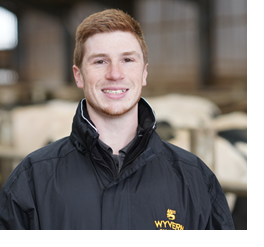 Providing a high volume of fluids quickly to sick, fresh or cows with low rumination can reduce metabolic challenges and accelerate recovery resulting in better herd performance.
"Under normal conditions, adult cattle can drink around 80 litres of water per day; in warm conditions this can increase to 100 litres per cow per day, so recent hot weather presents exaggerated challenges if cows are not drinking sufficient water," explains Sam Mitchell, Veterinary Surgeon at Wyvern Farm Vets.
"Being proactive and rehydrating challenged cows with oral fluids can have significant benefits, especially when we are experiencing warm weather," he explains. "Stomach pumping can supplement around 50% of the cow's daily requirements in under 5 minutes. It's a gamechanger for herd health."
Combining this with targeted electrolyte 'recipes' is recommended by Mr Mitchell who trains farmers to use the Selekt system; with a range of formulae for tackling specific health issues.
"Fresh cows, for example, are provided additional calcium and yeasts to assist normal function and prevent milk fever or ketosis. Cows that are sick or with low rumination are given a balanced electrolyte aimed to maximise absorption and distribution, whilst replacing sodium, potassium and chloride ions lost through sweating. The added benefit of dextrose sugar can be beneficial to providing the short burst of energy cows need to eat or drink during heat stress, crucial for kick-starting the recovery process."
In the UK, heat stress becomes a significant risk to cows when environmental temperatures exceed low- to mid-twenties. "At this time, a cow can no longer regulate its internal body temperature below 39.5oC, and the natural response is to maximise heat loss and minimise further heat production."
Sam explains the cow achieves this though reduced activity, which can lead to lower feed and water intakes; panting and sweating which encourages heat loss, or selective eating, so favouring smaller amounts of higher energy, moist feed over dry forages. The result of which can be reduced milk production, metabolic issues, and in extreme cases, death.
Overall, the cost of heat stress is estimated at £200-£400 per cow per year depending on severity. "Milk yield can reduce by around 15-20% during heat stress, conception rates can reduce by as much as 50% in some cases during periods of heat stress, and a higher number of cattle 'not-seen bulling' in the herd can extend service periods, at a cost of approximately £4 per cow per day," he says. "Cattle in the first half of gestation also have approximately 10% higher risk of abortion during heat stress, not only resulting in loss of a viable calf but also fertility and milk losses of the cow."
A preventive approach is clearly favourable and there are some simple, practical steps all dairy farmers can take. "Pump cows early. Administration of oral fluids to cattle flagged with reduced appetite, activity or rumination by on-farm herd management systems. If possible, feed in an evening rather than morning to maintain dry matter intakes during cooler overnight temperatures. Also look at the environment; provide shade, improve ventilation or if workable, add fans or a fan/sprinkler combination," he concludes.
WyvernFarmVets
|
|
|
UK - Patience will pay dividends for drought affected grassland
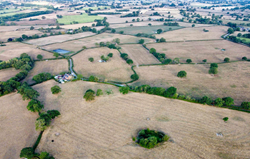 With large swaths of grassland suffering the effects of the UK's ongoing drought, livestock farmers are being advised to play the long game when it comes to preserving the productivity and quality of existing forage swards.
"Despite the recent spell of hot and dry weather, the majority of livestock farms in the UK have access to decent crops of silage and hay which were safely gathered into sheds and silos during the favourable conditions at the start of summer," explains James White, Barenbrug Account Manager. "Since then, however, the weather has been less than favourable, with the lack of rain and record-breaking temperatures putting grass and forage production at the mercy of Mother Nature and forcing many livestock farmers to break into their winter forage reserves."
While there's nothing farmers can do to make up for the lack of fresh grass growth while the drought endures, they should be thinking about how to mitigate any long-term damage to swards once more advantageous conditions return. "Other than practicing their rain dance routines and using winter feed reserves to bolster lacklustre summer grazing, there's not much livestock farmers can do to alleviate the current situation," James continues. "However, when the weather breaks and rain finally arrives, farmers should adhere to a few simple guidelines to maximise the potential of their existing swards.
"For example, despite the temptation to graze new grass growth as soon as it appears, a safer option, and one which will safeguard the long-term productivity and quality of current swards, is to keep stock off the worst affected fields until fresh regrowth reaches the three-leaf stage. "Grazing too hard, too soon will be counterproductive, with future regrowth stunted resulting in less forage available later in the season," James continues.
In extreme circumstances, James advises farmers to choose a field, or fields, which can be sacrificed in the short-term so that the farm's remaining grazing area has longer to recover.
"Forfeiting a handful of fields by grazing them hard so that the remainder of the grazing platform has longer to recover could be the best option where swards have been under severe drought stress," he explains. "Then, when the sacrificed swards have been completely depleted, they can be reseeded with a rapid establishing multi-species mixture of ryegrasses, fescue, clover, Timothy and Cocksfoot such as Barmix, or overseeded with a specialist mixture such as Barmix Renew.
"Alternatively, to maximise protein production, an SFI mixture such as CSAM3 Barmix which also benefits from the inclusion of herbage species such as plantain and chicory, could be used to provide a more diverse rooting structure and extended growth curve."
Key to a successful reseeding season is to prioritise those fields most in need of renovation and, where possible, to introduce new seed while the ground is still warm from the summer's hot weather.
"But don't be tempted to reseed too soon," James cautions. "Wait until adequate soil moisture is available. That way, a fast-establishing mixture such as those mentioned will be ready to graze within a handful of weeks.
"Only time will tell what the autumn will bring," James concludes, "but with a bit of luck and help from Mother Nature, hopefully we'll see an extended grazing window which will take the pressure off any winter forage stocks which have had to be used early. Either way, there's no time like the present to start planning and to talk to your agronomist or Barenbrug seed rep to discuss the best seeding options for your farm and its unique set of circumstances."
Barenbrug
|
|
|
UK - Maize additive key to optimising forage stocks on somerset farm
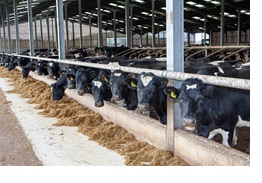 Using an additive on this year's earliest ever maize harvest is a no brainer for the Tincknell family who are looking to safeguard every tonne of forage following the drought.
Tom Tincknell farms 1,000 acres near Wells in Somerset, with his sons, Sam and Henry. They run 200 spring calving, British Friesians at Cross Farm, Wedmore, and 200 autumn calvers at Lower Manor Farm, Wells.
Following multiple heat waves and dry conditions, 20 acres of maize grown on contract by Steanbow Farms was harvested on 19 August by a contracting team from Steanbow Farms and James Bolton. The mid-August date is around 2-3 weeks ahead of when most farmers would expect to harvest and a week ahead of when the Tincknells harvested last year following the hot summer. Another 50 acres, also grown on contract, is not as far ahead and will likely come off at the end of the month.
Like many livestock farmers the Tincknells are keen to maximise every tonne of forage in what has been a challenging forage year because of the drought.
"We've been feeding grass silage for weeks because the cows are basically grazing a desert," Sam says. "We're in a better position than many because we've got a lot of wetter ground on the Somerset Levels so we've got good first, second and third cut grass silage and built a stock of round bales, but we need to get as much as we can from maize to carry us through the winter."
With maize maturing rapidly during hot weather, Sam and his contractors have been assessing the crop every other day from the start of August to check readiness. "The 20 acres suddenly came ready, I couldn't believe how quickly it changed. Because of the difficult growing conditions, it's quite variable across the field, but it should be about 32% dry matter," Sam says.
To protect against dry matter and nutrient losses, the Tincknells treat all maize with Ecocool silage additive. Ecocool is a heterofermentative additive, which produces lactic acid to drive efficient fermentation in the clamp and a rapid drop in pH to help stop the proliferation of undesirable bacteria. Acetic acid production also helps control yeasts and moulds, helping to prevent heating at feed-out.
Sam explains: "We use Ecocool to make sure we've got the best possible forage we can. It definitely helps the fermentation and when the clamp is open we don't get the mould on the face."
As maize crops will likely be drier in many regions, and so harder to consolidate, there could be increased risk of heating and nutrient losses, which makes Ecocool even more valuable. Volac's Amanda Clements says maize is also naturally quite a dirty crop, harbouring yeasts and moulds in dying leaves and rotting tassels.
"The lack of rain also increases that risk as the crop hasn't had a good wash and there could be even higher levels of bacteria and moulds. Left unchecked, they can interfere with preservation. Ecocool can help tip the odds in your favour by providing a rapid drop in pH and helping stop the growth of undesirable bacteria," she explains.
To prevent air ingress and heating in the clamp, the Tincknells pay attention to consolidation and always use side-sheets, a cling-film and heavy straw bales on top. Half sheer-grabs will be taken at feed-out if necessary to ensure they move across the 15-metre-wide clamp rapidly and limit air exposure on the face.
Maize is fed as part of a total mixed ration (TMR) to the autumn calvers, whilst the spring calvers receive blocks of grass and maize silage in troughs at calving for about a month before turnout. Sam says maize has proved valuable in supporting higher yields, with the spring calvers averaging 6,000 litres a cow a year and the autumn herd, 7,200 litres. The business also finishes 250 dairy beef animals annually which will be fed a TMR including maize this winter.
Volac
|
|
|
UK - Q2 2026 dairy trade review: cheese exports at an all-time high, whilst other categories disappoint
Key trends
- Cheese export volumes continued to grow, and are now at an all-time high
- Milk powders also saw export growth in volume terms
- Total UK dairy export volume for Q2 2026 declined 25% year-on-year to 277,800 tonnes, driven by milk and cream, yogurt, whey and butter
- The EU drove export decline
- Total UK dairy export value stood at £487 million, down 17% year-on-year amid decline in volumes
- Total import volumes were also down, driven by milk and cream and butter
Read the full AHDB article: Q2 2026 dairy trade review: cheese exports at an all-time high, whilst other categories disappoint | AHDB
|
|
|
UK - Make reservoirs easier, urges CAAV
The Government needs to expedite and improve its plans to make it easier for farmers to create reservoirs if it is remotely serious about food security. This year's drought - after one of the wettest winters on record - has brought water management sharply into focus, and unhelpful legislation is preventing farmers from taking necessary action.
"July was the driest since records started in 1836," says Jeremy Moody, secretary and adviser to the Central Association for Agricultural Valuers. "Some places have not seen rain for 60 days. Two thirds of England and all of Wales are now under drought orders."
Crops have died in the field, with yields significantly down, and livestock are having to be fed their winter rations, leaving a shortfall for the winter ahead. In addition, heat stress has slashed milk production, with daily temperatures exceeding 30oC for 35 days this year, and likely to increase.
"Having taken water for granted for so long, we should now learn from those who have always had much less and use it more carefully while still growing crops and keeping animals," says Mr Moody. "We need to identify how to harvest and abstract water best, store it well and then use it most efficiently, taking advantage of when our extreme weathers bring long periods of rain instead."
Despite warm words from the Government about making it easier for farmers to build reservoirs, the legislation remains restrictive. Environmental Impact Assessment (EIA) issues override permitted development rights (PDRs), while the latter also restrict development within 25m of a trunk or classified road, prevent farmers from taking any minerals extracted off site, and prohibit bringing waste materials onto the land save for providing a hard surface.
"The frustrating interactions with both EIAs and the abstraction rights needed to fill reservoirs require a much more serious approach by government," says Mr Moody. "It needs to ease the complexity, delay and cost of processes that depend on Natural England and the Environment Agency as well as planners. For Wales, where farm reservoirs are becoming useful, we can hope that the new John Davies review of Welsh farming bureaucracy can propose similar reforms."
Accelerating the Structures and Buildings Allowance for Income and Corporation Taxes, so that it is of practical use for costs involved would also help with such substantial and necessary investment, he adds. "Alternatively, the Annual Investment Allowance could be increased and widened to cover such work."
As periods of water scarcity become more frequent, increasing storage capacity and preventing wastage will become more important. "That may mean protecting stored water from evaporation and moving from rain gun irrigation to more effective technology." A farm reservoir is also an on-site resource against wildfire - and of benefit to wildlife. "With yet more extremes of weather to come, this is reshaping what we do and how we do it," notes Mr Moody. "Farmers need to futureproof their businesses and food production, and the Government needs to make it easier for them to do so."
www.caav.org.uk
|
|
|
|
| |
BRITISH DAIRYING
ENSURE YOU RECEIVE EVERY COPY
British Dairying is available by subscription at £70.00 posted to UK addresses,
£90.00 for Europe, £115.00 for the Rest of the world
or £30 +VAT for British Dairying Online only
|
|
|
QUOTE
"Travel light, even yesterday is baggage."
"When you realize nothing is lacking, the whole world belongs to you."
Zen proverbs
|
|
| |
|
|
|
You are receiving this email because you are a registered reader of British Dairying and we are pleased to send you extra information to supplement the journal.
|
|
|
British Dairying, Grove House Media LtdPriory Cottage, Eastbourne Road Ridgewood East Sussex TN22 5STGrove House Media Ltd is registered in England and Wales, Registration No 16722598 Us
|
|