|
|  |
|
July 14, 2026
|
|
UK - Q1 2026 EU dairy products available supplies trend up
Key trends
- Butter and cheese stocks grew, boosted by increase in milk deliveries
- Cheese stocks also rose amid spectacular growth in production
- SMP stocks continued the uptrend whilst WMP stocks shrank
Milk deliveries in the EU increased by 4.6% in Q1 2026 year-on-year, boosting the production of dairy products. Favourable dairy economics continued to drive increase in milk flows. Coupled with this, increased imports further strengthened the supplies of butter, cheese and SMP. Lower production and imports dragged down the available supplies of WMP.
Total dairy exports on the continent picked up by 6.9% in the first quarter year-on-year. Good demand for butter, cheese and SMP boosted exports while exports of WMP remained lower amid subdued demand from some Middle East and Asian countries. Higher price of WMP compared to Oceania weighed on exports.
Butter stocks continued to scale up
The increase in available supplies of butter during Q1 2026 was due to increasing production, supported by strong milk supplies. Imports also rose during the period. Exports picked up by a remarkable 34.1% (19,700 tonnes) but not enough to compensate for growth in production. Exports increased to some Asia and MENA (Middle East and North Africa) nations.
On balance, available supplies of butter increased 8.8% (43,000 tonnes) year-on-year in Q1 2026.
Cheese supplies continued to grow
Cheese supplies were elevated in Q1 following an increase in production and higher imports. Along with strong growth in milk supplies, the protein and fat content increased thereby boosting higher production. Export demand was up mainly from the United Kingdom followed by some Asian and MENA (Middle East and North Africa) nations. Available supplies of cheese increased by 1.7% (37,800 tonnes) in the first quarter year-on-year.
SMP stocks trend up whilst WMP fell
Available supplies of SMP edged up by 33.7% (53,900 tonnes) year-on-year in Q1 2026. Production and imports increased by 20.8% and 19% respectively which outweighed the increase in exports of 9.7%. Exports increased mainly to Asian countries including Thailand, Indonesia, Singapore, Pakistan and Saudi Arabia, United Arab Emirates, Iraq, Israel, Oman, Lebanon, Yemen, Qatar, Bahrain, Egypt, Morocco in MENA.
WMP production continued the decline seen in the beginning of the year, witnessing a decline of 4.6% in Q1 2026. Processors continued to direct more milk towards production of butter and SMP. Imports declined 75.8% (5000 tonnes) during the period. Export demand remained subdued and declined to the Middle East (Israel, Oman, Kuwait, Serbia) and Asia (Bangladesh, China, Singapore, South Korea).
Available supplies declined by 7.7% (6300 tonnes) due to lower production and imports.
Read the full article
|
|
|
|
|
UK - Margins tighten and supply slows - Rabobank Q2 dairy outlook
Global dairy markets are showing signs of rebalancing as milk production growth slows, though tighter margins and rising input costs continue to weigh on the outlook.
Key points
- Global milk production growth is set to slow sharply from the Q4 peak, falling off a lot in Q2 before declining by Q4
- Farmer margins are tightening as falling milk prices meet rising input costs
- Commodity markets are split, with protein products maintaining strength, while butter and cheese remain under pressure
- Demand is fragile, with inflation, geopolitics and El Niño posing key risks
The Big 7 production region dairy markets are entering a transitional phase as strong 2025 production growth eases. Milk output is forecast to rise by around 1% in 2026, down from 3.1% in 2025, with production peaking in Q2, flattening in Q3 and contracting in Q4.
This signals gradual rebalancing, although supply remains ample following last year's surge. Skimmed milk powder (SMP) and whey are strengthening on protein demand, while butter and cheese continue to face pressure from oversupply.
Farm profitability is tightening across most regions as milk prices weaken and input costs rise. Energy, fertiliser and interest rates remain key pressures, compounded by geopolitical uncertainty.
Inflation and uneven consumer spending are shaping demand, although the "protein trend" continues to support higher-value dairy. While oversupply is easing, markets are entering a more uncertain, margin-driven phase.
* The Big 7 includes the EU, the US, New Zealand, Australia, Brazil, Argentina, and Uruguay
Read more: Margins tighten and supply slows - Rabobank Q2 dairy outlook | AHDB
|
|
|
UK - New cow number limits are introduced in the Netherlands
The Dutch government has announced a new nitrogen-reduction package that includes a land-based dairy standard of 2.6 livestock units per hectare - known in Dutch as 2.6 GVE/ha.
The measure is part of a wider plan to reduce nitrogen emissions, restore nature, and restart permits for farming, construction, and other economic activity. The official Dutch government announcement says the package is backed by EUR20bn in funding.
For dairy farms, the government proposes an emissions standard of 0.164 kg of ammonia per phosphate right by 2035. A phosphate right is a Dutch dairy quota that gives a farmer permission to produce one kilogram of phosphate from cattle manure each year. A dairy cow usually counts for about 32-49 kg of phosphate a year, depending on milk yield; under Dutch figures, a cow producing around 9000 kg of milk a year is counted at 43.5 kg.
Standards for poultry, pig, and veal farms are expected in early 2027. Farmers will be supported with EUR2bn for measures such as changes to feed, housing, manure use, extensification, and voluntary farm closures.
Dutch farm publication Boerderij reported that dairy farmers may also be able to meet the land requirement through cooperation with arable farmers within 25 km.
New cow number limits are introduced in the Netherlands | South West Farmer
|
|
|
UK - Exceptional first-cut silage set to shape winter feeding
With second and third cuts now in the clamp on many farms, attention is beginning to turn towards winter feeding strategies. Analysis of more than 300 first-cut silage samples at the NWF Agriculture laboratory suggests 2026 could be remembered as one of the strongest forage years seen for some time, with quality showing a marked improvement on recent seasons.
This year's first-cut silages are showing a clear improvement compared with first cuts from 2025, reversing the five-year trend of declining silage quality. This improvement in quality has been driven by favourable winter and spring growing conditions, although some regions experienced a drier spring than in 2025.
The main driver behind this improvement is that we have seen silage cut slightly earlier this year, which has meant the grass has been leafier, less mature, lower in fibre and higher in digestibility. The weather conditions have allowed farmers to cut and wilt at the optimum growth stage of the grass, giving an increase in sugar, RFC, ME, with lower fibre and NDF values.
This improvement in quality will give farmers an opportunity to include forage at higher levels within the rations, driving milk from forage with increased forage dry matter intakes. This could also give the potential to reduce purchased feed and improve feed conversion efficiency. There will, however, be a greater requirement for effective fibre and NDF sources, such as straw and fibrous straight feeds, to help balance rations.
Based on results to date, first-cut silage quality is looking exceptional for 2026. This itself will bring some challenges for winter 2026/27. Rumen health will be critical this winter. Lower fibre and NDF levels, combined with higher fermentability, will increase the risk of ruminal acid loading. Without sufficient effective fibre in the diet, the risk of digestive upsets and reduced performance will increase. To help combat this, farmers will need to ensure there is enough effective fibre to give the ration some structure. Higher RFC and increased protein in silage should help maintain rumen balance; starch levels will need to be reviewed carefully, along with an increased requirement for by-pass protein.
The higher dry matter silage, combined with higher sugar, will give the silage an increased intake potential but can also lead to increased risk of heating and aerobic spoilage. Careful clamp management, including maintaining a clean face and progressing quickly across the clamp, can help minimise spoilage. At the feed fence, avoiding overfeeding and regularly removing refusals will further reduce heating losses and support feed intakes. Careful management at the feed fence will also be required, not overfeeding and regular removal of feed refusals will reduce waste and heating, which can lead to lower dry matter intakes.
Better silage this year should give some real performance gains if diets are carefully balanced. Ensure fermentable energy and effective fibre are balanced and avoid pushing high levels of fast fermentable starch into high yielders.
At the start of the feeding period and whenever there is a diet change, careful monitoring will be required. Check cows regularly for cud chewing rates, rumen fill, dung consistency, and milk butterfat; these are all indicators of rumen health. Monitor intakes and adjust as required. Most importantly, carry out regular forage analysis throughout the feeding period and use the results to review ration performance. By closely monitoring forage quality and cow response, farmers can maximise the value of what appears to be one of the highest-quality first-cut silage crops seen in recent years. www.nwfagriculture.co.uk
|
|
|
Health testing is not a luxury…
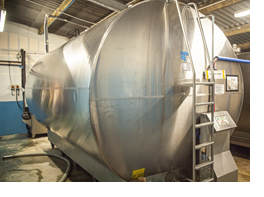 …it's smart risk management.
Time is one of the most valuable assets on any farm. Waiting for problems to appear, reacting instead of preventing, and dealing with unexpected disease outbreaks all come at a cost. Early disease detection gives you the power to act sooner, protect herd performance, and avoid costly surprises.
…it's smart risk management.
Time is one of the most valuable assets on any farm. Waiting for problems to appear, reacting instead of preventing, and dealing with unexpected disease outbreaks all come at a cost. Early disease detection gives you the power to act sooner, protect herd performance, and avoid costly surprises.
Use your bulk milk sample
You can use your bulk milk sample to test for infectious diseases. It's quick and simple and built around your routine.
With flexible testing options designed to suit your needs, NMR makes herd health monitoring easy - saving you time while keeping you in control.
Both NMR and non-NMR customers can screen their herd quickly, easily and cost-effectively for cattle diseases using their bulk milk sample* or individual cow milk samples. Offering a convenient, robust, cost effective and non-invasive way to assess herd health. *well…97% of dairy farmers can do this!
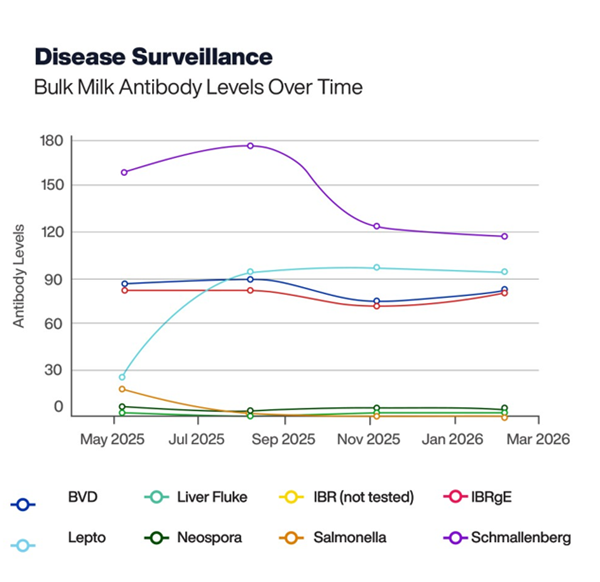
Bulk testing for key diseases includes: o BVD (antibody) o BVD (qPCR Virus) o Leptospirosis o Salmonella o Schmallenberg o IBR (gE & gB) o Neospora o Liver Fluke
Samples can be tested on a regular quarterly regime or on an ad hoc basis, for as many or as few diseases as required. It is best to discuss your requirements with your vet to assess which option best suits your herd. Results are accessed through Herd Companion and can be viewed by third parties if permitted; results can also be sent by email or post.
Individual cow milk samples can also be tested, as well as blood and tissue samples. Speak to us about bolting testing onto recording samples and for non-recording herds, simply let us know how many samples you would like testing and we will send you a sampling kit. www.nmr.co.uk
|
|
|
UK - Judge ruling re firm planning major new pylon routes through Wales
Groups representing more than 500 landowners took Green Gen Cymru to court, claiming they were left "frightened and intimidated" by company agents turning up on their farms. A judge said the company should do more to give landowners proper notice and criticised its "failure to grapple" with the risk of spreading livestock diseases from farm to farm.
Green Gen said it was "committed to carrying out our work responsibly" to "deliver a secure and resilient energy network for Wales". Lawyers acting on the landowners' behalf said they had been vindicated.
Green Gen hopes to build three major electricity pylon routes connecting onshore windfarms planned by its sister company Bute Energy in mid and west Wales with the wider grid network. Proposals affect parts of Carmarthenshire, Ceredigion and Powys - with one of the routes stretching across the Welsh border into Shropshire.
Supporters say Wales' electricity grid is not fit for purpose, holding back renewable energy schemes and the roll-out of low carbon technologies such as electric cars and heat pumps. The company has statutory powers to access land due to its work on what would be nationally significant energy infrastructure.
But it has found itself in a dispute with hundreds of farmers and landowners, who have accused its agents of acting in a heavy-handed way.
Farmers 'vindicated' after ruling to Green Gen Cymru pylon firm - BBC News
|
|
|
UK - NEW Livestock Health Guide launches at Royal Welsh Show
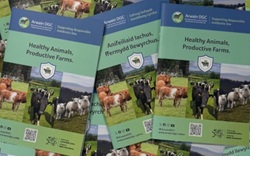 The Royal Welsh Show will see the launch of a new, practical booklet to support Welsh farmers in tackling common livestock diseases while reducing reliance on antibiotics. 'Healthy Animals, Productive Farms' has been produced by Arwain DGC - an award-winning Welsh Government-funded programme that supports vets and farmers in the fight against antimicrobial resistance (AMR) through data-driven decision-making, innovative technologies, and the promotion of best practices.
The launch will be made in conjunction with the Wales Young Farmers Clubs, as part of the drive to increase awareness of AMR among the next generation of farmers.
The farmer-focused Arwain DGC booklet includes guidance on: Recognising common diseases linked with high antibiotic use; Understanding the impact of disease on animal health and business performance; Preventing and managing disease through good husbandry, nutrition, and biosecurity; Reducing reliance on antibiotics without compromising animal welfare.
Among the dairy cattle diseases covered are Lameness, Pneumonia, Johne's Disease, and Calf Scour. Good husbandry prevents disease, and there is advice on biosecurity, livestock housing and ventilation, hygiene, vaccination, nutrition and colostrum management.
The booklet will be launched at the Wales YFC Village on July 22nd at 10am.
|
|
|
UK - Share your views on calf rearing
AHDB are carrying out research to better understand how calves are reared, grown and finished across Great Britain, along with the barriers and opportunities farmers face.
What you share will help shape how the GB Calf Strategy is delivered, so it works better for farmers and the wider industry.
If you rear, grow or finish calves, AHDB want to hear from you.
Taking part is straightforward:
- Complete a short online form to register your interest
- A research partner, Navigator Insight, will contact you to set up a 45-minute phone interview
- Your interview will be completely anonymous
About the GB Calf Strategy
The GB Calf Strategy 2025-2030 aims to make sure every calf is reared with care and purpose, whether within the dairy or beef supply chain.
The strategy focuses on three themes:
- Right Calf
- Right Start
- Right Route
Register before 27 July 2026 to take part.
Register to take part: Share your views on calf rearing | AHDB
|
|
|
|
|
UK - Staffordshire Jersey herd produces Supreme Champion Dairy Product
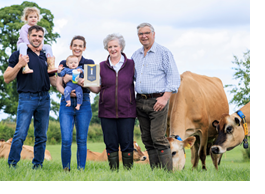 A Staffordshire dairy farming family has been recognised with one of the dairy industry's highest accolades after its pasteurised Jersey whole milk was crowned Supreme Champion Dairy Product at the International Cheese & Dairy Awards.
The Wright Family Dairy, based at Kennels Farm, Tixall, first secured Gold in the Whole Milk class before being awarded Champion Milk in Show for the third consecutive year. The milk then went on to claim the overall Supreme Champion Dairy Product title following anonymous blind judging against dairy products from across the UK and overseas.
The award recognises the quality of milk produced by the family's 200-cow Fourcrosses pedigree Jersey herd, established in Staffordshire for more than 50 years.
Alongside the dairy enterprise, the family launched a direct-to-consumer milk vending business in 2022, pasteurising a proportion of their Jersey milk to sell through self-service vending machines. The remainder of the herd's milk continues to be supplied wholesale to Longley Farm, Holmfirth, a long-established family dairy renowned for producing premium yoghurt and dairy products from Jersey milk.
The diversification was developed to add value to the family's milk while strengthening the long-term sustainability of the dairy business. Since launching, the business has expanded from one vending machine to two locations across Staffordshire, creating employment opportunities for local people while keeping more of the food pound within the local economy. By processing and selling milk directly, the family have strengthened connections with local consumers while supporting rural jobs and businesses throughout the supply chain.
The Wright Family Dairy places sustainability and animal welfare at the heart of the business. Milk sold through its vending machines is supplied in reusable glass bottles, reducing single-use plastic and food miles while encouraging customers to buy local. The herd is managed under Red Tractor Assurance standards, with animal health and welfare underpinning every aspect of the farming operation.
BBC
|
|
|
Ireland - Milk cheque boost for farmers as Dale Farm hits bumper year
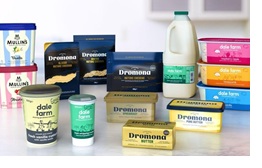 Group Chief Executive Nick Whelan comments: "Our focus remains on ensuring the profitability and sustainability of our farmers' businesses."
Dale Farm has reported another strong financial year - and its 1,300 farming families saw the benefit directly in their milk cheque.
The farmer-owned dairy cooperative said it returned more than £10 million to its members by paying an extra 1p per litre "13th payment" on all milk supplied in the year to March 2026.
Throughout the year, farmers received a competitive average milk price of 40.38p per litre (after transport), amounting to £409 million in total milk payments - ahead of average prices in both Northern Ireland and the Republic.
Dale Farm's business model remains robust, supported by a milk pool now exceeding 1 billion litres annually, which has grown 13% in two years thanks to farmer confidence and continued investment.
Milk cheque boost for farmers as Dale Farm cooperative enjoys bumper year - The Irish News
|
|
|
UK - Unite secures union recognition at Milk & More
Unite, the UK's leading union, has restored statutory recognition at three Milk & More depots, completing a remarkable campaign that has restored collective bargaining rights for workers less than a year after the company terminated its national voluntary recognition agreement.
Workers at the Erith, Ipswich and Watford depots can now call on union support for pay and conditions negotiations, health and safety representation and advice in the workplace.
In April 2025, Milk & More terminated its long-standing national recognition agreement with Unite and shopworkers union USDAW, with recognition formally ending in October 2025. Unite launched a strategic organising campaign to rebuild representation within the business and pursued a new statutory route by submitting separate applications to the Central Arbitration Committee (CAC) seeking recognition.
Milk & More opposed the applications throughout the CAC process, challenging Unite's proposed bargaining units and requiring the cases to proceed to a full hearing. Following that hearing, the CAC accepted Unite's proposed bargaining units in all three cases, allowing independent recognition ballots to proceed.
Workers at each depot subsequently voted in favour of Unite conducting collective bargaining on their behalf.
Unite regional officer Perry Wright said: "This victory belongs to our workplace representatives, activists and members who spent months organising, recruiting, speaking to colleagues and demonstrating the value of collective bargaining. Their determination has restored workers' voices in the workplace.
"We now look forward to working constructively with Milk & More to build positive industrial relations and negotiate on behalf of our members."
UnitetheUnion
|
|
|
US - America can't get enough of protein. The dairy industry can't keep up
Whey protein inventories have fallen roughly 50% since 2023, and prices keep rising. Dairy industry infrastructure required to process protein from cheesemaking takes years to scale and most plants were built for steady, predictable growth, making it difficult to commit to significant financial outlays for new capacity.
Use of GLP-1 drugs requires more protein to offset muscle loss, which has compounded already rising demand for protein as part of the American diet, with it showing up across America's "protein-maxxing" obsession is stressing the dairy industry.
Whey protein concentrate, once considered a cheap byproduct of the cheese manufacturing process, has become one of the most in-demand ingredients in the American diet. The surge is creating nationwide shortages, with some suppliers sold out for the latter half of the year, according to a USDA report from late April. US whey protein end-of-month inventories have fallen by roughly half since 2023.
"The market remains extremely tight, with product largely unavailable and buyers continuing to report difficulty securing supply," the USDA reported in a June 25 report. As a result, whey protein isolate prices have reached as high as 14 dollars per pound.
With the boom in use of GLP-1 weight loss drugs; which is poised to expand across many more Americans due to Medicare coverage; protein consumption is headed higher at least in the short term. Use of these drugs requires users to increase protein consumption to avoid muscle loss. And that continued expansion of weight-loss drug coverage comes at a time when protein is already in high demand among Americans in many consumable forms.
America can't get enough of protein. The dairy industry can't keep up
|
|
|
China - Chinese dairy industry gains global recognition for innovation
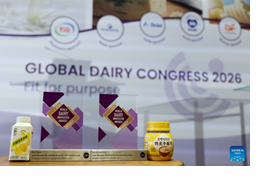 China's dairy industry is gaining increasing international recognition for its innovation capabilities, as companies expand beyond traditional dairy products into functional nutrition, product development and global research collaboration, industry experts said recently.
At the 2026 Global Dairy Congress held in Barcelona in June, Chinese dairy companies were among the participants recognized at the World Dairy Innovation Awards, reflecting the sector's growing international presence. Yili Group received two category awards, along with multiple finalist nominations and commendations. This year's competition attracted 177 entries across 23 categories. Richard Hall, Chairman of the Global Dairy Congress, said China's dairy industry has undergone significant development despite entering the global market later than many traditional dairy-producing countries.
"China started relatively late compared with some traditional dairy-producing countries, but it has learned extremely quickly," Hall told Xinhua in an interview.
Hall said the industry's progress reflects sustained investment in research, product development and technological innovation, adding that companies such as Yili demonstrate how Chinese dairy producers are moving from manufacturing-oriented growth toward innovation-driven development.
Industry executives said the dairy sector is entering a stage in which consumers increasingly seek products tailored to specific health needs rather than simply providing basic nutrition. Ignatius Szeto, Vice President of Yili, said product development is increasingly focused on areas such as bone health, muscle function, immune support and blood glucose management to meet changing consumer demand.
Chinese dairy industry gains global recognition for innovation-Xinhua
|
|
|
Thailand - Excess raw milk supply puts industry in crisis
Thai dairy cooperatives warn that excess raw milk, zero-duty milk powder imports and school milk stocks could push 50 cooperatives into crisis.
Nairit Chamle, Chairman of the National Farmers Council, said that dairy cooperatives across Thailand were facing a severe raw-milk sales crisis, with the impact spreading through the supply chain.
If the situation is allowed to drag on, more than 50 dairy cooperatives nationwide could face financial problems serious enough to threaten their survival, he warned.
The government is urged to clear 235 million school milk cartons, options include: speeding up the clearance of accumulated UHT school milk cartons.
A Cabinet resolution on September 9, 2025, had ordered quality checks on about 100 million cartons of school milk. However, the process stalled after the House of Representatives was dissolved.
The remaining stock has now risen to 235,467,819 UHT milk cartons, involving 25 dairy cooperatives and one unit under the Dairy Farming Promotion Organisation of Thailand, or DPO. The unsold stock has worsened liquidity shortages among cooperatives and severely affected their ability to buy raw milk from members.
The second proposal is to support the use and sale of bio-liquid fertiliser made from fresh cow's milk, in order to absorb excess raw milk that has no buyers.
More than 8,417 tonnes of raw milk have already been processed into bio-liquid fertiliser, representing raw-milk value of more than 151.5 million baht. Nairit said the government should promote the use of this product to reduce losses for farmers.
See full story Thai dairy sector warns 183 tonnes of raw milk left unsold daily
|
|
|
UK - South East Water launches dedicated emergency support for livestock owners during a supply outages
South East Water has launched a major new emergency support system to protect livestock and give farmers in its supply area a vital safety net during unplanned water outages.
The new framework outlines a rapid, structured deployment of emergency water supplies specifically tailored to the needs of local livestock handlers across parts of Hampshire, Berkshire, Surrey, Sussex and Kent.
The livestock register has been developed following lessons learned from previous water supply interruptions and feedback from livestock owners that water outages pose an immediate threat to animal welfare and farm livelihoods.
The plan ensures that critical support is on the ground within 48 hours of an outage, with emergency teams prioritising areas facing the highest animal welfare risks.
For livestock owners who have six or more animals, the drinking water company will deliver direct water support tailored to the setup of the farm. Depending on the individual needs, the business will use reasonable endeavours provide water through either emergency bottled water for young or vulnerable stock, mobile bowsers*, strategically placed static tanks, and direct bulk tanker deliveries straight into on-farm storage tanks.
For smallholders, with five or fewer animals, during a water outage, the drinking water company will set up filling points as close to the affected area as possible to provide quick, easy access to bulk and bottled water for self-collection. This enables smallholders to easily fill storage units such as water bowsers.
Livestock owners in South East Water's supply areas, from commercial farms to private smallholders, are encouraged to register their details online via South East Water's website: business.southeastwater.co.uk/livestocksupport
|
|
|
|
| |
BRITISH DAIRYING
ENSURE YOU RECEIVE EVERY COPY
British Dairying is available by subscription at £70.00 posted to UK addresses,
£90.00 for Europe, £115.00 for the Rest of the world
or £30 +VAT for British Dairying Online only
|
|
|
QUOTE
"Don't get older just to get wiser. If you get older, you will be wiser, I believe that - if you dare. But get older because it's fun!"
Maya Angelou - Poet & Activist, 1928-2014
"Service to others is the rent you pay for your room here on earth."
Muhammad Ali - Boxer & Activist, 1942-2016
|
|
| |
|
|
|
You are receiving this email because you are a registered reader of British Dairying and we are pleased to send you extra information to supplement the journal.
|
|
|
British Dairying, Grove House Media LtdPriory Cottage, Eastbourne Road Ridgewood East Sussex TN22 5STGrove House Media Ltd is registered in England and Wales, Registration No 16722598 Us
|
|