|
|  |
|
May 19, 2026
|
|
UK - Study shows breeding can help cut dairy farm emissions
A new study suggests that breeding could play a bigger part in reducing greenhouse gas (GHG) emissions from dairy farming.
The research, commissioned by AHDB and undertaken by Promar International, looked at how genetics can help lower a farm's carbon footprint.
It found that herds using targeted breeding could reduce emissions by up to 16% over five years.
The study focused on the EnviroCow index, which ranks animals based on traits linked to environmental impact. Herds that selected bulls with higher EnviroCow scores saw steady improvements over time.
On average, this led to carbon footprint reductions of 8.5% to 16% over five years. This progress assumed an average emissions intensity of ~1.01kg CO?e per kg of fat and protein-corrected milk (FPCM).
Why genetics matters: Dr Jordana Rivero, principal sustainability consultant at Promar International, said the results were 'really promising'.
She explained that genetics account for more than one third of the variation in emissions between dairy farms.
She said that EnviroCow showed the strongest link to lower emissions compared with other genetic measures.
Find out more about this study
|
|
|
|
|
UK - Prioritise fuel for food and prepare for 2027 shortages, warns CAAV
The UK will soon start to see real impacts of the crisis in the Gulf, and the Government needs to act now to ensure continued access to food. That's according to the Central Association of Agricultural Valuers, which warns that access to fuel may need to be prioritised to avoid crops rotting in fields this summer and enable autumn sowing.
"Reviews of the oil market by sector experts point to a tipping point in supplies in early June, with critically low global levels by the end of May and stocks exhausted by the end of June," says Jeremy Moody, secretary and adviser to the CAAV.
"So far, the major impacts have been on South-East Asian manufacturing, but the seismic waves are coming towards us. We all need to be thinking now how to make the best of remaining supplies as fuel and other goods come to be limited by price, shortages or controls."
Harvesting, processing and delivery of field vegetables and arable crops is highly fuel dependent, and the UK's complex food supply chains are extremely vulnerable - as seen by the bare supermarket shelves during the Covid pandemic. And it's not just fuel that's affected - it's also access to raw materials for plastics and CO2 for packaging. Restriction of supplies will, in the first instance, push food prices higher, and subsequently, risk halting them altogether.
Even if the war were to be ended quickly - which is looking increasingly unlikely - there will be a time lag before normality can resume, says Mr Moody. "Physically blocking 20% and more of world supplies of oil and other commodities for months will inevitably have major consequences. The prospect of a long blockade extends that timetable, with long-term consequences for UK farming and food supply."
Domestic production of wheat and barley could be severely curtailed this autumn as arable farmers, following three years of financial losses and facing another two loss-making years, may opt not to plant some or more of their land this autumn. Low commodity prices and extreme weather meant arable producers lost money in 2023, 2024 and 2025, and now soaring input costs have added to the mix when looking ahead to 2027.
Red diesel costs have soared from 65ppl, at one point to almost 140ppl, with nitrogen fertiliser up 53% on last year. Harvest 2026 is predicted to lose an average of £56/acre, rising to a loss of £139/acre for harvest 2027. "Across a 500-acre farm that equates to losses of £28,000 and £69,500, respectively," says Mr Moody. "The cumulative losses point to a significant strain on cash flow and credit, limiting farmers' ability to plant even where they are minded to do so."
It is possible that the impact of the war constitutes 'exceptional circumstances', warranting official intervention under s.20 of the Agriculture Act 2020, he suggests. "The situation should be under close review by the UK Government's Market Monitoring Group, and appropriate options identified." www.caav.org.uk
|
|
| |

|
To find out more about Neogen Igenity can help build stronger foundations for your business, click here.
| |
|
|
|
UK - National testing highlights widespread mycotoxin challenge
Farmers are being urged to take a preventative approach to mycotoxin management to protect herd performance following findings which identified the toxins in over 90% of feed and forage samples.
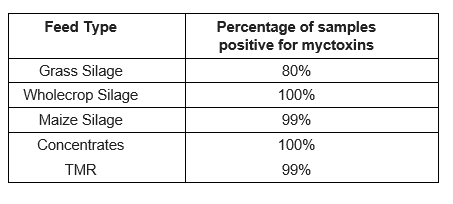
776 animal feed and forage samples were tested in the UK & Ireland in 2025 as part of Volac's Mycocheck service, with 93.2% of those positive for one or more mycotoxin.
Mycotoxins are produced by certain moulds which can grow on bought-in feeds and home-grown silages. These invisible toxins have wide-ranging effects including reduced feed efficiency, suboptimal yields, poor fertility and mastitis.
Mycocheck tests for 31 different mycotoxins and assigns a risk score to each based on how likely they are to impact the cow so mitigation strategies can be put in place. Rob Furmage, Scientific Services Manager for Volac says the results show that mycotoxins could be "silently eroding profits" on many farms.
"The data is quite stark and highlights that nearly all farms could be facing a hidden mycotoxin challenge," he explains. "Even at low levels they can cause depressed milk yields, you might not even know cows could be achieving more. With low milk price, farmers can ill-afford any drain on performance."
Wholecrop and concentrates were found to be particularly high risk with 100% of samples testing positive, followed by 99% of maize silage samples (see table).
Deoxynivalenol (DON) and Zeralenone (ZON) mycotoxins, which are produced by Fusarium moulds, were found most frequently (71% and 49% of samples respectively). Both have wide-reaching impacts, for example DON can cause immunosuppression or immunostimulation, whilst ZON can lead to reduced fertility.
The results also highlight the variability in mycotoxin risk both within the same year and between farms. Analysis showed that various high risk geographical "hot spots" emerged through the year, which could have been linked to buying-in high risk imported maize-based feeds or environmental stress in a particular region, for example. Mr Furmage says it underlines the unpredictability of mycotoxins.
"Not all moulds will produce mycotoxins, but a mould is more likely to produce a mycotoxin if it is stressed. That means they can rapidly become an issue, for example very wet or very hot weather might trigger them. This means herd challenge can very quickly escalate leading to herd level issues such as poor fertility and reduced feed intakes," he explains.
This underlines the value of taking a preventative approach and including the triple-action mycotoxin remediator and endotoxin binder, Ultrasorb in diets at feed-out.
"Unlike a straight clay binder which simply binds a small number of mycotoxins, Ultrasorb binds, transforms and degrades a wider range using a combination of specifically selected clay binders, yeast fractions and biological active agents. This makes it effective against mycotoxins that are difficult to bind such as DON and ZON," Mr Furmage explains.
It is available through Trident MicroNutri in the UK and can be incorporated into the diet in multiple ways including in blends, minerals or as part of a farm pack.
Mr Furmage adds: "Any drop in milk production because of mycotoxin challenge can be hugely costly and take time to recover compared to feeding Ultrasorb preventatively which costs pennies per cow per day. It's a no brainer, particularly in the current market."
|
|
|
UK - 'What's Next for Organic Dairy'
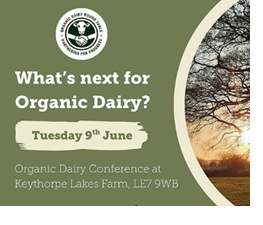 Tuesday 9th June 2026, the Organic Dairy Roundtable will officially launch its first major industry event, 'What's Next for Organic Dairy?', hosted at Keythorpe Farms, Leicestershire.
The Organic Dairy Roundtable was formed to bring together farmers, processors, feed businesses, certifiers, banks, advisers and the wider industry to create a stronger collective voice for organic dairy production. The focus is very simple - collaboration, practical discussion and building a sustainable future for the sector. The event itself has been designed for both organic and non-organic farmers alike and follows a conference-style format in the morning before moving into a farm walk during the afternoon.
Every panel will include a next generation participant alongside established industry experts, helping to give a genuine snapshot into the future of the sector and the people who will shape it.
The event has strong support from across the industry, including feed compounders, banks, milk processors and many others, which reflects both the quality of the event and the importance of the conversations taking place.
The day will finish with a farm walk around Keythorpe Farms, managed by the Armitage family - an exceptional commercial organic dairy business producing outstanding results and offering a fantastic opportunity to see progressive organic dairy farming in practice.
Tickets are £17.50 per person including lunch, with the event running from 10:00am - 4:00pm.
www.organicresearchcentre.com/news-events/events/whats-next-for-organic-dairy/
|
|
|
UK - April 2026 dairy market review
Susie Stannard, AHDB Lead Analyst Dairy reviews the April 2026 dairy market. GB milk deliveries in April reduced by a marginal 0.1% year-on-year with milk supplies now showing signs of stabilisation. The latest week of data available (week ending the 2 May) saw a 0.6% decline. However, April still sat well-ahead (+3.2%) of the five-year average. Dairy economics, including the Milk to Feed Price Ratio (MFPR) have generally been pointing towards expansion until a turn in the Autumn, with significant pressures building since.
The milk to feed price ratio (MFPR) has now come down into the 'stabilisation' zone due to falling milk prices. Milk price announcements have been falling since November and have meant as much as 15ppl decline for some. The latest Defra farmgate milk price is now around 35ppl on average with feed prices relatively steady.
Dairy cow kill is up by 4% when comparing the latest 6-month period (Sep-Feb) to the same period of the year prior. This equates to a further 8,000 head of dairy cattle culled. We have seen an acceleration in March with 16% more dairy cows being slaughtered than the previous year. Falling milk prices, high beef prices and volume management strategies are driving this trend.
AHDB's latest forecast predicted stabilisation in milk supplies for this milk year with growth slowing through the flush and going into decline in the Autumn. However, as a result of some of the milk volume management tools and A/B pricing clauses in contracts as well as sharp growth in input costs, the decline has begun more quickly than expected. The forecast will be revised again in June.
Continue reading on the AHDB website for the full analysis.
UK - GB milk deliveries: April volumes shadow last year's highs
Key points:
- The new milk year is beginning to show signs of year-on-year stabilisation, although we are comparing against record volumes.
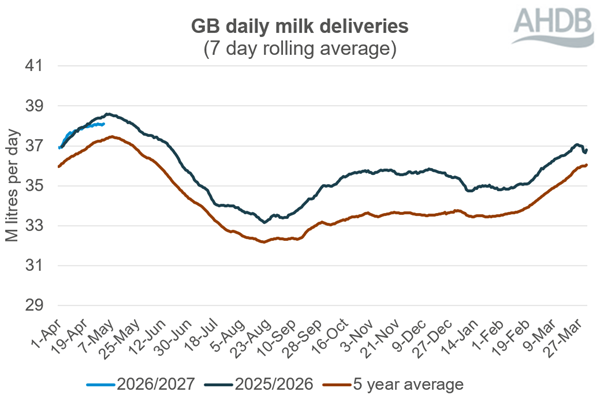
- GB milk deliveries are estimated to have totalled 1,136 million litres in April, down 0.1% year-on-year.
- Daily deliveries averaged 37.86 million litres.
After a record-breaking milk year for GB, with 2025/26 volumes closing at 5% ahead of the previous year, the new 2026/27 season is showing signs of stabilisation.
April milk volumes reduced by a marginal 0.1% year-on-year. The latest week of data available (week ending the 2nd May) saw a 0.6% decline. However, April still sat well-ahead (+3.2%) of the 5-year average. Dairy economics, including the Milk to Feed Price Ratio (MFPR) have generally been favouring expansion with significant pressures building since, although with falling milk prices it has now come down to 1.26 which is in the 'stabilisation' zone.
The spring flush peak may have already happened, with peak day recorded on the 4th May in 2025 (we will be able to confirm with the next data release), but high seasonal volumes will continue to top-out processing capacity for the next few weeks.
May milk price announcements were mostly stable, with some increases. The recovery climb appears a much steadier movement than the earlier downturn and could still be impacted by the market downturn in fats seen in April.
As rising input costs are squeezing margins, managing costs and maximising value from forage is essential. Click here for resources to support businesses with falling milk prices.
Figure 1. GB daily milk deliveries (7 day rolling average)
Source: AHDB
Figure 1 is a line chart showing GB daily milk deliveries, using a 7 day rolling average, from 1 April to 31 March. It compares 2026/27, 2025/26 and the five year average (million litres per day).
The vertical axis shows million litres per day, ranging from 29 to 41 million litres. Three lines are shown:
2026/2027 (light blue, short line)
2025/2026 (dark blue, top line)
Five year average (orange, bottom line)
|
|
|
UK - Feeding 'cool' to keep dairy cows cool during hot weather
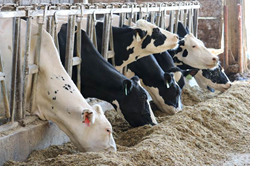 The high energy density and efficiency of use of rumen-protected fat supplements make them ideal for mitigating heat stress
As warmer temperatures set in, dairy producers are increasingly challenged to protect herd health and maintain performance during periods of heat stress.
"Heat stress is a persistent issue affecting dairy herds worldwide during warmer months," says Dr Richard Kirkland, ruminant nutritionist for Volac Wilmar Feed Ingredients. "It impacts animal welfare, milk production, feed efficiency, fertility and overall health. Identification, diet and good management are all essential for combating this issue."
But just how hot is heat stress hot?
Although lactating cows are most comfortable between 5°C and 20°C, problems often begin once temperatures climb beyond 25°C - and the risk intensifies when humidity rises. Under humid conditions, the cow's natural cooling mechanisms, such as panting and sweating, become less effective.
The combination of heat and humidity places cows outside of their thermoneutral zone and forces them to divert energy away from production in an attempt to keep cool. As a result, cows can begin to experience heat stress even at temperatures in the low 20s.
When exposed to heat, several physiological processes are activated to try to shed excess warmth. Sweating, panting and an elevated respiratory rate all demand energy, which increases a cow's maintenance requirements by as much as 25 percent. At the same time, dry matter intake declines sharply by 20 to 40 percent at high temperatures, pushing cows into negative energy balance.
This has severe consequences for productivity and health, says Dr Kirkland. Milk yields can drop by 25 to 35 percent during hot weather, while conception rates can fall to around 10 percent due to disrupted reproductive function.
"Heat stress also increases the risk of acidosis, as reduced rumination lowers saliva production, limiting the natural buffering needed to maintain rumen pH," explains Dr Kirkland. "Additional knock-on effects may include compromised immune function, lower milk fat and protein, increased lameness from prolonged standing and even reduced calf birthweights."
How rumen-protected fats help overcome heat stress
While heat stress management practices such as providing space, shade, ventilation, fans and sprinklers are essential, nutrition is also a critical component, says Dr Kirkland. According to him, feeding rumen-protected fats offers a direct way to increase dietary energy density without contributing to rumen acid load or generating excessive heat during digestion.
Rumen-protected fats are considered 'cool' ingredients because they generate far less metabolic heat than carbohydrates or forage during digestion. This supports energy supply when cows are already expending considerable effort to regulate body temperature.
"Dietary fat isn't fermented in the rumen and is used with much greater efficiency than other nutrient sources. The metabolisable energy supplied by a product like Megalac allows high-energy diets to be formulated to support production even when total DMI is low," says Dr Kirkland. "These supplements not only increase energy density but do so safely. They do not increase rumen acidity the way cereals can, which is particularly important when the rumen is already under pressure during heat stress conditions."
Selecting fatty acids to support milk contracts
Aside from being an energy-dense feed ingredient, the fatty acid make-up of the fat will determine which aspect of performance can be most influenced, adds Dr Kirkland.
"For example, cows in early lactation and approaching their next breeding window would benefit from a traditional calcium salt supplement that offers a source of rumen-protected oleic acid (C18:1). This helps improve body condition, development of eggs and embryos, and total diet fat digestibility," explains Dr Kirkland.
"On the other hand, the high-C16:0 (palmitic acid) supplements are effective at stimulating milk fat production and may be of interest under heat stress conditions where milk fat often declines. However, palmitic acid can cause partitioning of nutrients away from body fat, resulting in lower body condition, which may not be desirable," he concludes. "By understanding the impact these key fatty acids have on specific areas of performance, farmers can better target overall herd productivity while also meeting cow energy demands during hotter months."
VolacWilmar
|
|
|
UK - Build solid foundations for a resilient business
Ensuring your herd comprises the most efficient cows producing milk to optimise your contract while being durable and able to have a longer productive life will be the best way for dairy businesses to establish sound foundations to cope with market volatility, according to Rob Horn from Neogen.
"Identifying and investing in the best possible genetics for your system is the most significant, permanent and cumulative gain available to dairy farms. It is like compound interest - the benefits just keep on growing. The initial returns may be small grow over time, significantly impacting profits.
"In 2024 AHDB demonstrated that the difference in average Profitable Lifetime Index (£PLI) between herds highly engaged with genomics and those with little to no testing, translated directly to increased profit potential of £193PLI per calf."
Mr Horn says genomic testing is the only way to get a comprehensive, reliable early-life picture of the herd to enable confident decision making early in the heifers' life, allowing you to keep only the best heifers and optimise the ROI on heifer rearing. "Genomics are becoming more widely accepted as the gold standard for planning future herds and maximising the return from breeding strategies, with over 112,000 heifers tested in 2024 - a 19% increase year on year - and you only need to test them once as their genetic make-up is with them for life.
To find out more about Neogen Igenity can help build stronger foundations for your business, click here.
|
|
|
DEADLINE APPROACHES . . . Cream Awards entries - please send your entry by 31st May . . .
Put yourself forward, or nominate someone you know. www.creamawards.UK
|
|
|
|
|
UK - Protection for cattle and sheep against BTV-8 with new BTV PUR vaccine
 BTV PUR, a vaccine from Boehringer Ingelheim containing BTV-8, is now available in the UK via the usual veterinary channels.
Since launching Bultavo 3 in Sept 2024 in Great Britain, Boehringer has worked closely with vets, stakeholders and industry associations such Ruminant Health and Welfare, Battle Bluetongue, British Cattle Veterinary Association, Sheep Vet Society and the National Beef Association to raise awareness of the risk of BTV-3.
To date, over 5.6m doses of vaccine have been used by producers to protect GB livestock against this production-limiting disease. In response to the emerging threat of BTV-8, Boehringer has now made available stock of BTV PUR, a vaccine containing BTV-8, to help the sheep and cattle industries against the threat of this second circulating serotype.
While the majority of the 316 identified cases of BTV in Great Britain have been BTV-3, BTV-8 has been identified on 11 farms, seven of which were also infected with BTV-3. The most recent BTV-8 case was confirmed in England on 24 March 2026 after a cow in East Sussex was tested following a late term abortion. In Wales, there have been 23 cases of BTV-3, five confirmed cases of BTV-3 in Northern Ireland and no cases in Scotland.
"These cases may be the tip of the iceberg and more cases could be going undiagnosed" says Boehringer Ingelheim veterinary services manager, Sioned Timothy. "Farmers should be vigilant for the effects of infection, such as poor scanning results, abortions or dummy calves. Vaccination remains the most effective tool for protecting stock against the clinical effects of infection and helping to reduce onward spread of the virus."
BTV PUR is licensed for the active immunisation of cattle and sheep to prevent viraemia and reduce clinical signs caused by BTV-8. Immunity starts three weeks after completion of the primary vaccination course of two 1ml doses three to four weeks apart for both cattle and sheep. The vaccine can be used during pregnancy and lactation, and administered to lambs or calves born to seronegative dams from one month of age, or from two and a half (10 weeks) months if the dam is immune to BTV-8.
"As temperatures rise over the coming months, so too will midge activity and, potentially, the spread of the virus," Dr Timothy concludes. "Vaccination provides livestock keepers with the only certain way of ensuring that their animals are protected against the threat of BTV in the coming season."
BoehringerIngelheim
|
|
|
UK - Treveale Farm to host landmark Gold Cup Open Day in Cornwall
Dairy producers from across the UK are invited to one of the year's standout on-farm events, as the RABDF NMR Gold Cup Open Day heads to Cornwall on 30 June 2026.
Hosted by 2025 Gold Cup winners Treveale Farm, the event offers a rare opportunity to step inside a high-performing, progressive dairy business and take home practical ideas ready to implement.
Far more than a traditional farm walk, the Open Day will feature a packed programme of interactive talk stations, live demonstrations and more than 30 trade stands.
RABDF Chairman Robert Craig said: "Treveale Farm is a fantastic example of a business continually evolving and investing for the future. Visitors will see how the system works and, with so much to explore, there is something for everyone."
Treveale Farm has undergone significant transformation in recent years, including a new dairy in 2018 and a purpose-built youngstock facility completed in 2023. Run by Paul and Wendy Broad, alongside sons David and Philip and Wendy's brother Irwin Morrow, the 280ha unit is home to the 471-cow Maymor Holstein herd, plus 461 youngstock.
The day will open with an update on milk market trends from industry analyst Chris Walkland, followed by insights from the Treveale team on system design, investment and long-term planning.
Technical sessions throughout the day will bring key topics to life, from slurry management, including seeing the farm's slurry separator in action, to herd health and Johne's management, nutrition, and business and tax planning.
Alongside the technical programme, the event will have a strong social element, with complimentary food and drink throughout the day, including a whole ox roast from The Whole Ox Roast Company, Cornish cream teas and free ice cream.
Entry is free, but advance registration is required at 2026 RABDF/NMR Gold Cup Open Day Tickets, Tuesday 30 June o 10 AM - 4:30 PM | Eventbrite
|
|
|
UK - Book now for the Environment Baselining Roadshow in Central Scotland
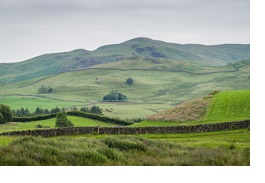 Farmers, producers and land managers across Scotland are encouraged to book their place now for the Environment Baselining Roadshow, taking place on Wednesday 3 June 2026, from 10:00am to 2:00pm, at Bowhouse, Newark Street, St Monans, East Neuk, Fife (KY10 2DB).
Hosted by Quality Meat Scotland (QMS) and AHDB with host farmer Sam Parsons, this summer farm open day forms part of the Environment Baselining Pilot (EBP), a major project assessing the environmental impact of agriculture using real farm data. The pilot is measuring the environmental position of 178 farms across the country, including 22 livestock farms in Scotland, covering areas such as soil carbon, emissions, trees, hedges and wider environmental indicators.
This event will bring those findings out of the reports and into the field. Through practical demonstrations and expert discussion, attendees will see how baselining insights can be used to support better, more informed decision making on farm, while receiving first-hand insight from Sam Parsons, who is participating in the pilot.
Bruce McConachie, Head of Industry Development at Quality Meat Scotland, said: "The Environment Baselining Pilot is about giving farmers clear, credible evidence they can use to make confident decisions for their business and the environment. This roadshow is a valuable opportunity to see how real farm data translates into practical action on the ground, and to learn how baselining can support both productivity and sustainability. We would strongly encourage farmers and land managers to book their place and engage with the project."
The event programme includes the latest updates and early results from the project, an introduction to the host farm, a keynote presentation on the EBP, and three interactive field station talks that explore how data translates into real-world farming practice. Refreshments and catering are included.
The open day is being held at Balcaskie, a modern working estate at the heart of the East Neuk of Fife. The estate covers around 2,000 hectares, stretching from the coastline at St Monans to Kellie Law and into the hills beyond, with a mix of let farms and in-hand farming operations.
Approximately 1,400 hectares of the estate is dedicated to organically farmed livestock production, following a conversion process that began in 2016. The farm carries a mix of native breed suckler cows and sheep, with grazing carefully integrated into crop production to improve soil health. Mixed grazing, winter cover crops and a focus on species diversity all showcase how productive farming and environmental outcomes can work together.
Click here to book your tickets now.
|
|
|
|
| |
BRITISH DAIRYING
ENSURE YOU RECEIVE EVERY COPY
British Dairying is available by subscription at £70.00 posted to UK addresses,
£90.00 for Europe, £115.00 for the Rest of the world
or £30 +VAT for British Dairying Online only
|
|
|
QUOTE
"That which we obtain too easily, we esteem too lightly."
Thomas Paine - Philosopher, 1737-1809
"It's no trick to support the free speech of somebody you agree with or to whose opinion you are indifferent.
The defence of free speech begins at the point when people say something you can't stand."
Salman Rushdie - Novelist, 1947-
|
|
| |
|
|
|
You are receiving this email because you are a registered reader of British Dairying and we are pleased to send you extra information to supplement the journal.
|
|
|
British Dairying,
Grove House Media Ltd
Priory Cottage, Eastbourne Road Ridgewood East Sussex TN22 5ST
Grove House Media Ltd is registered in England and Wales, Registration No 16722598
|
|