|
|  |
|
July 21, 2026
|
|
UK - Will there be enough milking cows to meet future demand? Weighing up beef vs milk
The latest data from the British Cattle Movement Service (BCMS) recorded a 0.4% increase in 2025 birth to dairy dams in GB year-on-year, whilst the latest data for Q1 (January to March) 2026 shows stability. But dairy-beef calves largely drove the increase last year.
In 2025, 60% of registrations to dairy dams had a beef sire while 32% were dairy heifer calves (potential replacements). Annual registrations of dairy females to a dairy sire have been reducing since 2021. The 2025 total was 463,373 head, a 3.1% decline year-on-year and the lowest total on record. When we factor in the numbers born, but that won't make it to their first lactation will we have enough to safeguard future production?
The past year's record volume of GB milk came from higher yields per cow, while the GB dairy cow herd has continued its long-term trend of decline, falling by 2% in the latest data set.
The bulge in youngstock numbers seen through the early 2020's was driven by some mistrust in sexed semen and subsequent "over-serving". This cohort are now progressing through the milking herd and many will now be on their fourth lactation, a point at which herd exits grow. As of April 2026, BCMS data showed the 4-6 year old category of dairy females to be the only group showing year-on-year growth. As these groups age out, the national herd is projected to have fewer cows in milk which could mean too few cows going forwards.
Read the full article: Will there be enough milking cows to meet future demand? Weighing up beef vs milk | AHDB
|
|
|
|
|
UK - How have the recent heatwaves impacted GB milk production?
Western Europe has been hit by a series of intense heatwaves in recent months with temperature records being broken in both May and June in GB. With climate change and more extreme fluctuations in weather becoming a fact of life we look at what the impact is on milk production and what this means for the future, both short and long-term.
Key points:
- The UK and mainland Europe have been hit by a series of heatwaves seeing record-breaking temperatures - with the UK seeing temperatures over 35C in May, June and July for the first time ever
- Milk production in the UK and has tipped from over to under supply in the short-term
- GB milk production estimated to be down by 18.5 million litres so far and counting due to the heatwaves
- Spot milk prices have recovered 10ppl with signs commodity prices may follow suit as milk utilisation shifts
Dairy cows are particularly susceptible to heat stress because high milk production generates substantial metabolic heat. Researchers typically assess heat stress using the Temperature Humidity Index (THI), which combines air temperature and humidity, rather than temperature alone. Heat stress is generally considered to begin at a THI of around 68, equivalent to roughly 22°C under moderate humidity conditions, although high-yielding cows can show signs of stress at lower thresholds.
The first heatwave was in May and reached peaks of 35.1C on 26 May setting a record. A new record of 21.4C overnight was also set in Cornwall.
Prior to the heatwave production was running at 1.6 to 2.0% above the 5-year average. During the heatwave production was running only 0.4% ahead of the 5-year average. However, the heatwave coincided with month end meaning volume management schemes were also in play and a number of factory breakdowns were reported.
The first heatwave probably lost around 5.8million litres before the cows recovered back to pre-heatwave levels, which didn't happen until mid-June despite much more moderate temperatures.
The second heatwave was at the end of June, by this time some of the key volume management schemes had been adjusted to much more favourable terms so would have less of an impact.
Effects have been quite pronounced, tipping Europe and the UK from an over-supply to an under-supply situation temporarily.
According to milkprices.com spot milk has risen to 38-48ppl, firming by around 10-15ppl which is well above Defra's average farmgate milk price of 34.2ppl. This suggests some anxiety amongst processors about milk availability, at least in the short-term.
Read more: How have the recent heatwaves impacted GB milk production? | AHDB
|
|
|
UK - Hot weather putting milk yields at risk
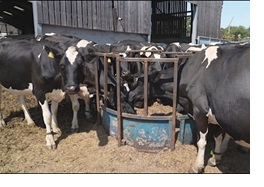 A Wiltshire dairy farmer has told ITV that summer's hot weather has reduced milk production, putting the farming industry under further pressure. Ceri Cryer, who runs Brinkworth Dairy in Chippenham, said she is already having to feed her herd winter silage because of a shortage of grass caused by the dry conditions and lack of rainfall.
She said the hot weather is also impacting the herd's ability to produce milk. "The cows are producing less milk. Per cow, they're producing about four litres less, per cow, per day," Ms Cryer said. "With our herd size, that represents around £1,000, that we're losing per week in milk yield."
She said the extreme heat has also reduced the amount of time the cows can be out grazing in the fields. There was not a lot of moisture in the ground, which had impacted the grass.
"The grass isn't growing," she said. "The ground is so dry, so we are having to feed the silage to the cows. This is more expensive, and it also means that we're running out of our winter feed. It is a huge pressure on our system." Ms Cryer said she is trying her best to protect the farm for the future, for example, by planting new trees to create shade, but she might have to make some tough business decisions.
She said: "I just wonder, does this now mean we can't keep as many cows, so we're going to have to reduce our herd size? This means that our area of land, because of climate change, can produce less food for humans. If we've got less cows, we're making less milk. We're making less cheese. It's always tough in farming, but it's really tough at the moment."
https://www.itv.com/news/westcountry/2026-07-15/dairy-farmer-says-hot-weather-is-reducing-milk-production
|
|
| |

|
To find out more about Neogen Igenity can help build stronger foundations for your business, click here.
| |
|
|
|
UK - Introducing Farmer Welfare Grant
Through the Farmer Welfare Grant, £1.5 million will be available over 3 years to support farmer mental health and wellbeing. Rural and agricultural charities and organisations across England will be able to apply for funding, so support can be delivered by the groups that already know and work closely with farming communities.
It will open for applications on 6 August. The new funding will support targeted interventions to help farmers with personal wellbeing and business resilience. This will give organisations the flexibility to provide help and support that works best for the people they serve.
The previous round of the Farmer Welfare Grant provided £500,000 to seven farming welfare organisations and charities, helping them deliver projects that supported mental health and wellbeing in farming communities. Activities included resilience support, workshops, training, one-to-one assistance and online resources for farmers and their families.
The new and expanded Farmer Welfare Grant has been shaped by what was learned from previous funding, alongside input from organisations that work closely with farmers and farming families.
Earlier this year, workshops and discussions with stakeholders helped identify where funding could make the greatest difference. Their insight has helped focus the grant on practical support that strengthens personal wellbeing and business resilience across farming communities.
A recent knowledge-sharing and partnership event, brough together more than 30 stakeholders in person and online to share their experience of delivering wellbeing support for farmers. The event included case studies from the Royal Countryside Fund, Baton of Hope and Healthwatch North Yorkshire, followed by group discussions on common challenges and approaches.
https://defrafarming.blog.gov.uk/2026/07/16/introducing-farmer-welfare-grant/
|
|
|
A guide to bypass fats in dairy nutrition
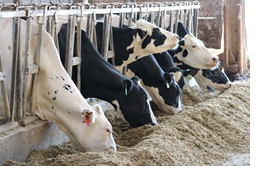 How rumen-protected fats improve milk production, fertility and feed efficiency
As margins tighten and production targets continue to rise, dairy farmers are under increasing pressure to maximise herd performance. Foundational to this is meeting energy requirements without disrupting rumen function, says Dr Richard Kirkland, Global Technical Manager for Volac Wilmar Feed Ingredients.
One nutritional tool that has helped producers achieve this balance is rumen-bypass fat - more commonly known as rumen-protected fat. Designed to deliver concentrated energy without interfering with rumen fermentation, rumen-protected fats have become an important component of modern dairy nutrition.
"Fat is the highest-energy nutrient available to dairy cows, but the way it is supplied is critical," says Dr Kirkland. "Rumen-protected fats allow producers to increase dietary energy density safely, without the negative effects that conventional fat sources (e.g. vegetable oils, or high-oil ingredients such as brewer's grains) can have on rumen function."
What are rumen-protected (bypass) fats and how do they work?
Bypass fats are fat supplements specifically manufactured to resist breakdown in the rumen, avoid negative interference with rumen fibre digestion, and pass into the small intestine for digestion and absorption. This allows cows to benefit from the energy and functional effects of fatty acids without disrupting the rumen microbes responsible for fibre digestion.
In contrast, unprotected fats such as vegetable oils can create an "oil slick" effect in the rumen, coating fibre particles and reducing digestibility, feed efficiency and milk fat production.
"Protection serves two purposes," explains Dr Kirkland. "It protects the rumen from the fat to avoid negative effects on fibre digestion, and it protects the fatty acids from rumen biohydrogenation, ensuring they reach the small intestine where they can be absorbed and utilised by the cow in their active form."
How are bypass fats manufactured?
One of the most widely used methods of producing rumen-protected fats is through calcium salts of fatty acids. In these products, fatty acids are reacted with calcium to create a rumen-insoluble compound that remains stable in the rumen before breaking down in the acidic conditions of the abomasum.
Research by Volac Wilmar Feed Ingredients at the National University of Singapore, has also shown that particle size influences rumen protection. Results demonstrate that smaller granules break down more readily as they pass through the rumen than larger granules, reducing the effectiveness of the rumen-protection.
"Selecting the Megalac calcium salt brand, which has been manufactured to contain a higher proportion of larger granules, is an effective way to optimise cow performance by minimising negative rumen effects and improving fatty acid supply," says Dr Kirkland.
Why do farmers use bypass fats?
While bypass fats have traditionally been viewed as highly effective ingredients to increase energy supply in the diet, for example Megalac has a proven ME of 33.3 MJ/kg DM, ongoing research has shown their benefits extend far beyond simply adding calories to the ration.
"Fat is the most concentrated source of energy available to dairy cows, containing more than 2.5-times the energy of cereals," explains Dr Kirkland. "A further advantage of rumen-protected fats is that they allow us to increase energy density without adding to the acid load in the rumen, helping cows meet their energy requirements safely and efficiently."
Research from Cornell University, USA, highlights the efficiency benefits of this approach. Supplementation with Megalac increased milk yield by 3.2kg per day while improving feed efficiency, meaning cows produced more milk and milk solids from each kilo of feed consumed, while also reducing methane production.
The response depends largely on the fatty acids supplied. Oleic acid (C18:1), found in calcium salt supplements, improves total fat digestibility, supports body condition and promotes egg and embryo development, making it particularly beneficial for fertility during early lactation. In contrast, palmitic acid (C16:0) directs more nutrients towards milk fat production and milk solids. "Understanding fatty acids is just as important as understanding fat itself," says Dr Kirkland. "Different fatty acids influence how nutrients are partitioned within the cow, allowing producers to evaluate products with different fatty acid profiles to target specific performance goals." Volac Wilmar
|
|
|
UK - GB milk deliveries: the decline in milk volumes accelerates
Key points:
- GB daily deliveries fell by an estimated 3.1% in June compared to the previous year
- Heat stress on cows has reduced yields, particularly in the latter half of the month
- Lower milk prices and high input costs are putting pressure on margins
Daily deliveries in June averaged 35.51 million and totalled an estimated 1,065m litres for June, a reduction of 34m litres (-3.1%) compared to the previous year. This brings milk year to date (April-June) supplies for GB to 1.7% below 2025 levels.
June daily deliveries began just under last years' high levels before falling sharply towards the end of the month. Production was impacted significantly by the extreme hot weather, with yields reduced as a result of heat stressed cows. Additionally, the reduction may have been exacerbated by volume management measures taken before month-end. The last week of available data (week ending 4 July) saw a 4.8% decline on year-ago levels, and stooped below the 5-year average.
AHDB's latest production forecast estimates a 0.9% year-on-year decline for the whole 2026/27 season. The declining GB milking herd, volume management control schemes, a decline in the number of GB producer numbers, rising input costs and declining milk-to-feed-price-ratio (MFPR) are the major factors behind the drop in milk deliveries for this milk year.
In June, the acceleration of the decline has been linked to heat stress. The exceptional heat came in during the second half of the month, when milk volumes dropped more sharply, indicating the significant impact of heat stress on cows.
Early summer conditions have been largely favourable for rebuilding low forage supplies. However, recent hot and dry weather will likely slow growth rates.
As input costs continue to pressure already squeezed margins, availability of forage and straw will be crucial. AHDB will continue to monitor the situation as the summer progresses.
Read the full article: GB milk deliveries: the decline in milk volumes accelerates | AHDB
|
|
|
UK - Q2 2026 dairy market review
Key points
- GB milk supplies have been dwindling with spring volume management and then a series of heatwaves constraining supplies
- Markets saw some decline due to global milk supplies but have found support with the heatwave supply pressures
- Milk prices have seen some positive announcements but more holds, awaiting direction
- Retail demand is steady with growing consumer demand for protein supporting the category
Read the full article: Q2 2026 dairy market review | AHDB
|
|
|
UK - NO farmers, no food, no future, that is the stark warning from a major farming voice in Cumbria
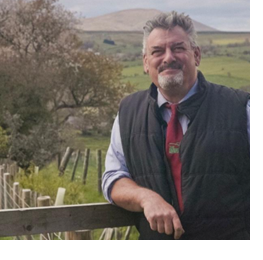 Farmers are battling a perfect storm of soaring fertilizer and energy costs, volatile weather, and major policy shifts, with many operating on razor-thin margins or at a loss, says Adam Day, Managing Director of the Penrith-based Farmer Network. He says without continued government support and fair supply chains this could spell the end for our small county family farms.
A frustrated Adam told the Cumberland News how six years ago at a meeting of the newly-formed Business and Economic Response and Recovery Group (BERRG), a weekly online gathering of local government officers, and representatives of various business communities, that the farming sector was in 'pretty good shape'.
"However, at just about every meeting over the next few months, I gave a repeated message regarding Cumbria's farming communities; "With what his happening politically, and governments focus on nature and net zero rather than food production, the hard times are yet to come".
Today farmers across the land are in a worrying kind of limbo. In their primary role of food producers, they are often at the mercy of the major supermarkets, hamstrung by rising input costs such as fuel and fertiliser, and at every policy turn, persuaded that they are farming for the environment rather than food. Many farmers are worried for their future, and particularly the future of the next generation. What future is there if you are just not valued as food producers?"
He adds: "We knew the changes in support payments were coming and that those changes would lead farmers to focus more on environmental land management than food production and that is alright, but what could not be foreseen was how much less of the support payments would end up in the farmers pocket. The previous area-based payments which for so long had been a safety net for farmers to produce incredibly cheap food often at a loss but then be able to get back to breakeven or even a little profit, have been phased out and after this year they have gone.
www.newsandstar.co.uk/news/26283203.cumbria-farmers-facing-hard-times-farm-support-payments-end/
|
|
|
SlurryKat Expands Tanker portfolio with the launch of the new farmline range
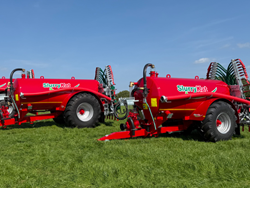 SlurryKat has announced the launch of its new Farmline tanker range, expanding its slurry tanker portfolio and making the company's renowned engineering and manufacturing standards accessible across an even broader range of farming operations.
The launch marks another significant milestone for the Northern Ireland manufacturer, which now offers a comprehensive tanker portfolio comprising the Farmline, Premium Plus and Elete ranges, alongside its established Mobile Nurse Tanks and Ferry Tankers. Built on more than 30 years of agricultural contracting experience, every SlurryKat tanker is developed using real-world knowledge gained in the field before being rigorously tested and refined through the company's research and development programme.
The new Farmline tanker range has been created to meet growing demand for a high-quality slurry tankers that are designed for less intensive slurry handling, while maintaining the manufacturing standards and engineering excellence that have become synonymous with the SlurryKat name.
Manufactured in the same facility as the Premium Plus and Elete tanker ranges, Farmline tankers are built using the same high-tensile S355 steel, premium paint system with a seven-year guarantee and the same exacting production processes. The result is a lightweight yet robust tanker that delivers long-term durability, dependable performance and outstanding value.
Available in capacities from 1,350 to 2,500 gallons, the Farmline range has been developed as a standardised tanker solution, enabling improved stock availability and shorter delivery lead times through the SlurryKat dealer network, while maintaining the engineering excellence and manufacturing standards that define every SlurryKat tanker.
The introduction of Farmline further strengthens SlurryKat's tanker offering, complementing the proven Premium Plus range and the advanced Elete series, which has been engineered to deliver enhanced efficiency, greater productivity and innovative operator-focused performance for intensive farming businesses and professional contractors.
Together, the ranges ensure SlurryKat can offer a slurry tanker solution for virtually every farming operation, from everyday slurry handling through to high-output agricultural and contracting businesses.
www.slurrykat.com
|
|
|
New Magnon models from Strautmann: Magnon 8/9-330 and Magnon 10/11-390 expand the Magnon range downwards
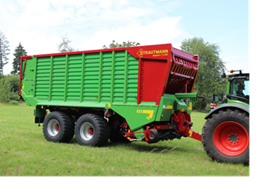 With the new Magnon 8/9-330 and Magnon 10/11-390 forage wagon models, Strautmann is expanding its successful Magnon forage wagon range to include two more compact models with a lower loading capacity. In doing so, the company is responding specifically to the growing demand for high-performance professional forage wagons with compact dimensions. Both models are aimed at professional users who do not wish to compromise on performance, forage quality and operational reliability, but who are opting for more compact machines.
In some markets, forage wagons that combine the performance and features of a professional series with a more compact design are becoming more important. "Many customers want the technology and performance of our profi rotor forage wagons in more compact sizes. We are specifically meeting this demand with the Magnon 8/9-330 and the Magnon 10/11-390," explains Felix Rademacher, Sales Director at Strautmann.
Magnon 8/9-330: The compact Start off model in the Profi segment
With a loading capacity of 32 m³ according to DIN, this model rounds out the existing Magnon 8 and Magnon 9 series at the lower end of the range and forms the start into Strautmann's professional forage wagon segment.
The details at a glance:
- 32 m³ loading volume to DIN
- 18 t boogie chassis for 22 t gross vehicle weight
- 35 or 22 mm theoretical cutting length
- Hydraulically swivelling front wall
Magnon 10/11-390: The high-end machine with compact dimensions
The new model in the professional class has a load volume of 38 m³ according to DIN. It combines the unique selling points of the Magnon 10 and 11 series with compact dimensions.
The details at a glance:
- 38 m³ load capacity according to DIN
- 20 t hydraulic chassis for a 24 t gross vehicle weight
- 35 or 22 mm theoretical cutting length
- Hydraulically swivelling front wall
- 2.25 m wide Flex-Load pick-up with hydraulic drive
www.strautmann.com
|
|
|
|
| |
BRITISH DAIRYING
ENSURE YOU RECEIVE EVERY COPY
British Dairying is available by subscription at £70.00 posted to UK addresses,
£90.00 for Europe, £115.00 for the Rest of the world
or £30 +VAT for British Dairying Online only
|
|
|
QUOTE
"What is success? I think it is a mixture of having a flair for the thing that you are doing; knowing that it is not enough, that you have got to have hard work and a certain sense of purpose."
"If you lead a country like Britain, a strong country, a country which has taken a lead in world affairs in good times and in bad, a country that is always reliable, then you have to have a touch of iron about you."
Margaret Thatcher - Prime Minister of the UK 1979-1990 (1925-2013)
|
|
| |
|
|
|
You are receiving this email because you are a registered reader of British Dairying and we are pleased to send you extra information to supplement the journal.
|
|
|
British Dairying, Grove House Media LtdPriory Cottage, Eastbourne Road Ridgewood East Sussex TN22 5STGrove House Media Ltd is registered in England and Wales, Registration No 16722598 Us
|
|