|
|  |
|
June 9, 2026
|
|
UK - Inside a Cream Award-winning dairy business: Lessons from Hook Farm
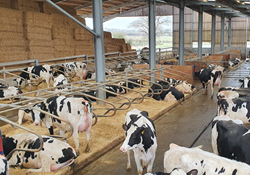 Exceptional herd performance, fertility and business efficiency will be the central themes discussed on Wednesday 18 June at the AHDB and British Dairying Cream Awards Winners Walk, hosted by Richard Woolford and the Woolford family at Hook Farm, Wiltshire.
Hook Farm was awarded both the 2025 Cream High-Performance Award and Fertility Award, recognising its exceptional results across productivity, cow welfare and fertility. Through sharp attention to detail, investment in infrastructure and a commitment to data-led management, the Woolford family have built a resilient and highly efficient dairy enterprise.
The day will begin with a panel discussion featuring leading industry experts, including Mike Bray of Kite Consulting who has been working with the Woolford family for over 30 years, alongside Ian Ohnstad, veterinary specialist Kate Brodie and Cream Awards judge Jessica Cook. The panel will explore the key drivers of sustainable dairy performance, discussing how successful businesses combine strong technical results with sound financial management and efficient resource use.
Mike Bray will bring valuable insight from Kite Consulting's extensive work with progressive dairy businesses across the UK. His contribution will focus on the practical management strategies that enable farms to achieve consistent performance improvements while maintaining profitability and resilience in a challenging operating environment.
Visitors will then join a guided farm walk around Hook Farm, home to a closed herd of approximately 280 Holstein Friesian cows. The herd achieves an impressive average yield of 14,000 litres per cow, has a 384-day calving interval and an average age at first calving of 23 months. Attendees will gain first-hand insight into the systems and management practices that underpin these results. The Woolford family will explain how deliberate, strategic growth has focused on improving efficiency and productivity, supported by robust data-driven decision-making.
Visitors will learn about the farms policy of selection intensity when it comes to their voluntary replacement policy. A percentage of cows are sold annually based on genetic merit and performance, helping to drive continual herd improvement.
A strong culture of staff involvement and engagement is central to the farm's success, with every member of the team playing a role in maintaining high standards of cow performance, health and welfare. Visitors will have the opportunity to explore the practical approaches that have delivered Hook Farm's impressive performance.
To book a place click here
|
|
|
|
|
UK - GB dairy population: April 2026 posts another record low
The GB milking herd totalled 1.59 million head as of April 2026, another lowest number recorded, and a 2.0% decline compared with the same month the previous year. The GB total herd stood at 2.46 million head, a year-on-year decline of 2.0%. A fall was seen across all age groups with the exception of the 4-6 years age group.
The average age of a cow in the GB milking herd now stands at 4.56 years, very slightly older than last year's figures.
Figure 1. GB female dairy population (million head) Source: BCMS
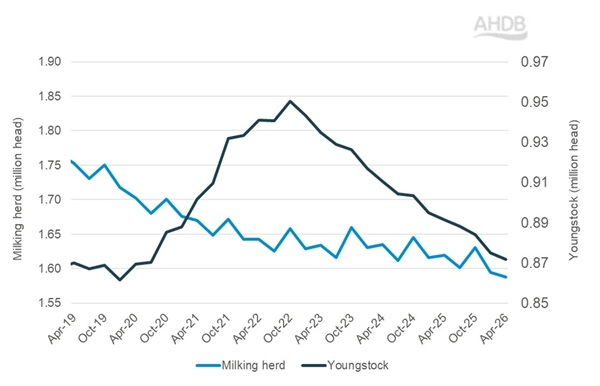
Figure 1 is a line chart showing GB milking herd on the left vertical axis and the one on the right vertical axis shows the youngstock from April 2019 till April 2026 (million head). Two lines are shown:
Milking herd (light blue line)
Youngstock (dark blue line)
Looking into the different age categories, cows aged between 2-4 years continued to record the largest decline of nearly 31,000 head, followed by those under 2 years, having fallen by nearly 20,000 head. This downward trend in youngstock (less than 2 years) has continued over the last three years.
Cows aged 6-8 years witnessed the smallest decline of 3,000 head year-on-year followed by those over 8-yrs seeing a decline of 5,000 head.
The 4-6 years is the only category to have continued the increase, with a gain of 7,000 head compared to the previous year. This category has been increasing from January 2025 onwards following the youngstock boom of 2021, which is now maturing through the milking herd.
Many of these cows will now be on, or close to their final lactations meaning cow numbers could contract further in the near term.
Continue reading On AHDB's website
|
|
|
UK - Is your silage analysis report fit for purpose?
Silage variability remains one of the biggest challenges facing dairy farmers and one with significant financial implications. With first cuts already being fed on many farms, ensuring analysis is both regular and accurate has never been more important.
"With tighter margins and the need to deliver more sustainable milk production, increased accuracy of data is increasingly important when planning and deciding how diets should be formulated and forage allocated to stock," says David Wilde, Massey Harpers Feed Group National Ruminant Technical Manager.
"Dairy farmers are far too aware of the changes in silage quality throughout the feeding season and this can make consistent and cost-effective feeding very difficult. The first step is testing your clamp regularly and across the full face so you know exactly what you're working with."
That approach has delivered results at Hobble End Farm near Walsall, where Yvonne Sadler and family milk 260 pedigree Holsteins. Following inconsistencies in forage quality, the farm increased sampling frequency and now reviews silage and cow performance regularly alongside Massey Feeds nutritionist Jake Manning.
"Having frequently updated and accurate analysis data gives us the opportunity to formulate a more consistent diet," explains Yvonne. The impact has been significant. Milk yields have increased from around 29 litres/cow/day to over 32 litres, annual yields have risen from 8,900 litres to over 10,000 litres/cow and fertility performance has improved, with conception rates to first service increasing by 8-10%.
David stresses that accurate laboratory analysis is equally important.
Massey and Harpers Feeds are members of the Forage Analysis Assurance Group (FAAG), which helps ensure laboratory results remain aligned with wet chemistry testing and Near Infrared Spectroscopy (NIR) calibration. "Silage is a significant investment," David concludes. "Testing frequently and acting on those results helps ensure farmers get the greatest value from that asset."
https://www.harpersfeeds.co.uk/
|
|
|
|
|
UK - Get the best from your automatic dairy system
Labour shortages not just on farm but within the allied industries such as dairy engineers is a major industry problem, wrote Tim Gibson in the May edition of British Dairying.
"It's not just farmers who struggle to attract and recruit employees, the dairy engineering and especially robotic engineering roles are potentially harder to fill," says Robotic Milking specialist Tim.
Farmers are seeing long waits for on call engineers to go to breakdowns as companies struggle to compete with industry over wages and conditions faced by technically able people.
"It's easy to see why technicians (who can earn £60k a year in an industrial job) do not even apply for 24hr breakdown roles in agriculture; which average £45k and involve working in cow muck and laying on wet floors at 3am; being 'on call' and expected to do a day shift as well," says Tim Gibson.
You can contact Tim E: info@tim-gibson.co.uk 01677 424284.
Years of experience of automated milking and feeding, together with knowledge of how to buy, use and get the best from an automated dairy system.
|
|
|
UK - New Monitor Farm forage crop report gives in-depth view of overwintering options
 With this summer's seed orders in mind, farmers can use a new in-depth report on overwintering forage crops to help make drilling decisions. The Monitor Farm Scotland and SAC Consulting practical guide covers everything from cost of production and yield to nutritional analysis - and found that protein levels in some crops far exceeded traditional book values.
Carried out across four North-east Scotland farms, including the Deeside Monitor Farm, the project 'Maximising the potential of forage crops in a challenging climate' looked in-depth at 10 forage crops, from establishment to feeding performance.
The choice of crops across the farms was different, depending on space available, resources on farm and the class of stock to be outwintered. The variables made comparisons challenging, says Beth Alexander, Monitor Farm Scotland programme manager. "There is no one crop outstanding overall, but there are clear winners for highest DM, highest nutrition offered and lowest cost. "The main message from this is to consider your particular farm situation and what you need from the forage crop - the report is a comprehensive and useful look at all 10 options."
Total cost of the forage crop, as well as supplementary feeding was taken into consideration, calculating the ha cost/kg liveweight carried, with the lowest being deferred grazing and the highest being stubble turnips.
The lowest cost crop/kg DM to establish was deferred grazing at 0p/kg DM (no cost), followed by the stubble turnip catch crop (2p/kg DM).? The average across the 10 crops was 6p/kg DM.
For energy cost/kg DM, the deferred grazing had no establishment cost, so was effectively free.?The stubble turnips catch crop, at 1.4p/MJ ME, was next.? Average across the 10 crops was 3.8p/MJ ME.
Livestock units grazed/ha stood out at 16.88LU for suckler cows on beet, with a low of 2.40 LU on the stubble turnips; an average of 8.28 LU was seen over the 10 crops. Protein analysis raised some interesting results, with some levels far exceeding traditional book values.?In the case of kale, protein levels are typically 16-17%, but Duncan Morrison's kale was 30% protein on the Deeside Monitor Farm. Beth adds: "The average cost over the ten crops was 0.5p/kg protein, with the best being the stubble neep catch crop and kale, due to their low establishment costs. The four businesses are continuing to analyse their forage crops to understand whether these figures are normal or unusual for the year."
The guide includes information and links to videos about the systems involved on each of the farms, physical and financial comparisons for each crop, energy costs and feedback from each of the farmers. It also includes an example of a ready reckoner, allowing farmers to calculate their actual field yield and daily allocation of crops. 'Maximising the potential of forage crops in a challenging climate' is available to download free from the Monitor Farm Scotland website: https://bit.ly/49g1MGL
|
|
|
UK - First Milk & Nestlé cut 1,000 tonnes of CO2e with HVO switch
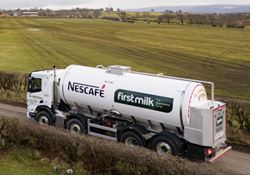 Nestlé will now work with First Milk to fund Hydrotreated Vegetable Oil (HVO) fuel, to move milk from First Milk dairy farms in Cumbria and Ayrshire to the nearby Nestlé factories in Dalston and Girvan. This move is expected to cut greenhouse gas emissions, for these journeys, by an impressive 83%, saving around 1,000 tonnes of CO2e every year; the equivalent of more than 200 cars on the road for a year.
Working hand-in-hand with logistics partners, T. P. Niven and Wm. Armstrong, First Milk now uses HVO - sourced exclusively from Renewable Fuels Assurance Scheme (RFAS) accredited suppliers, with full traceability. This change supports both companies' ambitious climate goals. Nestlé UK & Ireland is committed to halving its greenhouse gas emissions by 2030 and reaching net zero by 2050.
First Milk is equally determined, says the company, pledging that all milk transport and processing will use renewable fuels by 2030. Dr Emma Keller, Head of Sustainability for Nestlé UK & Ireland, added: "This initiative is another important milestone on our journey to net zero. By teaming up with First Milk and their hauliers to swap diesel for HVO, we're making a real, measurable cut in our emissions while continuing to invest in long-term solutions for a truly sustainable dairy supply chain."
FirstMilk
|
|
|
Health testing is not a luxury…
 …it's smart risk management.
Time is one of the most valuable assets on any farm. Waiting for problems to appear, reacting instead of preventing, and dealing with unexpected disease outbreaks all come at a cost. Early disease detection gives you the power to act sooner, protect herd performance, and avoid costly surprises.
…it's smart risk management.
Time is one of the most valuable assets on any farm. Waiting for problems to appear, reacting instead of preventing, and dealing with unexpected disease outbreaks all come at a cost. Early disease detection gives you the power to act sooner, protect herd performance, and avoid costly surprises.
Use your bulk milk sample
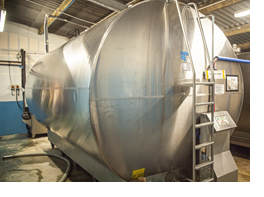
You can use your bulk milk sample to test for infectious diseases. It's quick and simple and built around your routine.
With flexible testing options designed to suit your needs, NMR makes herd health monitoring easy - saving you time while keeping you in control.
Both NMR and non-NMR customers can screen their herd quickly, easily and cost-effectively for cattle diseases using their bulk milk sample* or individual cow milk samples. Offering a convenient, robust, cost effective and non-invasive way to assess herd health. *well…97% of dairy farmers can do this!
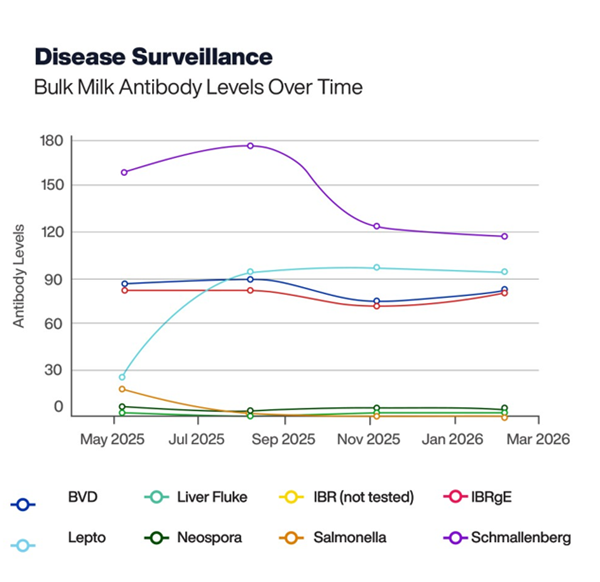
Bulk testing for key diseases includes: o BVD (antibody) o BVD (qPCR Virus) o Leptospirosis o Salmonella o Schmallenberg o IBR (gE & gB) o Neospora o Liver Fluke
Samples can be tested on a regular quarterly regime or on an ad hoc basis, for as many or as few diseases as required. It is best to discuss your requirements with your vet to assess which option best suits your herd. Results are accessed through Herd Companion and can be viewed by third parties if permitted; results can also be sent by email or post.
Individual cow milk samples can also be tested, as well as blood and tissue samples. Speak to us about bolting testing onto recording samples and for non-recording herds, simply let us know how many samples you would like testing and we will send you a sampling kit. www.nmr.co.uk
|
|
|
UK - Milk products launches powder blending service
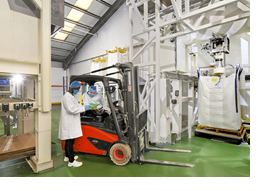 County Milk Products has announced the launch of its powder blending service, strengthening its offering to customers across the food, feed and nutrition sectors with flexible, tailored blending solutions designed around individual production requirements.
The service combines County Milk Products' long-standing dairy expertise with wider powder blending capabilities, enabling customers to create bespoke or standardised blends using both dairy and non-dairy ingredients. The launch reflects the company's continued investment in practical, customer-focused solutions that support manufacturers, brands and ingredient suppliers with reliable, scalable production options.
Designed to offer complete flexibility, the service allows customers to either supply their own raw materials or utilise County Milk Products' procurement network and buying-power to source ingredients in a cost-effective way. Blends can then be produced as finished products or semi-finished goods depending on operational requirements and routes to market.
The company's blending capabilities support a broad range of applications and sectors, including bakery, confectionery, dairy, convenience foods, foodservice, nutrition and animal feed. By working closely with customers, County Milk Products can develop blends tailored to specific technical, functional and commercial requirements, helping businesses achieve consistency and efficiency throughout their production process.
Alongside blending flexibility, the service also offers a wide range of packaging formats to suit different supply chains and end markets. Options include capsules, sachets, pouches and tubs, 10kg, 15kg, 20kg and 25kg bags, IBC bulk bags and bulk road tanker formats, providing solutions for retail, foodservice and industrial applications.
The service operates from two dedicated blending facilities which are fully BRC "AA" accredited and GMP+ certified for feed production. This ensures all products are manufactured to strict quality, food safety and traceability standards, giving customers confidence in the consistency and reliability of every blend produced.
CountyMilkProducts
|
|
|
UK - Think about cutting height & timings to boost silage stocks
Farmers are being warned against the temptation to reduce cutting height or delay cutting to boost grass silage shortfalls.
Ken Stroud, Technical Business Manager for Volac, has travelled the length of Britain this spring and noticed a worrying tendency for growers to reduce cutting height. "I've seen many fields that have been shaved off at first cut, probably in an attempt to get as much dry matter in the clamp as possible. But this strategy could actually be achieving the opposite across the season," he says.
Cutting grass too low stunts regrowth by taking off the leaf node. That can translate into 7-9 days of lost regrowth. "On farms aiming for four cuts of silage, scalping grass at each cut could mean a month of lost growth or 5-6t/acre across a season. At 6t/acre, that's 600 tonnes lost across 100 acres of grass," Ken explains.
This is a shortfall farmers can ill-afford, particularly considering the need to replenish forage stocks following last season's drought. Results from Volac's UK Grass Silage Survey found that 20% of the 140 respondents had seen the amount of grass silage made in 2025 reduce by up to a quarter because of the drought; 19% had seen it reduce between a quarter and a half and 10% had seen it reduce by more than half.
Combine this with lower milk price and increased costs, and maximising the production of quality silage to optimise milk from forage is vital. In fact, nearly two thirds of farmers surveyed said they wanted to increase milk from forage.
With that in mind, Ken urges farmers to review cutting height and avoid cutting below 5cm. "This is even more important as we head into hotter months. You're really asking for trouble if you scalp grass in June as regrowth could be suppressed even more if the moisture isn't there," he explains.
He also emphasises the value of focusing on quality over quantity at each cut, and upping cutting frequency. "You can always add straw to the diet or use wholecrop or maize later, don't panic," he says. "Also, fuel costs might be high, but don't be tempted to reduce the number of cuts as you will quickly lose quality." Cut timings will always need to be adapted with the season. Ken says the key is not to wait for grass to bulk up or it will go to head and quality will be lost. He also encourages growers to use a proven silage additive to safeguard forage DM and quality.
"When milk price drops, that's when it's imperative to use a proven additive to squeeze as much milk out as possible," he stresses. "Trial work has found that using Ecosyl on grass silage roughly halves DM losses and delivers silage of higher metabolisable energy and higher true protein. That equals more milk in the tank."
Volac
|
|
|
UK - Government plea: Help food and farming to grow
Farming is being hamstrung by lack of government understanding and support - but there are significant opportunities ahead. That's according to speakers at the Royal Bath & West Show last month.
Chairing the CLA debate, Show President Alice Plunkett said the Government lacks the understanding required to implement policies that genuinely support the rural sector. But with the right information to hand, and by enabling and encouraging growth in farming and food businesses, tremendous change could be unleashed.
"Confidence is a big issue," warned Joe Evans, Deputy President of the CLA. "Regulation is making it difficult to do business and farmers feel beleaguered. But food security is rising up the national agenda." Society is starting to realise that farmers hold the key not only to food security, but to climate change, water management and natural capital. "There's a lot of work to do on the policy front, but we're the only people who can do this."
Jeremy Moody, Secretary and Adviser to the Central Association of Agricultural Valuers, said the Government has walked away from agricultural and environmental policy since October 2024. But there are advantages to that - by no longer being beholden to anyone, farmers can take charge of their own business direction.
As the country gets progressively poorer in real terms, expecting Defra funding to be a salvation to farming is no longer realistic, warned Mr Moody. But there are other, targeted ways that better policy could encourage business growth and investment. And the top quartile of farmers are the ones who will be successful by just quietly getting on with things.
Richard Clothier, Managing Director at Wyke Farms, said the key to business resilience is exports, ideally to a diverse range of customers and regions. "Food and farming is a huge sector but we're not included in any growth plans," he said. The country has moved from 70% self-sufficient around WW2 times to just 50-55% now, making the nation very vulnerable to climate shocks or geopolitical events. "With the right politics in place UK dairying could grow by 50%."
British and global consumers really value high-quality, high-welfare British food, and producers should focus on added-value, branded sales, added Mr Clothier. But Defra should not be the department in charge of growth. "The Department of Business and Trade really understands that food and farming have a lot to offer."
Defra Minister Dame Angela Eagle also visited the show and admitted the Government is not solving anything overnight. However, she insisted it understands the difficulty of high fertiliser and diesel prices, and wants to work with farmers, with the £225m Capital Grants Scheme opening in July. "It has been one of the most difficult years for agriculture," she said. And it is a priority to help farmers navigate through difficult times.
RoyalBath&WestShow
|
|
|
UK - Wind turbines on farmland: myths vs reality
Wind turbines on UK farmland remain a topic of debate, particularly as more dairy businesses look at renewable energy as part of a long-term resilience strategy. With volatile milk prices, pressure on margins and rising input costs continuing to challenge farm businesses, on-farm renewables are increasingly becoming part of wider conversations around diversification and future planning.
Hans-Georg von Lewinski, Managing Director of Caeli, says many of the concerns surrounding onshore wind are often more nuanced in practice.
Questions around land use, noise, wildlife and local impact are regularly raised. However, modern turbines occupy a relatively small footprint, meaning grazing, forage production and day-to-day farming activities can often continue around them. On many farms, turbine income can also support wider investment in infrastructure, technology and the core farming business while allowing agricultural operations to continue.
Noise is another frequent talking point. However, UK planning guidance requires detailed assessments as part of the application process, with mitigation and operational measures used where needed. In practice, turbine noise is often comparable to existing background rural sound levels.
Environmental considerations also form a key part of project development. Ecological surveys, habitat assessments and mitigation measures are built into the planning process to help protect sensitive species and habitats while ensuring projects meet regulatory requirements.
Caeli works with landowners to identify and assess opportunities for onshore wind development and is seeing growing interest from farm businesses exploring long-term diversification options.
As dairy businesses continue to explore opportunities to strengthen resilience and manage volatility, conversations around on-farm renewables are increasingly becoming part of wider farm business discussions. www.caeli.co.uk/site-check
|
|
|
UK - QMS set for packed Royal Highland Show 2026 programme
Quality Meat Scotland (QMS) is gearing up for a packed programme of activity at this year's Royal Highland Show, running from Thursday 18 to Sunday 21 June 2026 at Ingliston. From showcasing the next generation of butchers and chefs to supporting young farmers and engaging with families, QMS will be front and centre celebrating all things Scotch Beef, Scotch Lamb and Prime Scottish Pork.
The QMS stand, located on Avenue O by the main ring, will once again be a hub for networking, learning, inspiration and community connection. Designed to reflect QMS's latest marketing campaign, When You Know, You Know, it will shine a spotlight on what sits behind the famous blue labels - the dedication, traceability and quality that define Scotch Beef, Scotch Lamb and Prime Scottish Pork. Visitors are invited to drop by for a cup of tea or coffee and the chance to catch up with the QMS team during the show.
Retailer Partnerships: QMS will return to the Lidl stand with Farm to Fork demonstrations on the Thursday and Friday, focusing on steak cuts, with Make It Scotch goody bags up for grabs. Over the weekend, the Lidl stand will turn up the heat with a fun cook-off featuring Eadie Manson and Scott Lyall from Fife College alongside professional rugby players from Scotland's elite clubs. There will also be a High Steaks quiz with Make It Scotch, giving visitors the chance to test their red meat knowledge in a lively, interactive format.
On the Thursday, QMS will judge and present the QMS Rose Bowl to the champion in the Kepak McIntosh Donald Best Scotch Steak competition at the Tesco stand, recognising excellence in showcasing premium Scotch produce.
Food for Thought Cookery Theatre: Supported by The Scotch Butchers Club, Scotch Beef Club and Native Hebridean Salmon, the Food for Thought Theatre in Scotland's Larder will bring together some of Scotland's most exciting emerging culinary and butchery talent. Across the four-day programme, visitors can enjoy live demonstrations and inspiring appearances featuring Scotch Beef, Scotch Lamb and Prime Scottish Pork.
Special Guests and Giveaways: Rugby fans should keep an eye out for special appearances from professional rugby players from Scotland's elite clubs over the weekend as part of QMS activity at the Lidl stand. Visitors can also purchase limited-edition Highland Show t-shirts at the QMS stand for a minimum donation of £5, with all proceeds going to RSABI and the SAYFC Big Build.
For updates and the full programme of events, follow @qmscotland on social media.
|
|
|
|
| |
BRITISH DAIRYING
ENSURE YOU RECEIVE EVERY COPY
British Dairying is available by subscription at £70.00 posted to UK addresses,
£90.00 for Europe, £115.00 for the Rest of the world
or £30 +VAT for British Dairying Online only
|
|
|
QUOTE
Rebel rebel . . .
"Every valuable human being must be a radical and a rebel, for what he or she must aim at is to make things better than they are."
Niels Bohr - Theoretical Physicist & philosopher, 1885-1962
"Conformity is the jailer of freedom and the enemy of growth."
John F Kennedy - 35th President of the USA, 1917-1963
"It's kind of rebellious to be 'yourself'
Kate Moss - Model, 1974-
|
|
| |
|
|
|
You are receiving this email because you are a registered reader of British Dairying and we are pleased to send you extra information to supplement the journal.
|
|
|
British Dairying,
Grove House Media Ltd
Priory Cottage, Eastbourne Road Ridgewood East Sussex TN22 5ST
Grove House Media Ltd is registered in England and Wales, Registration No 16722598
|
|