|
|  |
|
July 7, 2026
|
|
UK - Dairy retail performance - 13 June 2026
During the 12 weeks ending 13 June 2026, cows' dairy continued to be in volume growth, increasing by 0.2% year-on-year. Spend on cows' dairy increased by 3.4% year-on-year, driven by a 3.2% increase in average prices paid despite farmgate prices and the majority of wholesale prices continuing to decrease.
Milk volumes declined by 0.9% year-on-year. Average prices increased by 5.6%, and as a result spend saw a 4.6% increase. Declines were seen for semi-skimmed, skimmed, and plant-based milk. Whole milk continued to see volume growth, with a 1.7% increase year-on-year. Other cow milk was in growth this period, with volumes up 15.9%, driven mainly by higher purchase volumes per shop.
Cheese continued to deliver strong volume growth, with demand increasing by 2.3% year-on-year. Increased promotional activity helped lower average prices by 0.7%, encouraging shoppers to buy an additional 2.6 million kg on deal.
Butter saw a 1.0% decrease in volumes purchased year-on-year. Spend saw a 3.7% decrease, mainly driven by average price reductions of 2.8% year-on-year, with decreases in wholesale price feeding through to shoppers, as AHDB predicted back in December.
Yogurt, yogurt drinks and fromage frais continued to see growth, with volumes up 6.6% year-on-year. Average prices also increased, up by 2.4%, and as a result spend increased 9.2% year-on-year.
Cream volumes saw a 2.8% decrease year-on-year. Average prices increased by 3.5%, and as a result spend increased by 0.6%.
NIQ Homescan POD, Total GB, 12 w/e 13 June 2026
Read more: Dairy retail performance - 13 June 2026 | AHDB
|
|
|
|
|
UK - PM change unlikely to help, warns CAAV
A change in Labour leadership is unlikely to help farming and the rural sector, the Central Association of Agricultural Valuers (CAAV) has warned. With Andy Burnham widely expected to win the race to become Prime Minister, there has been much speculation as to what that will mean for emerging policy. "A lot of things have been said by him, and a lot of things have been unsaid by him," explained Jeremy Moody, secretary and adviser to the CAAV.
Speaking at the recent CAAV President's Conference in Durham, he warned rural professionals to take all speculation with a healthy pinch of salt. "So much of the current talk is just people projecting their hopes and fears onto his uncertain canvas." Mr Burnham has mooted some radical and large changes, including taxing land to fund social care, increasing taxes on the wealthy, and aligning capital gains tax rates with income tax bands. Such ideas would likely take a long time to implement, suggested Mr Moody. "If he knows what he wants, he would have to move very quickly, and very firmly, in a handful of weeks to get anything big done.
"But when he gets into power, he'll have to pick a Chancellor, choose defence and energy policies and see who he disillusions. He then has an election that's only two or three years away. He faces many much larger problems that came nowhere near the Mayor of Manchester's in-tray; it could easily be that we are looking at a re-run of the past two years."
There has been very little mention of farming - and Mr Burnham is unlikely to offer anything to help rural communities, warned Mr Moody. "The talk is more about capping food prices than supporting food production. There is also very little political appetite to revisit the Inheritance Tax changes that have now been in force for two months, he added. "Any changes will depend on a General Election, so for now we just need to get on with it."
One political priority that does affect farmers is the focus on water quality, said Mr Moody. "The Clean Water Bill is coming, bringing regulation of agricultural pollution. While there is a focus on water companies at the moment, the knife will spin, so farmers need to get compliant before it does."
The new Farming Roadmap looks to phase out payments for buffer strips and the conversion of farming systems, moving money to support larger changes, as for habitats, he warned. "The Sustainable Farming Incentive is to be a transitional scheme, as the regulatory baseline and expectations rise."
With accelerating and unpredictable risk, the nation is in a much more difficult era but, unfortunately, what the country really needs - a return to economic growth - is not on the horizon. "Nothing yet suggests that Burnham, any more than Starmer and Reeves, understands what is needed to recover growth and so the means to pay for what we want." www.caav.org.uk
|
|
|
UK - Heatwave pressures on livestock farmers and to build resilience
A potentially record-breaking heatwave is sweeping across parts of England and Wales, underlining the growing challenge climate change poses to livestock producers. For livestock systems, these extreme conditions bring immediate and practical challenges.
The Met Office has issued a Red Extreme Heat Warning, with temperatures forecast to reach at least 39°C. Combined with high humidity and "tropical nights" where temperatures remain above 20°C, the conditions increase the threat of prolonged and intense heat stress. Alongside adaptation in the short-term, building long-term resilience is increasingly important.
AHDB have developed climate resilience on-farm action planners to help farmers move from awareness of climate risks to practical action. These support structured thinking around key risks, system vulnerabilities and appropriate responses. They help farmers identify what matters most to their business, prioritise actions and plan for short, medium and long-term adaptation.
Importantly, they're designed to complement existing good practice, from soil and forage management to infrastructure and livestock strategies, while encouraging more proactive decision-making.
The current heatwave is a clear example of how climate change is already affecting livestock agriculture in the UK. With extreme temperatures and inconsistent weather patterns becoming more common, building resilience is becoming a priority.
By combining immediate actions to protect livestock with longer-term planning, farmers can better manage risk and maintain productivity.
Read the full article: Heatwave pressures on livestock farmers and how we're helping build resilience | AHDB
|
|
|
|
|
UK - Hundreds flock to Dairy Gold Cup Open Day in Cornwall
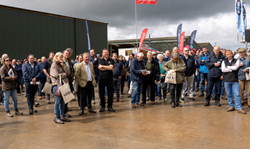 Almost 1,000 dairy farmers and industry professionals visited Treveale Farm, near Ladock, Cornwall, on 30 June for the RABDF NMR Gold Cup Open Day, marking the first time a Cornish farm has won the prestigious award since the competition began in 1920. Hosted by T N Morrow and Partners, the event showcased how long-term investment, strong management and a focus on efficiency have helped develop one of the UK's leading dairy businesses.
Opening the event, RABDF Chair Robert Craig said Treveale Farm demonstrated the importance of investing for the future despite the current challenges facing the dairy sector.
"The Morrow family has taken a long-term view of the industry, making significant investments for the next generation, including a new dairy unit in 2018 and a youngstock unit in 2023 as well as doubling their pedigree Holstein Maymor herd over the past 14 years to 471 cows," he said.
"If we want an industry that is fit for the future, farmers need the confidence to invest. While the current market remains difficult, businesses with strong management and a clear long-term strategy are best placed to succeed."
Visitors also heard from dairy market analyst Chris Walkland, who outlined the global pressures continuing to impact milk prices. "Although UK production has fallen, milk output remains strong across Europe, the US and New Zealand, meaning significant price improvements are unlikely in the short term." He added that while some improvement may come later in the year, current milk prices remain unsustainable.
"At the moment I can't see any major change to milk prices this year. What is clear, though, is we can't have milk prices where they are for the long term. If they stay low, volumes will fall, and then in a few months' time we'll be on the upside of the rollercoaster." Despite the challenging outlook, Mr Walkland remained optimistic about the industry's future.
"It was always going to take time to slow the global runaway milk volume train down, but we have started. That is something. Already positive things might be starting to happen as a result. It's going to be a hard slog for a while still, but you'll get through it. You are also hugely resilient, and very good at what you do."
The event, one of the UK's largest on-farm dairy gatherings, also featured key speakers and more than 50 trade stands covering technical topics from youngstock and slurry management to nutritional advice, all supporting the success of Treveale Farm and leaving visitors with plenty of take-home insights.
RABDF
|
|
|
UK - Demo farms highlight benefits of proactive herd health management
 Dairy farms participating in the MSD Animal Health Demonstration Farm Network are reporting measurable improvements in animal health, fertility and youngstock performance after implementing structured health reviews and herd-monitoring technologies. Launched in 2025, the network brings together five dairy farms across England, Wales and Scotland to demonstrate how proactive herd health management and monitoring technology can improve animal welfare, productivity and business performance.
Participating farms have reported gains in fertility, disease detection, calf health and overall herd performance since joining the programme. At Major Farms in Staffordshire, SenseHub Dairy herd monitoring system is supporting fertility and health management, helping identify cows requiring intervention and enabling targeted nutritional support.
The farm, which milks 650 spring-calving cows, has reported significant improvements in youngstock performance following diagnostic testing and targeted vaccination protocols introduced to address calf scour and respiratory disease, contributing to healthier, more resilient calves. Calves are now achieving weaning weights around 10kg higher than previous years while being weaned a week earlier.
At Greenrigg Farm in Cumbria, the MSD Calf Health Checklist helped identify several opportunities to improve calf comfort, health monitoring and disease prevention. Changes included the introduction of calf jackets, improved record-keeping, enhanced ventilation and the adoption of vaccination protocols, alongside the use of SenseHub Dairy and SenseHub Dairy Youngstock monitoring technology.
According to Herd Manager Macie Graham, the app has helped the team identify health and management challenges earlier. "SenseHub has made heat detection more accurate and less time-consuming," explains Macie. "It has also given us a clearer picture of when animals are starting to show signs of illness or stress."
The system proved particularly valuable during last summer's heatwaves. Alerts from the app highlighted reduced feed intake in one group of year-round housed cows. Although milk yields remained relatively stable, further investigation showed the cows were bunching together during the hottest parts of the day, while SenseHub Dairy data indicated increased respiration rates.
"We also experienced a small cluster of abortions during the hottest period of the summer," says Macie. "As a result, we've installed additional ventilation fans and will be using the SenseHub Dairy data to closely monitor cows during periods of heat stress so we can act quickly if issues arise."
In Scotland, Kaemuir Farm has strengthened vaccination protocols and introduced the SenseHub Youngstock technology, supporting improvements in calf health and youngstock management.
All farms in the network have improved their MSD Calf Health Checklist scores, highlighting the value of structured benchmarking and continuous review of calf-rearing protocols.
Duncan Sinclair, Market Access Associate Director at MSD Animal Health UK, says: "By identifying opportunities for improvement and acting on them, farms are delivering benefits for animal welfare, productivity and long-term herd performance."
MSDAnimalHealth
|
|
|
|
|
UK - Student understanding of milk's role in sport continues to grow
AHDB's Milk Every Moment (MEM) campaign is helping students better understand the nutritional benefits of milk and its role in supporting active lifestyles.
Student understanding that milk can support sporting performance rose to 79% in April 2026, up from 76% in December 2025. Awareness of milk's wider nutritional benefits also remains strong, with 90% of students recognising that milk can form part of a healthy, balanced diet.
The latest survey shows awareness of milk's nutritional benefits remains positive: 67% of students recognise that milk provides a range of vitamins and minerals. 79% understand that milk can support training or sporting performance. 90% agree that milk can form part of a healthy, balanced diet.
Now in its second year, Milk Every Moment is delivered in partnership with British Universities and Colleges Sport (BUCS) and aims to increase awareness of milk's nutritional benefits among 18-25-year-old students. The campaign highlights how milk supports sporting performance as part of a balanced diet through digital content, social media and face-to-face activity at major university sporting events.
Since launching in 2024, Milk Every Moment has generated: More than 16 million digital impressions. Reach of over 9 million people. More than 248,000 engagements across TikTok and Instagram.
As title sponsor, MEM also continues to support BUCS' premier rugby knockout competition, now proudly named the BUCS Super Rugby Milk Championships.
Students have been able to connect milk with real sporting performance, helping bring the messages to life in a practical, relevant way.
Read the full article: Student understanding of milk's role in sport continues to grow | AHDB
|
|
|
UK - Q1 2026 UK dairy product available supplies shrink
Key trends
- Swollen butter stocks eased slightly due to lower imports and an increase in exports
- Supplies of cheese eased amid robust exports
- Cheese exports increased to the EU, Asia and Oceania, Middle East and North African countries
GB milk deliveries recorded new peaks closing the 2025/26 5% higher compared to the previous year. Favourable dairy economics during the season supported unprecedented milk volumes. UK milk deliveries in the first quarter of the calendar year (Jan-Mar) totalled 3,947 million litres (3.4%) higher year-on-year.
Read more: Q1 2026 UK dairy product available supplies shrink | AHDB
|
|
|
UK - First Milk says evidence is key to unlocking the value of regenerative farming
First Milk is setting out how regenerative farming can secure food production, support nature and build greater trust - and why credible outcome data is essential to show what is genuinely changing on farm. The farmer-owned co-operative has published a new white paper, From principles to proof: why measurable outcomes matter in regenerative dairy, setting out why regenerative farming must move beyond practice adoption and be understood as an operating model for resilient food production.
First Milk launched its regenerative farming programme in 2021, which has developed into one of the UK's largest farmer-led regenerative programmes, involving around 700 dairy farmer members across Great Britain. Five years on, its programme now includes farm-level regenerative scoring, digital field mapping, intervention recording and a member payment structure that recognises regenerative performance.
First Milk is also working with independent specialists to measure and evidence outcomes, including Agricarbon on direct soil carbon sampling, Farm Carbon Toolkit on farm carbon and nutrient footprinting, Kingshay on animal welfare and resilience data, Senus on water risk mapping, and the UK Centre for Ecology & Hydrology on biodiversity monitoring and ecological analysis.
Shelagh Hancock, Chief Executive of First Milk, said: "Regenerative farming has huge potential to build resilience, strengthen trust and create value across the food chain. To realise that potential, we need credible evidence of outcomes, not just lists of practices. We are already working with our members and independent specialists to measure and evidence what is changing on farm, from soil carbon and water risk to biodiversity and animal welfare. That evidence is helping us understand where progress is being made, where further investment is needed, and how partners can work with our farmers to drive change."
The white paper calls for longer-term partnerships between farmers and supply chain partners, using outcome data to guide investment, share risk and reward progress. It says this is how regenerative farming moves from ambition to proof, building supply chain resilience, allowing customers and consumers to make informed choices, and creating value across the food chain.
FirstMilk
|
|
|
UK - Double approach key to reducing disease pressure in calf housing
A practical trial comparing two common calf-house cleaning protocols has highlighted the importance of combining effective cleaning with disinfection to significantly reduce bacterial contamination and disease pressure in youngstock environments.
The findings reinforce the need for dairy producers to view cleaning and disinfection as two separate but equally important stages in any calf-housing hygiene programme. According to Diversey's Dairy Hygiene Specialist, Michaela Rowlands, the opportunity to implement an effective two-stage cleaning process is often missed on farm. "Many producers focus on either cleaning or disinfection, when in reality both steps are essential," she explains. "Disinfectants work best on clean surfaces. If organic matter remains, it can protect bacteria and reduce the effectiveness of the disinfectant."
The trial, conducted on a dedicated calf-rearing unit, compared two cleaning systems on separate areas of the same calf shed floor. Both areas first received a volume wash to remove loose debris before following different cleaning protocols ahead of disinfection. Swab samples revealed a significant difference between the two approaches. The area cleaned using a hypochlorite solution before disinfection recorded a total bacteria count of 121 million cfu/g.
In comparison, the area cleaned using a detergent foam before disinfection recorded just 3 cfu/g. No coliforms were detected on the detergent-treated side, while the hypochlorite-treated area recorded 17,360 cfu/g. "The results clearly demonstrate the importance of effective cleaning before disinfection," says Ms Rowlands. "Detergents help break down organic matter, manure, milk residues and grease, allowing these materials to be removed from surfaces. Without this step, bacteria can remain protected from the disinfectant."
Environmental hygiene plays a vital role in calf health, particularly during the first weeks of life when immune systems are still developing. Diseases such as calf scours remain one of the most common causes of illness and mortality, leading to increased treatment costs, extra labour and reduced lifetime performance. Ms Rowlands believes practical, consistent routines are key to reducing disease pressure.
"The most effective protocol is one that can be carried out consistently and correctly every time," she says.
She adds that effective calf health extends beyond pen cleaning, with clean feeding equipment, staff hygiene, protective clothing and preventing cross-contamination all helping to create the best possible environment for healthy, productive calves.
Diversey
|
|
|
UK - The launch of the 25-year Farming Roadmap
RABDF has responded to the Government's long-awaited Farming Roadmap 2050: Growing England's Future, calling it an important opportunity to set a clear direction for the future of British agriculture.
RABDF Chairman and Cumbrian dairy farmer, Robert Craig, said: "The Roadmap rightly recognises the vital role that farming plays in food security, economic growth and rural communities and, more importantly, sets an overarching direction and framework for the future growth of British agriculture.
"For dairy farmers, long-term policy goes hand in hand with having the confidence to invest in their businesses, maintain competitiveness and respond to market volatility. What we need to see is how this vision for farming will actually shape and influence the regulations, rules and policies that affect farmers every day - from planning and disease control to theenvironment and land management.
"We are especially keen to start work with the Government on developing a growth plan for the dairy sector that has profitability, resilience and sustainability at its core. The Government's commitment to collaborate with industry on unlocking potential and removing barriers to growth is significant, recognising that individual sectors face distinct opportunities and challenges.
"If this Roadmap truly sets the direction for the next 25 years and can itself prove to be an adaptable and sustainable policy, then there will be positive outcomes for food production, the environment and consumers."
Background: The Farming Roadmap sets out a 25-year vision for English agriculture, focused on improving profitability, productivity, sustainability and resilience, alongside immediate measures to support farm businesses through investment, innovation and supply chain reforms.
The Roadmap offers an overarching vision and set of policies that reflect the government's understanding of the issues affecting agriculture, alongside the government's role in working with individual sectors to address challenges.
As recommended in Baroness Batters' Profitability Review, Defra has established a Food and Farming Partnership Board (FFPB). The Board is chaired by the Secretary of State for Environment, Food and Rural Affairs and the Farming Minister, and includes representatives from farming and the food supply chain. It will oversee Sector Growth Plans (as referred to in the Roadmap) starting with horticulture and poultry.
|
|
|
UK - Vets to turn routine farm visits into potentially life saving conversations
 A pioneering healthcare initiative - Vet Your Prostate - is harnessing the trusted relationship between farmers and their vets to tackle a significant yet often overlooked health challenge in the farming community: prostate cancer. Vet Your Prostate is recruiting and training veterinarians to raise awareness of prostate cancer risk among farmers, while offering at-home prostate specific antigen (PSA) testing kits that could lead to an earlier diagnosis, when survival rates are highest.
Farmers face around a 20% higher risk of prostate cancer than the general population. Despite this elevated risk, they remain one of the hardest groups for traditional healthcare to reach. Living and working in an environment that rarely stops, farmers often place their own health at the bottom of the priority list. The 24/7 demands of the job, combined with isolation and unpredictable schedules, can make standard clinics feel out of touch with their realities. The result is a compounded challenge: a high risk population navigating a healthcare system that isn't built or optimised to serve them.
Vet Your Prostate addresses this gap by working with farm vets - often the only medical professional a farmer sees regularly - to start informed, supportive conversations about prostate health during routine farm visits. "Prostate cancer is unusual in that, when it is diagnosed early at stages 1 or 2, survival rates are extremely high, with almost all men surviving for at least five years. But when the disease is diagnosed late, survival rates fall dramatically to less than 50%. That is why early detection is so critical." says David James, Director of Patient Projects & Influencing, Prostate Cancer Research.
The test kits are provided by health tech partner Thriva. They provide an innovative autodraw device and the technology and clinical oversight that makes on-farm PSA testing a reality. "A farmer might avoid visiting a doctor for months, but they won't miss a vet appointment. It's one of the most trusted relationships on a farm. By fitting the solution into the existing vet farmer routine, the programme delivers life saving awareness and Thriva's PSA autodraw kits exactly where they're needed most, meeting people where they are, not where we wish they'd be." says Vernon Bainton, Chief Medical Officer of Havas Lynx, the creative health agency, behind the initiative.
"At Thriva, we've traditionally engaged a tech-savvy audience. But with prostate cancer, we faced a clear challenge: the people who needed proactive prostate support the most were the hardest for us to reach." Hamish Grierson, co-founder & CEO, Thriva. The initiative is supported by IVC Evidensia and the British Cattle Veterinary Association (BCVA), organisations that collectively represent thousands of veterinary professionals across the UK.
David Black, President of the British Cattle Veterinary Association (BCVA) which represents over 1600 farm vets, said "We are delighted to support this initiative. Farm vets are privileged to work alongside their farm clients and often becomes trusted friends with the opportunity to chat about issues that may impact them. Anything that we can do to raise awareness of prostate cancer among our farming communities is very positive"
The long-term goal of Vet Your Prostate is to prove that a distribution model using the veterinarian network can help to close the gap for 70,000 farmers across the country, delivering awareness and early stage risk detection where it has previously been inaccessible.
To join or find out more, visit vetyourprostate.com.
|
|
|
UK - Farmer's son defies the weather to complete charity marathon
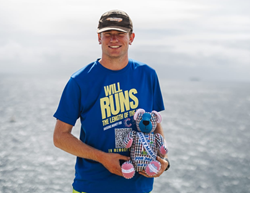 Even a heatwave and record-breaking temperatures couldn't deter a young farmer from finishing a gruelling run from John O'Groats to Land's End, completing the 870 miles in under 17 days, averaging 50 miles a day. A final year student at Bath University, William Sercombe was raising money for Cancer Research UK in memory of his dad, Charles Sercombe, a well-respected Leicestershire farmer and former NFU livestock chair.
Charles Sercombe was an active member of the NFU for many years, starting out as a local member and then progressing through the ranks until he took on the role of National Livestock Board chair, which he held for six years until 2018. He also took on a variety of other roles within the livestock industry while managing his own sheep business based near Melton Mowbray consisting of pedigree Charollais and commercial sheep flocks
The 22-year-old started raising money when he learnt of Charles' diagnosis with stomach cancer in May 2024. "I have taken on a number of challenges to raise funds, but this is the biggest yet," Will commented when he completed the run on June 29th supported by family members including his mother Helen and sisters Grace and Victoria. "We knew we would face a variety of weather conditions but didn't predict the heat wave. I had to keep ploughing on despite the high temperatures. I just rehydrated more frequently, used a lot more sun cream and walked more during the hottest parts of the day. But the worst weather to run in was the twelve hours of torrential rain we faced in Scotland."
Will was supported by the farming community throughout the run, parking the official support vehicle in fields and farm driveways along the route. "We really appreciated all the support we had from farmers along the way." On finishing the run, Will commented that it was a weird feeling. "I had been running for 160 hours and all I was thinking about was the finish line and then it was all over. To get there after 16.5 days will remain in my memory and gave me a real sense of achievement."
To donate, please go to www.fundraise.cancerresearchuk.org and search for Length of the UK run (William Sercombe) in the giving page box.
|
|
|
|
| |
BRITISH DAIRYING
ENSURE YOU RECEIVE EVERY COPY
British Dairying is available by subscription at £70.00 posted to UK addresses,
£90.00 for Europe, £115.00 for the Rest of the world
or £30 +VAT for British Dairying Online only
|
|
|
QUOTE
"Not all storms come to disrupt your life, some come to clear your path."
Paulo Coelho - Brazilian Lyricist & Novelist, 1947-
|
|
| |
|
|
|
You are receiving this email because you are a registered reader of British Dairying and we are pleased to send you extra information to supplement the journal.
|
|
|
British Dairying, Grove House Media LtdPriory Cottage, Eastbourne Road Ridgewood East Sussex TN22 5STGrove House Media Ltd is registered in England and Wales, Registration No 16722598 Us
|
|